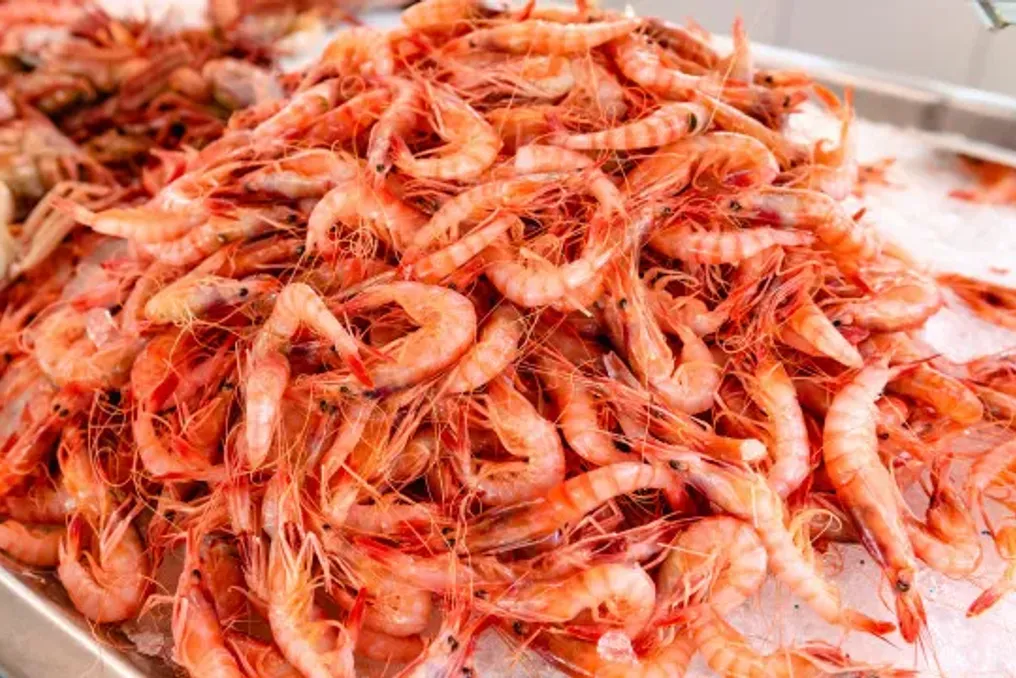
A study published in the 'Journal of Biogeography' proposes an alternative model to classical biogeographical hypotheses, which were based solely on physical and tectonic barriers. It demonstrates that long-distance dispersal and ecological plasticity (the ability to change) played a key role in shaping the modern pantropical biodiversity of these crustaceans.
Monica Núñez-Flores, a researcher at CSIC in the Institute of Marine Sciences of Andalusia, explained that this discovery fundamentally changes the understanding of the colonization of the planet by these organisms, as it was previously believed that they originated in the ancient Tethys Sea—a marine corridor connecting the Indian and Atlantic Oceans during the Mesozoic Era.
However, the research showed that the most recent common ancestor of these shrimp emerged in the Eastern Pacific Ocean during the Early Cretaceous period, approximately 125 million years ago.
To reconstruct this multi-million-year journey, the scientific group used phylogenetics calibrated by fossils, applying molecular markers and continuous space statistical models. This approach allowed tracking dispersal routes with unprecedented spatial resolution by analyzing over 34,000 records from 155 existing species, unlike traditional methods that divide the map into fixed regions.
The researcher noted that after originating in the Pacific Ocean, the shrimp expanded in various directions, including transatlantic crossings between America and Africa, as well as mass settlement in Oceania and Southeast Asia. Monica Núñez-Flores also highlighted the discovery of an acceleration in dispersal rates near the Cretaceous-Paleogene boundary, which was marked by the mass extinction of dinosaurs, likely linked to the restructuring of ecological niches and the expansion of coastal habitats.
Furthermore, Enrique González Ortega, a CSIC researcher at ICMAN, explained that besides the fundamental finding of long-distance dispersal based on ecological plasticity, the study showed that the larval development type, whose duration depends on whether development occurs in the ocean or freshwater, did not limit their capacity for long-term dispersal. In fact, their current distribution was shaped by their ecological tolerance and historical mobility capabilities.