As the UAE prepares for the next long weekend, travelers are seeking vacation options that differ from usual beach destinations, preferring cooler and more scenic locations. Although Salalah remains a popular choice, it is no longer the only sought-after destination.
Holidays and the desire for a change of scenery
The upcoming national holiday in the UAE, expected on August 25th to celebrate the birthday of Prophet Muhammad (PBUH), may create conditions for a long weekend at the end of August. However, as travel agents in Dubai note, the main motive for trips is not so much the choice of location as the desire to change one's state and climate mid-year.
Alternatives to Salalah
Ipsita Sharma from SCN Travel & More states that Salalah continues to be the main destination, but tourists are broadening their search, considering the mountains of Oman and more distant places such as Bhutan, Kathmandu, and the hilly terrain of Sri Lanka. She notes that the trips praised by tourists are usually related to gaining unique experiences, including misty journeys, secluded beaches, tea plantations, and Himalayan views.
Neha Joseph from Sharaf Travel believes that the capital of southern Oman still stands out. She emphasizes that Salalah represents the only true climatic anomaly within reach, as the Khareef season lowers the temperature in Dhofar to low 20°C, accompanied by mist, drizzle, and waterfalls, while the rest of the Persian Gulf exceeds 40°C. Thus, if one wants to experience the monsoon atmosphere, Salalah remains the closest analogue to a 'climate reset' for the UAE.
Hidden gems to visit
Besides Salalah, other attractive places include those that replace heat with higher altitudes or crowded locations with quieter, local relaxation. Ipsita recommends Jebel Akhdar and Jebel Shams for cool mountain retreats in Oman, as well as Bhutan, Kathmandu, Ella, and Nuwara Eliya in Sri Lanka, and underrated options like the Andaman and Nicobar Islands and Pondicherry for those looking for something more special.
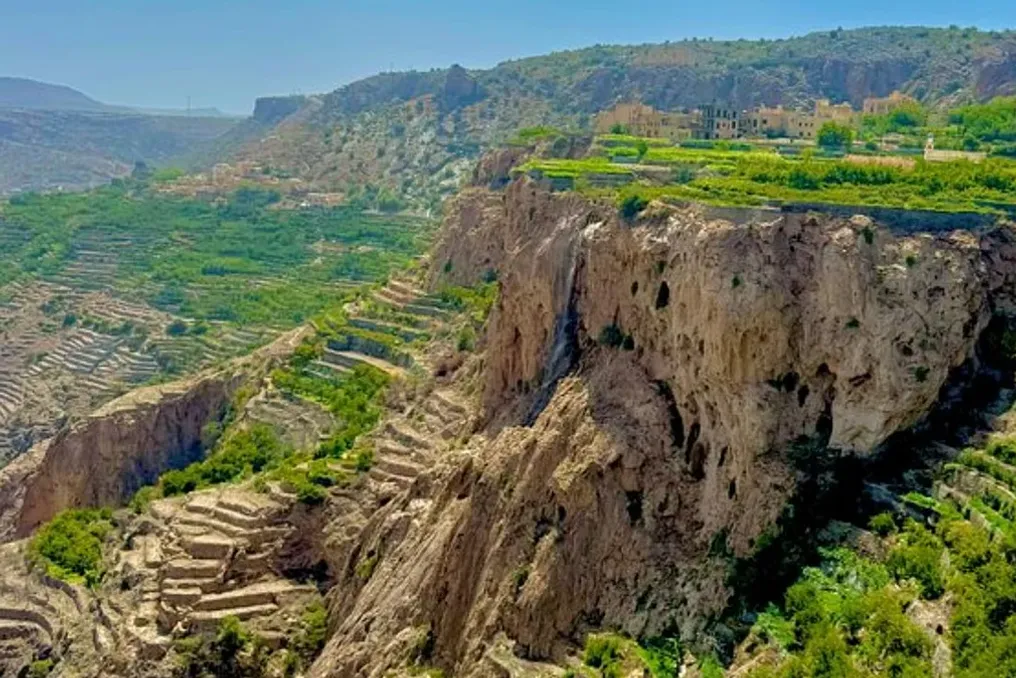
Neha similarly advocates for Jebel Akhdar, describing the 'Green Mountain' as a 'true high-altitude escape, not a monsoon one,' offering cooler air, terraced farms, hiking trails, and villages on the edge of a cliff. She also points to Bandar Al Khayran—a fjord-like area of bays and inlets near Muscat—as a place worth visiting, especially for snorkeling, dolphin watching, and dhow cruises.
Planning a short vacation
Regarding three-day weekends, both experts insist on not turning a short vacation into an airport marathon. Ipsita advises choosing a destination that matches the available time and believes that road trips or short tours in Oman make sense because they save precious hours. If flying is planned, she recommends choosing places with convenient connections and focusing on one region instead of trying to see too much.
In response, Neha adds that Salalah is less than a two-hour direct flight away, and for a three-day trip, the option with three nights is best, not two. She advises leaving early in the morning so that tourists can check in by noon and get two full days plus a relaxed morning, making the trip a vacation rather than a sprint.
High season specifics in Salalah
However, Salalah's advantage comes at a cost: all other destinations possess similar appeal. Ipsita warns that during the Khareef season, hotels book up quickly, prices rise, and major attractions become overcrowded, so early booking and traveling on weekdays yield a noticeable effect. She also suggests deviating slightly from the standard route, as the most memorable moments often occur during such detours.
Neha advises residents to travel mid-week to avoid crowds and lower accommodation costs. She recommends going in late August or early September, after the peak decade has passed, and booking 4x4 excursions to more remote wadis and viewpoints.