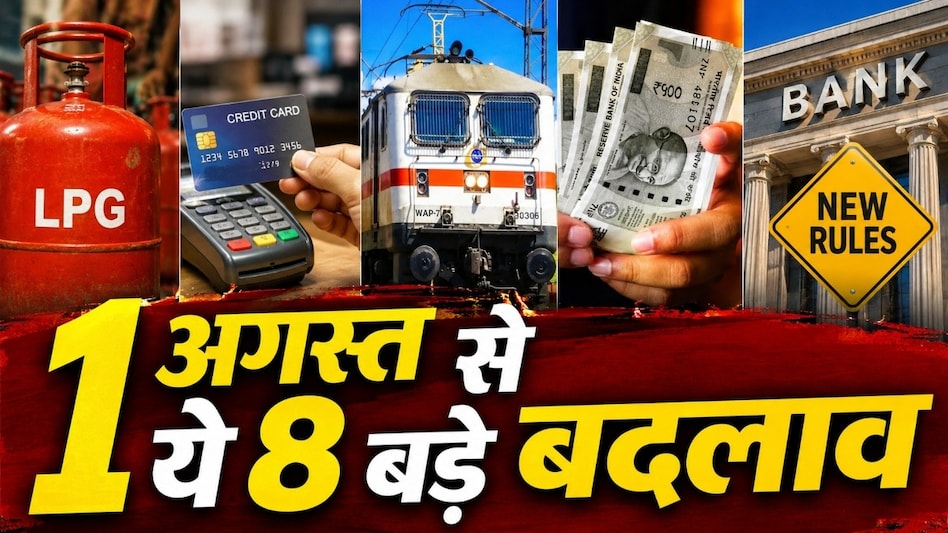
This month, as is customary monthly, numerous changes have occurred in financial regulations. Amendments that will directly affect citizens' wallets came into force on August 1st. These changes cover rules related to LPG gas prices, as well as norms for booking tickets on high-speed trains.
The first change concerns LPG gas prices: the cost of a 19 kg commercial gas cylinder has decreased by 202 rupees. In Delhi, the price for a 19 kg LPG cylinder was 2728 rupees, and in Kolkata, it was 2872.50 rupees. Meanwhile, the price of domestic gas cylinders remained unchanged.
Secondly, significant changes to the operations of Indian Railways come into effect on August 1st. The Tatkal Ticket Booking Rule Change has been modified so that token issuance will now coincide with the start time of Tatkal ticket sales. This is intended to help reduce crowding at reservation counters.
The third change relates to the banking sector: many banks are changing their service fees starting from the first of the month. For example, Ujjivan Small Finance Bank is altering the fee for SMS notifications for its customers.
The fourth change involves an increase in inflation this month. Market experts predict a rise in prices for various goods, from tea to clothing, televisions, refrigerators, and washing machines, as the increase in production costs is attributed to geopolitical tensions. Consequently, car and soap prices may increase by 4–6 percent.
The fifth change pertains to tax filings: the deadline for filing ITR 1 and ITR 2 expired on August 31st, and from August 1st, belated returns (belated ITR) must be filed, which may incur a fine ranging from 1000 to 5000 rupees.
The sixth change concerns credit cards: some banks are amending their credit card policies starting August 1st. These changes may include revisions to bonus point programs, annual maintenance fees, and other service charges. Since these changes vary across different banks, customers are advised to check the latest tariff plans and credit card terms issued by their bank.
The seventh major change aims to simplify banking operations through the launch of CKYC 2.0. Starting August 1st, financial institutions in the banking, insurance, and mutual fund sectors can implement enhanced centralized identification 2.0. After obtaining digital approval from a financial institution, they can access customer information through a centralized database. This will allow customers not to provide the same set of KYC documents every time they open an account, purchase a policy, or conduct another financial transaction.
The eighth and final change, effective from August 1st, relates to GST. Changes in GST rules will affect businesses, shops, and traders. According to reports, electronic invoicing (e-Invoice) and electronic waybills (e-Way Bill) systems are becoming more transparent and improved. Under this requirement, it will become mandatory to specify the recipient's GSTIN in 'Bill To–Ship To' transactions, and information such as GSTIN and state code will be verified.