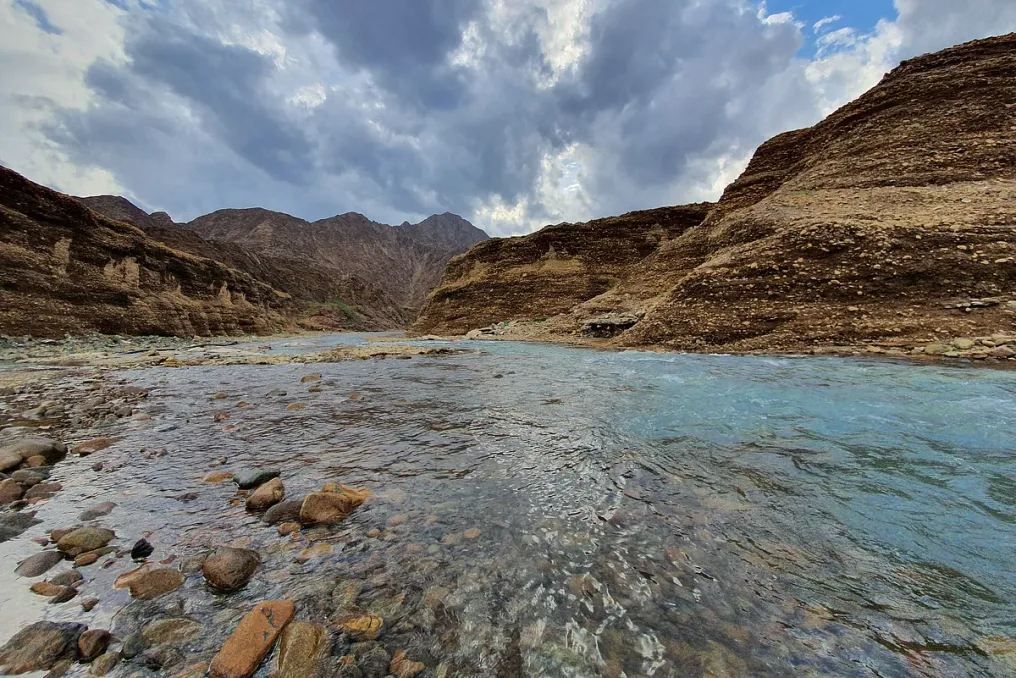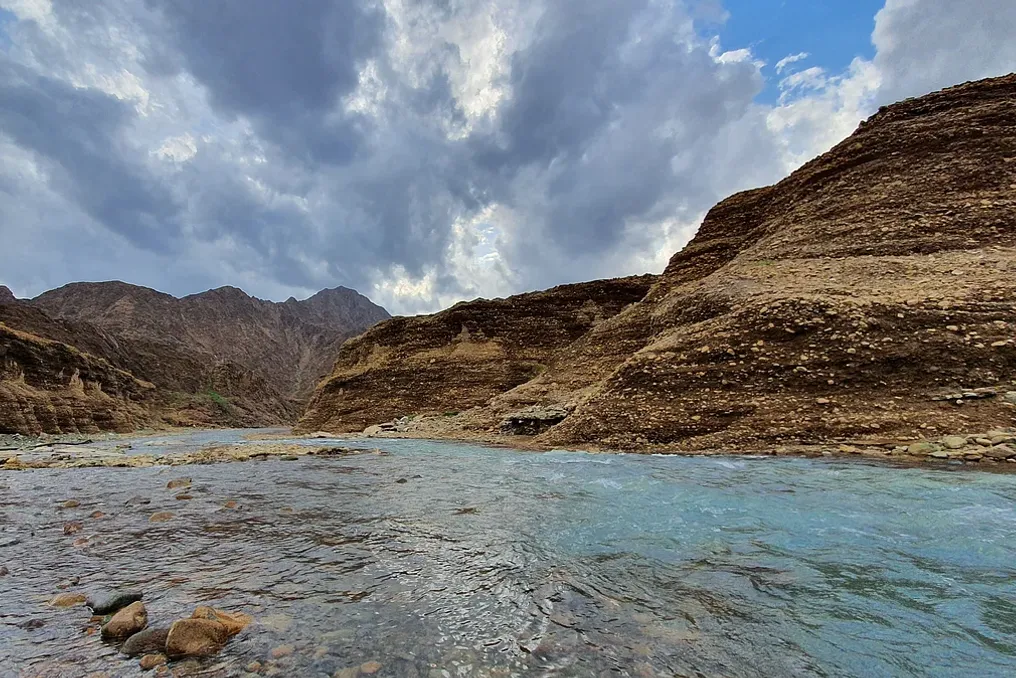
As Wadi Uruwaiya has been designated a UNESCO World Heritage site, nature lovers and hikers are eagerly anticipating the resumption of visits to explore this canyon in greater detail. After several years of being closed to the public, access to the wadi reopened in January of this year through controlled group tours.
Asila Abdullah Al Mualla, Director General of the Fujairah Environmental Protection Agency, noted that the iconic waterfall and its surrounding freshwater pools are among the most memorable features of Wadi Uruwaiya. This high-ranking official presented visitors with a range of must-see locations in the area.
She personally highlighted the waterfall and adjacent freshwater pools as the main attraction, especially recommending visiting them early in the morning. Al Mualla emphasized that the true beauty of the area extends far beyond the waterfall, urging guests to take time to explore the spring streams, deep mountain canyons, impressive rock formations, and natural viewpoints in the Hajar Mountains.
The True Beauty
Wadi Uruwaiya represents a living cultural landscape. Archaeological surveys have uncovered about 70 sites within the protected zone, including traces of ancient settlements, burials, and rock inscriptions. During permitted and organized tours, these elements help visitors understand the age-old connection between people, water, and mountains. Tours are conducted only during the hiking season, from the beginning until mid-October, and visitors must register to participate in an organized tour offered by Fujairah Holidays; packages start from 300 dirhams per person.
Hidden Wonders
Asila Al Mualla was most surprised by numerous studies conducted in the area, where a vast amount of life was discovered hidden within the seemingly harsh landscape. Scientific work has documented approximately 1099 species, including 216 plant species. Researchers also identified 55 invertebrate species that are new to science. The Arabian tahr was spotted in the Wadi Uruwaiya National Park in Fujairah, United Arab Emirates.
Other remarkable discoveries were also noted. In the UAE, thanks to research related to this area, a dragonfly previously considered extinct has been recorded. Furthermore, researchers documented local species of wadi fish that use their specialized bodies to climb sections of the main waterfall. Al Mualla noted that such observations demonstrate the amazing ability of wildlife to adapt to the complex conditions of Wadi Uruwaiya.
It is stressed that continuous research and community involvement remain vital. She explained that nature conservation is not limited to the physical protection of the site but requires ongoing research, long-term monitoring, and human engagement. This serves as a reminder that even the most fragile ecosystems can thrive if they are properly understood, respected, and protected.