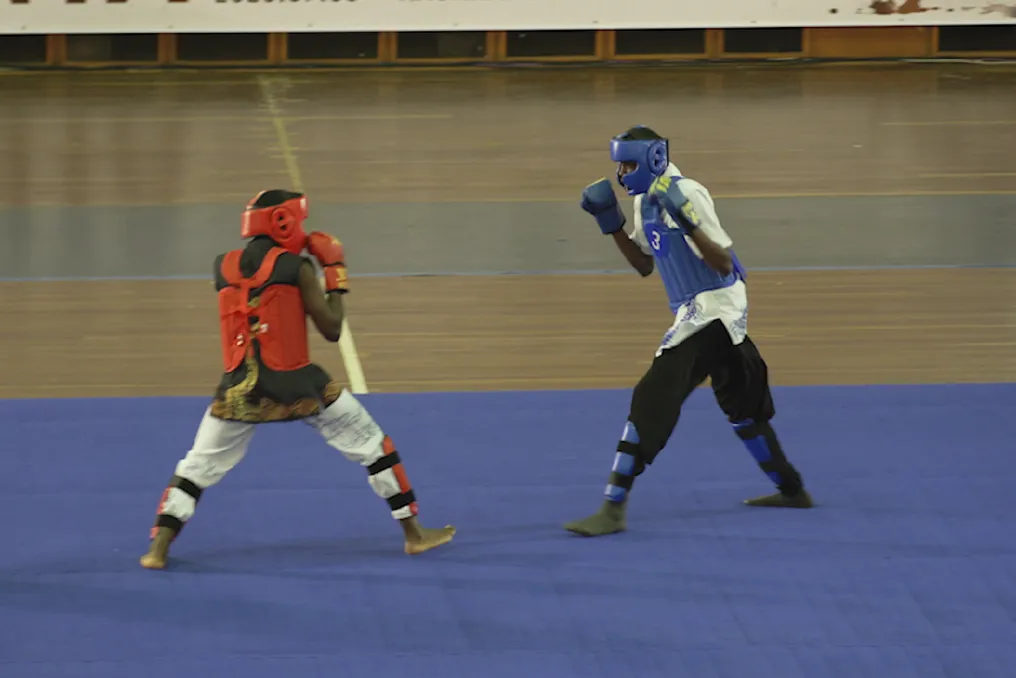
The ancient Chinese martial art of Wushu is gaining increasing support among young people in Africa. Practitioners in Kenya view Wushu not only as a competitive sport but also as a means of achieving self-discipline, self-control, and cultural exchange.
Athletes from all over Kenya gathered in the capital, Nairobi, to participate in Wushu competitions organized by the Confucius Institute at Kenyatta University. This demonstrates the growing appeal of this sport in the East African country.
Wushu combines athleticism, artistry, and centuries-old Chinese traditions. It includes graceful staff exercises, powerful kicks, acrobatic jumps, and lightning-fast attacks that require high precision, balance, and endurance.
Sport Inspired by Film and Culture
For 22-year-old Elvis Munyangi, starting Wushu was inspired by watching martial arts movies and online videos. Munyangi noted that he was inspired by action films, after which he stumbled upon Wushu performances on YouTube and decided to start training.
He believes that every movement in Wushu tells a story, and every performance reflects years of hard work, sacrifice, and determination. For many participants, competitions serve as an opportunity to assess their progress and learn from the experience of other athletes. Munyangi added that participating in competitions helps understand the current level of mastery and allows one to learn a great deal.
More Than Just a Martial Art
For his teammate Veronica Wambu, Wushu has become a tool for personal growth and emotional discipline. She emphasized that practice teaches self-control: if someone insults you, you do not react immediately, but learn to restrain yourself or walk away. She noted the great deal of discipline in Wushu.
Practitioners claim that this sport promotes self-confidence, resilience, and respect while introducing them to aspects of Chinese culture and philosophy.
Building Bridges Through Sport
Organizers believe that Wushu can play a broader role beyond sporting contests. Professor Xiaodong Zhou, Director of the Confucius Institute at Kenyatta University, stated that martial arts are not just physical movement but also culture. He added that through this culture, people learn to interact with each other, and martial arts can improve health, strengthen character, and build connections between people.
Zhou noted Wushu's potential in deepening cultural ties between Africa and China by promoting mutual understanding through sport. Organizers hope this marks the beginning of a new chapter for Wushu in Kenya. Supporters believe that as interest in this sport grows, it could become an important platform for youth development, cultural exchange, and strengthening interpersonal relations between Kenya and China.