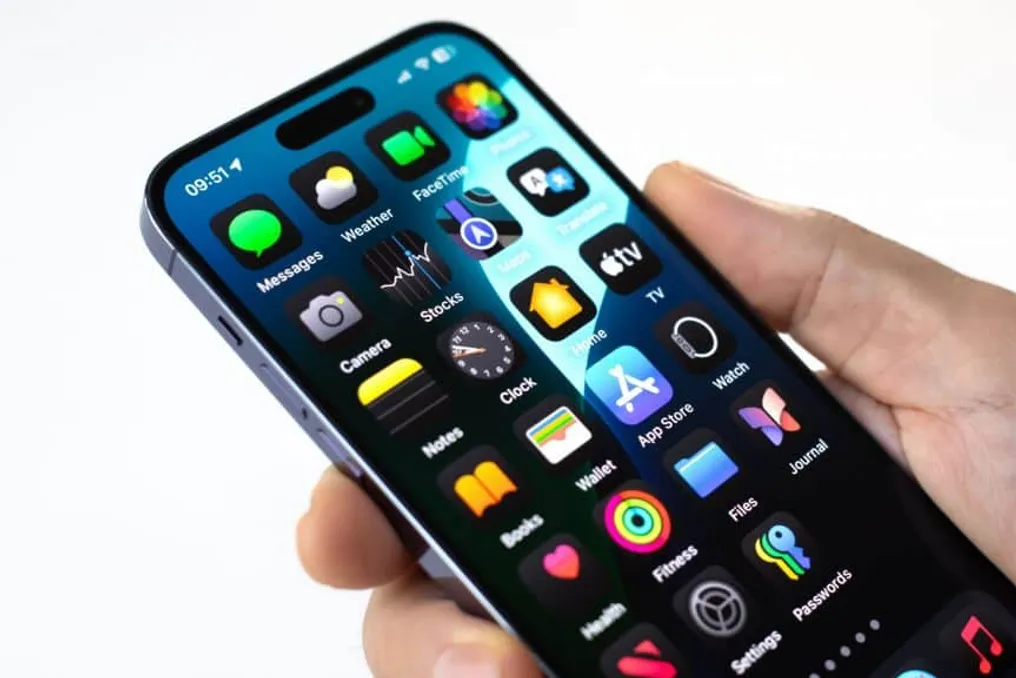
Apple is reportedly looking to lower the cost of OLED screens designed for the future iPhone 18 Pro Max, in a scenario influenced by competition for artificial intelligence-related components. According to The Elec, a South Korean portal focused on the technology sector, the company has been negotiating with its main panel suppliers to secure lower prices.
Price Negotiations with Screen Manufacturers
Apple has asked suppliers to reduce the price of the iPhone 18 Pro Max OLED screens to approximately US$ 70 (equivalent to about R$ 380). This price represents a reduction compared to the panel used in the iPhone 17 Pro Max, which was estimated at US$ 80 (approximately R$ 435).
The discussions were even broader, as Samsung Display and LG Display are reportedly supplying the screens for around US$ 66.50 (approximately R$ 360), which constitutes a drop of about 20%. Data from UBI Research, cited by the publication, presents production projections for 2026:
- Samsung Display is expected to manufacture about 46 million OLED screens for the iPhone 18 line, with 2 million for the entry model, 18 million for the iPhone 18 Pro, and 26 million for the iPhone 18 Pro Max.
- LG Display also forecasts production of panels for the new generation, with estimates of 1.09 million for the basic model, 19 million for the Pro, and 21 million for the Pro Max.
The iPhone 18 Pro and iPhone 18 Pro Max models are expected to incorporate M16 OLED screens, a more modern version of these panels. This new generation is anticipated to bring improvements such as higher luminous efficiency, increased durability, and advancements in color reproduction quality. It is worth noting that the decrease in display price is not new; OLED screens used in the iPhone 16 Pro Max, launched in 2024, once cost over US$ 100 (about R$ 545) on certain occasions.
Impact of Artificial Intelligence on Suppliers
The progress of artificial intelligence has intensified the demand for memory chips and generated new challenges for technology manufacturers. Lee Cheong, president of Samsung Display, stated that there is a 'very strong pressure to reduce component and screen prices' due to 'chip inflation.' Jeong Cheol-dong, president of LG Display, also acknowledged this situation but assured that the situation remains 'at a manageable level.'
This negotiation conducted by Apple signals a transformation in the market: the competition for components essential to artificial intelligence is already interfering with the development of popular products, including one of the planet's main smartphone series.