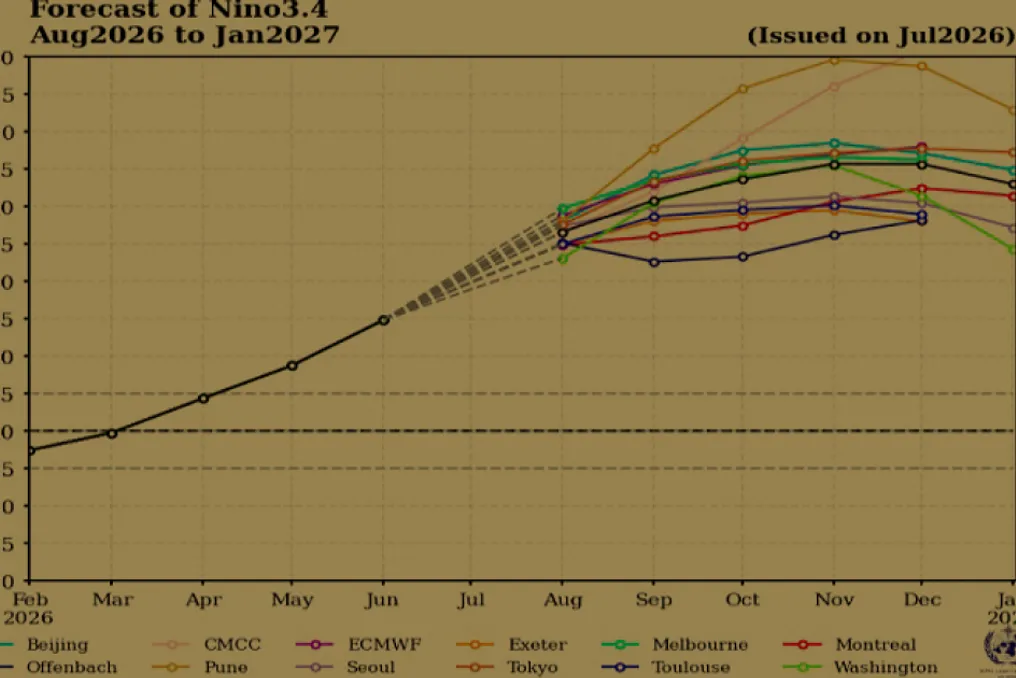
The World Meteorological Organization (WMO) has issued a forecast indicating that El Niño will continue to strengthen and play a key role in shaping the global climate from August to October 2026.
The World Meteorological Organization (WMO) has issued a forecast indicating that El Niño will continue to strengthen and play a key role in shaping the global climate from August to October 2026.
El Niño, which translates from Spanish as 'boy', is one of the most significant natural phenomena on the planet because its consequences can threaten the lives of many people. The essence of the phenomenon lies in the influx of warm water into the Pacific Ocean, but its influence is felt far beyond this area.
During periods of El Niño activity, there is a general increase in average temperature, leading to heatwaves in some regions, which negatively affects agricultural production, especially.
Another part of the material reports the discovery of blue-throated lorikeets by ornithologists. These brightly colored parrots inhabit exclusively the island of Buru, located in eastern Indonesia. Previously, this species was described based on seven specimens collected in the 1920s, and only two confirmed sightings were recorded at the end of 2014.
After more than eleven years, researchers managed to rediscover these rare birds. It turned out that they prefer to live not in the lowlands or mid-altitude forests where searches were previously conducted, but in the remote and little-studied mountainous areas of Buru. Details of this sensational find are available on the Search for Lost Birds project website.
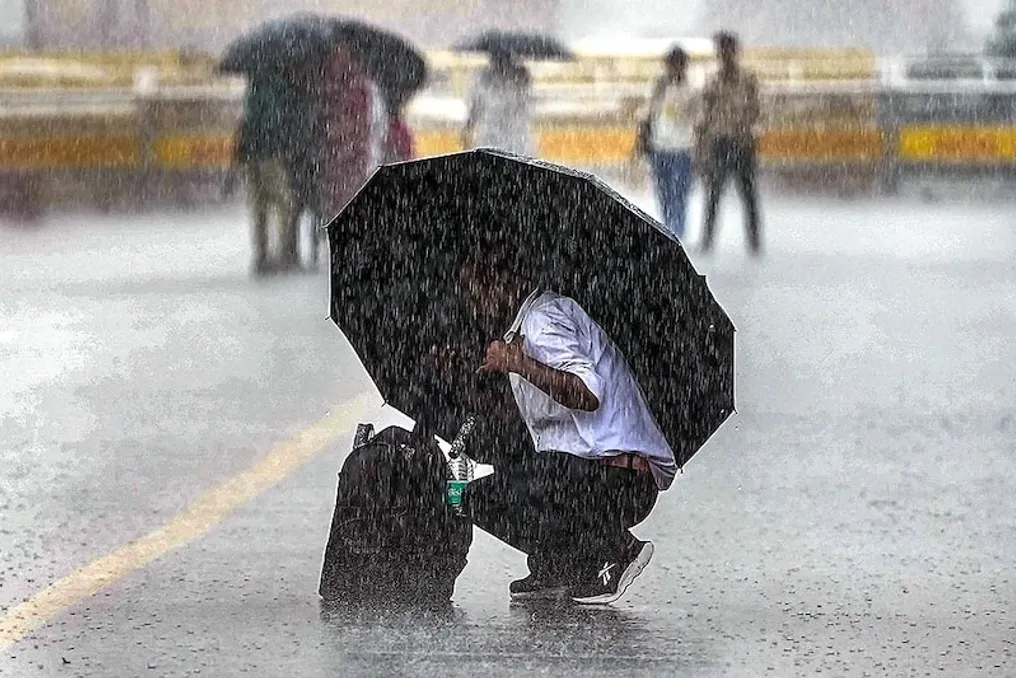
According to new forecasts from the Indian Meteorological Department (IMD), the amount of rainfall in India in August 2026 is expected to be below normal. IMD predicts that the average rainfall across the country may be less than 94% of the normal amount, whereas 254.9 millimeters of rain usually fall in August.
The main reason cited for the decrease in rainfall is the presence of the El Niño phenomenon in the Pacific Ocean, which is forecast to persist until August and intensify in September. This forecast came after July, when the influence of El Niño was partially mitigated by the formation of several low-pressure systems and monsoon depressions, which led to good rainfall in several regions.
Despite the monsoon showing better results in July, the situation may change in August. Although a deficit of rainfall is expected in most regions of the country, some areas, including the northwestern, northeastern, east-central, and eastern parts of India, may receive normal or even more rainfall.
The normal amount of rainfall in August is 254.9 millimeters. The IMD forecast also indicates that the total rainfall in August and September may be below normal, as 422.8 millimeters usually fall in these two months. IMD believes that the total rainfall could drop below 94% of the normal amount.
However, this deficit will not be evenly distributed across the country. Some parts of South and Central India, northern areas of Northwest India, as well as eastern and northeastern regions may receive normal or above-normal rainfall, meaning that even with an overall decrease in the average figure, individual territories may experience favorable precipitation.
El Niño in the Pacific Ocean may remain at a moderate level until August, with a forecast of intensification in September. Some climate models suggest that El Niño could continue until early 2027, and this phenomenon may affect the Indian monsoon, increasing the probability of reduced rainfall. Therefore, special attention will be paid to the state of El Niño in August and September.
Nevertheless, there is positive news related to the Indian Ocean Dipole (IOD). Many meteorological models indicate the probability of a positive IOD forming by September. A positive IOD is capable of promoting increased rainfall in India and partially compensating for the impact of El Niño. However, the IMD's own weather model currently forecasts a neutral IOD state, so the influence of the IOD remains uncertain.
Thus, rainfall in August and September will be critical, as water shortage can affect agriculture, reservoir levels, and water availability. While improvement is possible in some areas due to heavy rainfall, the current IMD forecast indicates that a decline in rainfall is expected across the country during the latter half of the monsoon. In the coming weeks, it will become clear how the monsoon will develop depending on the state of El Niño and IOD.