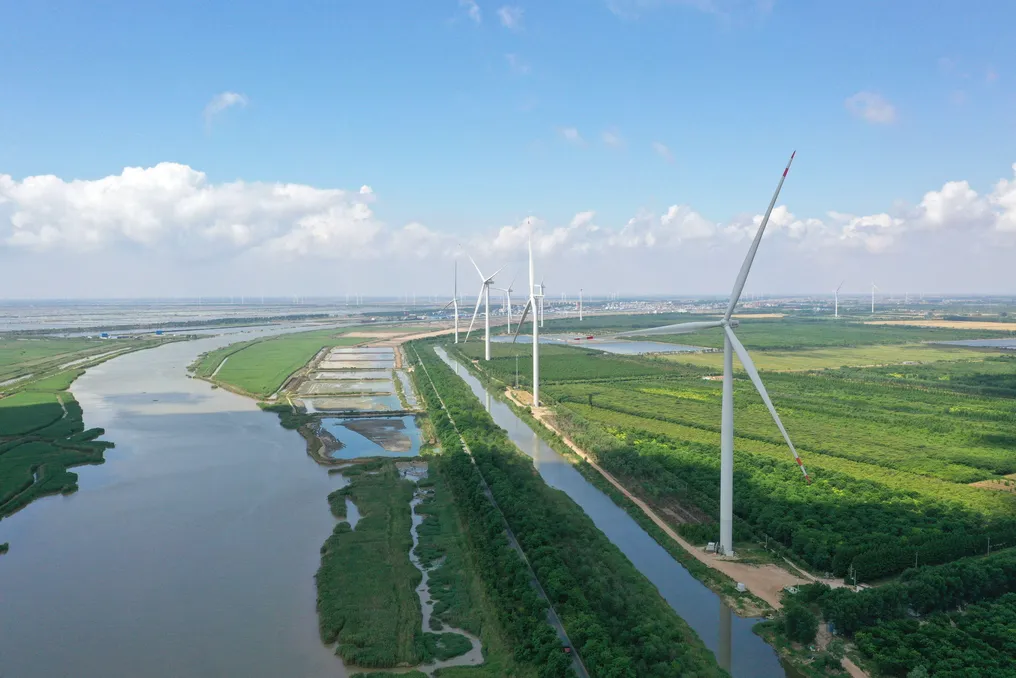
China has set a goal to establish around one hundred national industrial parks with zero or near-zero emissions by 2026 as part of its Fifth Five-Year Plan. These zones are intended for industrial production with a clean or almost zero carbon footprint, elevating their status to a national priority compared to previous pilot projects.
Similar stories
Popular
According to the energy non-profit fund RMI, industrial parks in highly industrialized China are responsible for nearly a third of the country's total emissions. Consequently, achieving the zero-carbon goal could be a significant step in accelerating and deepening China's decarbonization, especially in sectors like steel, cement, and chemical production, which are often concentrated in industrial parks.
As China's industrial ecosystem increasingly integrates into global supply chains, some analysts question whether China's drive to create such parks domestically can spread internationally. According to the World Resources Institute (WRI), there were 159 Chinese overseas industrial parks globally as of 2022, and this number continues to grow, including new facilities in Zimbabwe, Kenya, and Indonesia.
China's Zero-Emission Industrial Parks
The history of low-carbon and zero-carbon industrial parks in China dates back to the Fifth Five-Year Plan (2006–2010), when the country began establishing so-called 'pilot ecological industrial parks.' Some researchers trace this history even further back to 2001, when the first 'eco-industrial park'—a sugar processing complex with circular economy elements—was established in Guangxi province in southwestern China.
Under the Fourteenth Five-Year Plan (2021–25), China introduced its '1+N' climate policy, which explicitly promoted the development of 'green and low-carbon industrial parks' and 'demonstration projects with near-zero carbon emissions.' Researchers from the iGDP environmental analysis center in Beijing note that this marked the 'systematization and scaling' of emission reductions. By 2024, the term 'zero-carbon parks' appeared in central government documents, and by March 2026, it was included in the Fifth Five-Year Plan.
At the end of 2025, the National Development and Reform Commission of China (NDRC) published a list of 52 national zero-carbon industrial parks slated for construction by 2030. However, although the core principle of a 'zero-carbon industrial park' is clear—it must have a clean or near-clean level of emissions from its operations—Chinese policymakers have not provided a unified definition, even in the latest five-year plan.
As the iGDP article notes, in reality, zero-carbon zones in China develop very differently depending on the economic strengths and policy priorities of the provinces. One of the main current challenges is the standardization of carbon accounting and certification systems.
China's Overseas Industrial Parks
Economists and policymakers view industrial parks as a key tool for economic development in many parts of the world. Along with their counterparts, Special Economic Zones (SEZs), they help attract foreign investment, stimulate and mitigate risks for industry and business growth, and strengthen local value chains. They played a central role in China's transformative economic growth, allowing market reforms to be experimented with in places like Shenzhen since the early 1980s when reforms and opening began.
China is undoubtedly the largest hub of global industrial parks and SEZs. According to RMI, nearly half of the world's 5383 industrial parks and SEZs are located in this country. The growing number of Chinese companies is also investing in overseas industrial parks, with almost half of them located in Southeast Asia (45%), and the remainder predominantly in Africa (28%) or Europe (25%), according to the WRI report.
Some of these parks are particularly energy-intensive. For example, nickel smelting parks such as the Indonesian Morowali Industrial Park (IMIP) and the Indonesian Weda Bay Industrial Park (IWIP)—into which Tsingshan from China has made significant investments—are heavily reliant on coal energy for their energy-intensive industrial processes. According to a report by the Center for Energy and Clean Air Research and Global Energy Monitor, IWIP alone possesses a coal power plant capacity of 4.5 GW, most of which is invested in and operated by Chinese companies.
Transitioning to a 'Green' Lifestyle
A mapping of existing overseas industrial parks conducted by WRI shows that most are located in areas rich in solar resources. The study suggests that nearly 420 GW of solar photovoltaic capacity and over 116 GW of wind power could potentially be installed in these parks. Analysis by Jing Song, a researcher at the WRI China Sustainable Transition Program, indicates that this could prevent the emission of 340 million metric tons of carbon dioxide annually, equivalent to the UK's annual emissions as of 2024.
Beyond technical feasibility, changes in global trade and development policies add new incentives for green industrial parks. Yang Muyi, a senior energy analyst at the Ember think tank, states: 'One thing is clear: many developing countries want to leverage their comparative advantages to support industrial upgrading. They aim to shift to higher value-added sectors, such as battery manufacturing, electric vehicle assembly, and so on.'
He adds: 'But it would be too risky for Chinese investors to invest in high-yield sectors if they still rely on a fossil fuel base, which is characteristic of many overseas industrial parks. Therefore, I think if they want to take their supply chain abroad, they will want to tie it to a cleaner foundation.'
Sam Kimminges, Director of Energy at Climate Group, agrees with this view. He says: 'The ability to credibly demonstrate zero-emission claims and use renewable electricity is becoming an increasingly important factor for companies.'
Earth Dialogue
The potential to do this could be critically important for market access and ensuring operational sustainability in the future. He cites the European Carbon Border Adjustment Mechanism (CBAM) as an example of how new trade rules change incentives.
Kimminges notes that regulations like CBAM require companies to declare their carbon emissions. For an export-oriented company, 'if you can be located in an industrial development zone that allows you to meet these requirements simply because of your location, that is a huge competitive advantage,' he stated at a press briefing in Singapore in May. He adds that these benefits accrue not only to the companies but also to the development zone itself and the host country.
Jing Song from WRI also points to China's commitment to halting the construction of overseas coal-fired power plants, as well as the Guidelines on Principles of Green Development of External Investment and International Cooperation issued by the Ministry of Commerce and the Ministry of Ecology and Environment in 2021, as additional incentives for reducing carbon emissions in overseas industrial parks.
Furthermore, at the provincial level, there are certain policies for evaluating overseas industrial parks. According to Jing Song, the provinces of Shandong, Guangdong, Hubei, and Zhejiang include low-carbon efficiency in the annual evaluation of overseas industrial parks where companies from their provinces invest.
Earth Dialogue
The type of industrial park also matters. Not all of them are as energy-intensive as the Indonesian nickel smelting zones or the currently developing Zimbabwean steel zone. Industrial parks focused on light manufacturing and assembly, for instance, are much easier to electrify—provided the power sources are clean, according to her.
'From a decarbonization perspective, electricity is the most accessible and scalable 'low-hanging fruit' in all of China's overseas industrial parks,' says Jing Song. The transition to renewable and low-carbon power generation sources 'can provide substantial and immediate emission reductions.'
Challenges and Lessons
However, implementing zero-carbon industrial parks in China's overseas investments is far from simple. There are numerous obstacles. Primarily, there is the availability of clean energy, which varies between and within countries, depending on both natural resources and infrastructure, such as grid access, according to Yang from Ember.
Another issue is land access, especially if industrial parks need to develop their own renewable energy sources. Solar energy, in particular, requires large tracts of land that are difficult to obtain unless local authorities properly facilitate it, notes Yang.
Roofs can offer significant space for installing solar panels. According to WRI studies, existing Chinese overseas industrial parks have sufficient roof space to install over 2.5 GW of solar photovoltaic capacity. Indonesia, Cambodia, and Vietnam have been identified as the top three countries for this solar potential.
Yang also points to the insufficient support faced by Chinese companies investing abroad. Domestically, provincial governments, often competing to attract investment, do everything possible to facilitate investment, including in zero-carbon industrial parks. But this is not always the case in other countries.
'When they [Chinese companies] go abroad, they have to do everything themselves. They need to build the industrial park, build the road, build the port, and take care of the local community,' notes Yang. This makes it difficult for companies to initiate decarbonization efforts in their operations.
What can host governments do to better support low-carbon and zero-carbon industrial parks? One lesson they can learn from China, Yang suggests, is to view the return of low-carbon and zero-carbon industrial zones for the economy as a whole, rather than just within individual projects that often do not justify the investment sufficiently. However, understanding the broader return in terms of competitiveness and industrial upgrading—and making it a national priority—can help align necessary parties, such as local authorities, banks, and companies.
In Kimminges' view, while China's approach is specific to its context, 'principles of design coordination, risk sharing, and unified approval can be applied in market-oriented economies.'
Jing Song warns that while lessons can be drawn from China's industrial park decarbonization, they 'cannot be directly replicated' abroad due to the different legal statuses and governance structures of Chinese industrial parks outside the country. 'However, significant experience from China's domestic practices can serve as valuable reference material.' For example, the Shenzhen Guide to Low-Carbon Parks, released in 2018, awards higher scores to parks whose renewable energy consumption is more than 15% of total energy consumption.
In early June, a group of researchers from the Indonesian think tank Institute for Public Service Reform visited Shanghai and Suzhou to learn how China built its energy transition ecosystem. A solar photovoltaic manufacturer there told them that developing zero-carbon industrial parks requires an 'iterative approach' over a long period. This is difficult in any political and economic context. But, as Yang from Ember says, 'the problem does not mean the absence of progress.' It will depend on the presence of serious policy or funding.
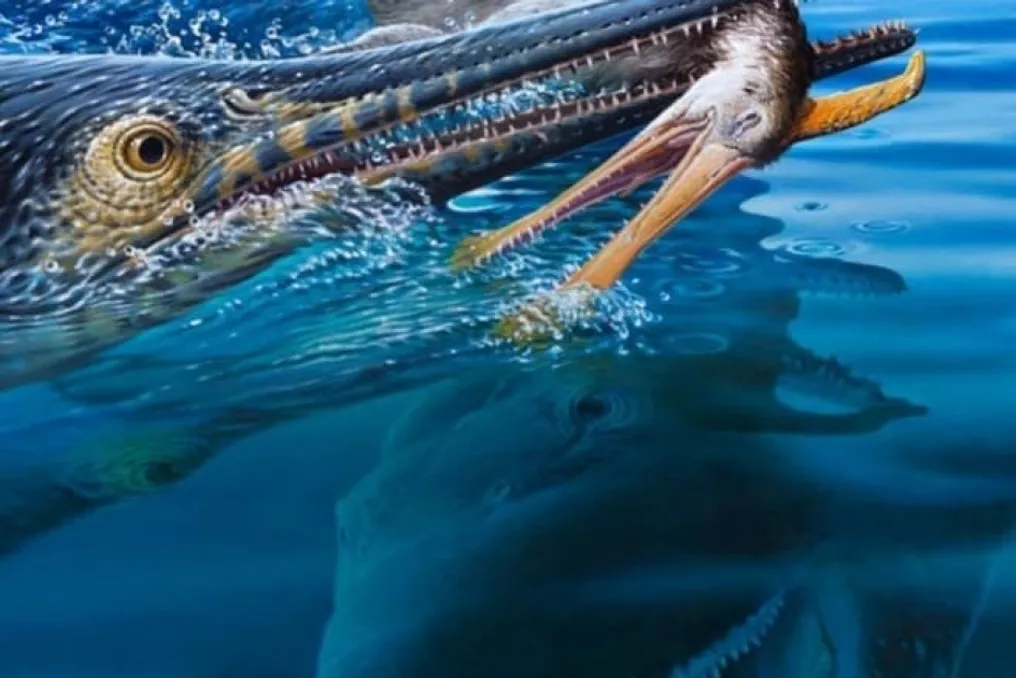
Researchers described the fossil of a six-to-seven-meter ichthyosaur, Platypterygius australis, which inhabited the inland Eromanga Sea in Australia during the Early Cretaceous period, approximately 105–106 million years ago. Among the scattered bones of this ancient reptile, fossilized remains of stomach contents were found. Analysis of this content showed that shortly before P. australis died, it had swallowed a pterosaur. There are two versions: either the ichthyosaur caught the winged reptile on its own, or it fed on its carcass. This marks the first documented case of an ichthyosaur feeding on a pterosaur.
Furthermore, based on tooth marks on the vertebrae, it is suggested that P. australis itself might have been killed and eaten by an even larger marine animal—the pliosaaur Kronosaurus queenslandicus. These research findings were published in the scientific journal Gondwana Research.
Periodically, paleontologists come across fossil remains of ancient animals containing coprolites—that is, preserved parts of stomach and intestinal contents. Such finds allow for the direct study of the diet and feeding behavior of long-extinct species. For example, previously, a coprolite was discovered belonging to a sauropod, young specimens of Diamantinasaurus matildae, which lived in Australia about 100 million years ago. Analysis of this sample confirmed that sauropods were herbivores and ingested food without much chewing.
A team of paleontologists led by Matt Andrew White from Northeastern University presented data on another discovery of a fossil animal with preserved gastrointestinal tract contents. The focus was on remains under identification number KK F1435, which were found in the Tulubook formation in Queensland, Australia. The age of this specimen is estimated at 105–106 million years. During that era, most of Australia was covered by the shallow inland Eromanga Sea.
Specimen KK F1435 consists of the remains of a large reptile, including a nearly complete skull with teeth and fragments of the postcranial skeleton, such as vertebrae, ribs, and limb bones. By studying this specimen, White and his colleagues classified the remains as belonging to the ichthyosaur Platypterygius australis of the family Ophthalmosauridae, which is well known to paleontologists and was described in 1972. It was established that this individual could reach a length of six to seven meters when alive.
About half a meter from the skull of KK F1435, White and his co-authors discovered a spherical mass, which they interpreted as fossilized stomach content that had fallen out of the abdominal cavity. From this structure, two fragments of pterosaur tooth bone from the family Anhangueridae were extracted, whose wingspan was presumably about four meters. The most likely scenario is that P. australis caught the pterosaur while it was flying over the sea and ate it. An alternative version suggests that the ichthyosaur fed on the carcass of a winged reptile that fell into the water.
According to researchers, this is the first known example of an ichthyosaur feeding on a pterosaur. Nevertheless, coprolites also contained (using neutron tomography) remains of more typical ichthyosaur food: several belemnites, as well as fish vertebrae and ribs and shell fragments. The stomach contents of P. australis indicate that members of this species, and possibly other Cretaceous ichthyosaurs, were generalist predators consuming a wide range of prey.
Notably, deep tooth marks were observed on the vertebrae of KK F1435, and some vertebrae were broken or missing. Judging by the size and shape of these marks, they were left by the pliosaaur Kronosaurus queenslandicus—an even larger marine reptile that reached over ten meters in length and occupied the position of apex predator in the Eromanga Sea. According to the most plausible version, the pliosaaur hunted the ichthyosaur, killed it, after which it fell to the seabed, damaging its skull from the impact. Then this same pliosaaur consumed the body of the victim, scattering the remains across the seabed over a distance of more than ten meters (possibly its relatives later acted as scavengers).
The research results demonstrate the presence of a complete food chain in the Eromanga Sea: large ichthyosaurs consumed mollusks, fish, and pterosaurs, and in turn became prey for more massive pliosaurs. Several years ago, paleontologists found a fragment of a lower jaw of an unknown pterosaur on the Tulubook formation, based on which a new genus and species—Thapunngaka shawi—was described. Scientists estimated the wingspan of this reptile to be six to seven meters, making it the largest pterosaur in Australia. There is a possibility that the bone found in P. australis's stomach belonged to T. shawi.