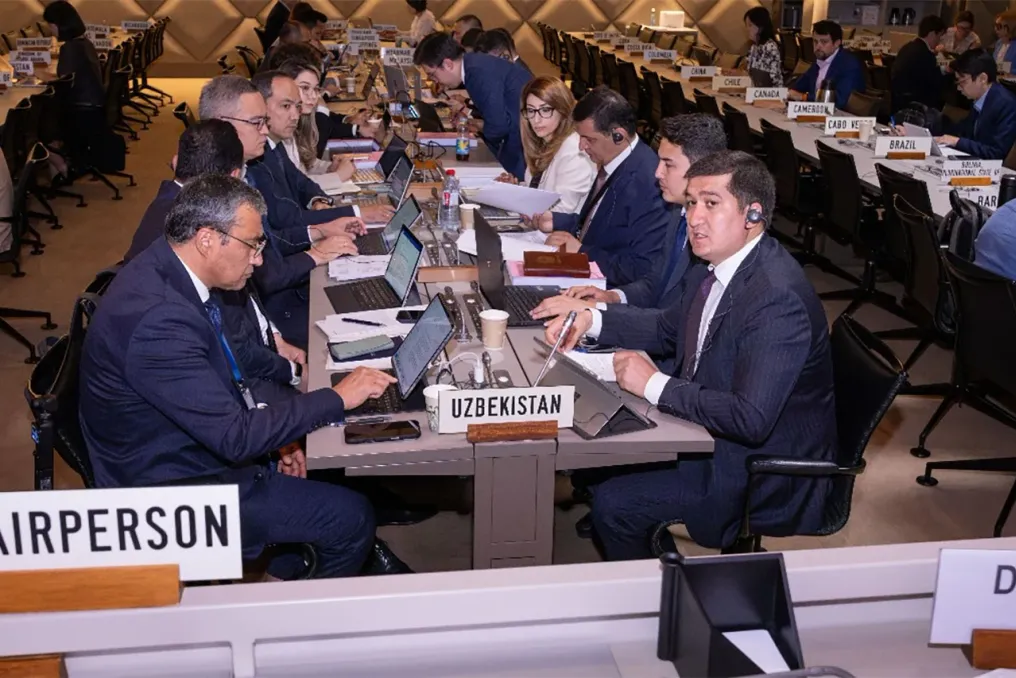
Uzbekistan has reaffirmed its commitment to completing the accession process to the World Trade Organization (WTO) by 2026. This statement was made during the thirteenth meeting of the WTO Working Group on the country's accession.
Uzbekistan has reaffirmed its commitment to completing the accession process to the World Trade Organization (WTO) by 2026. This statement was made during the thirteenth meeting of the WTO Working Group on the country's accession.
The Uzbek delegation at the meeting included about thirty high-ranking government officials. Among them were the Special Representative of the President for WTO Affairs and chief negotiator Azizbek Urunov, Deputy Minister of Economy and Finance Akhadbek Khaydarov, Deputy Minister of Agriculture Akmal Kosimov, and Deputy Minister of Justice Mahmud Istamov. Representatives from various ministries and state institutions also joined the meeting online from Tashkent.
Urunov emphasized the government's readiness to actively engage with WTO members. He noted that the accession process has reached a more advanced stage compared to the previous Working Group meeting. This is evidenced by the reduction in questions from WTO members following the systematic resolution of accumulated issues.
The chief negotiator also reported that since March of this year, Uzbekistan has agreed upon 190 legal and regulatory acts that meet WTO requirements. The main focus was on sanitary and phytosanitary measures, as well as food safety. Furthermore, the country established a unified Food Safety Committee and updated draft legislation on anti-dumping, countervailing, and safeguard measures.
The Chair of the Working Group, Ambassador Song Yochol from the Republic of Korea, reported that 31 bilateral market access agreements have been submitted to the WTO Secretariat, including a recently concluded agreement with India. She noted that the bilateral negotiation phase is nearing completion and strongly urged the remaining participants to conclude consultations as soon as possible.
WTO members welcomed Uzbekistan's progress but pointed out that the adoption of some legislative acts was slower than expected. They highly praised the country's ongoing reforms, such as the privatization of state enterprises and measures aimed at creating a more transparent and predictable business environment. The meeting also discussed currency regulation, import policy, trade facilitation, investment and competition policy, technical barriers to trade, as well as further reforms of the public sector and agricultural support systems. Some WTO members recommended that Uzbekistan join selected multilateral WTO initiatives after accession.
Speaking on behalf of the WTO Director-General Ngozi Okonjo-Iweala, Deputy Director-General Xiangchen Zhang thanked Uzbekistan and WTO members for their active participation in the negotiations. He noted that the short intervals between Working Group meetings reflect the parties' determination to accelerate the accession process. At the end of the meeting, the Working Group Chair stated that achieving the goal of concluding negotiations remains a realistic task provided that outstanding issues are resolved in a timely manner. In turn, Urunov called on participants to focus on agreeing on outstanding commitments and successfully completing Uzbekistan's accession process.
Uzbekistan applied for membership in the World Trade Organization in 1994 and has been engaged in an active phase of accession negotiations with WTO members since 2020.
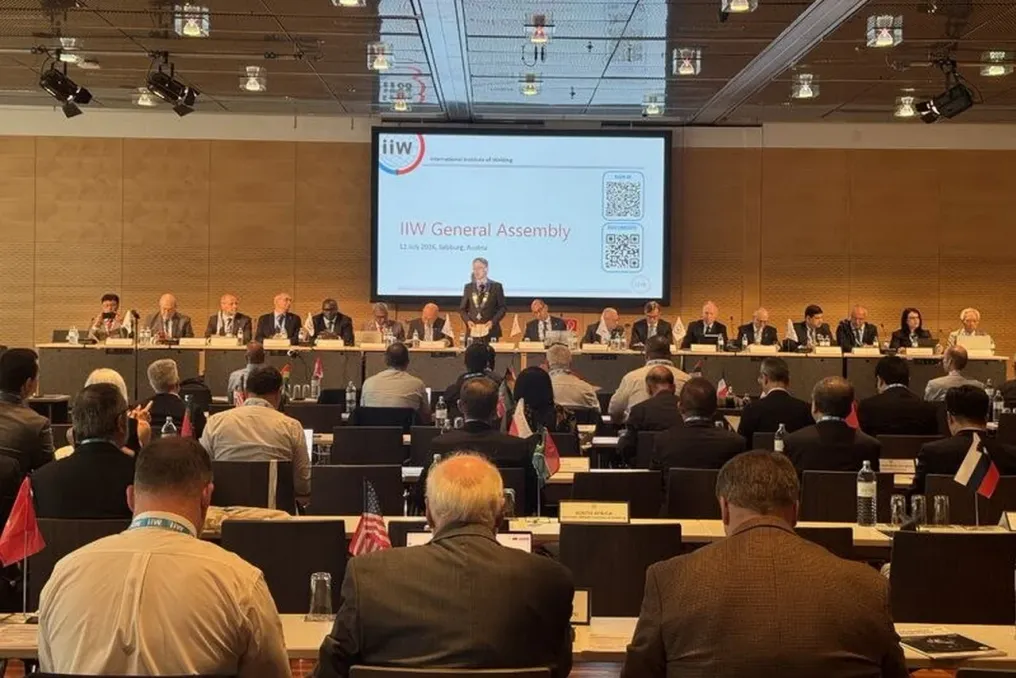
Uzbekistan has officially joined the International Institute of Welding (IIW). This membership opens up new opportunities for implementing global standards, improving professional training, and enhancing the quality of industrial production.
Uzbekistan's official welcome into the IIW community took place during the organization's 79th General Assembly in 2026. Welding technologies are widely used in fields such as mechanical engineering, energy, construction, the oil and gas sector, railway transport, and equipment manufacturing. Improving the quality of welding work directly affects the reliability and safety of industrial products and critical infrastructure.
Membership in the IIW provides access to a global ecosystem of specialists and technologies, uniting researchers, industry leaders, and educational institutions. The Institute focuses on knowledge exchange, the development of joining and welding technologies, the creation of international standards, and the improvement of education, qualification, and certification systems.
For Uzbekistan, membership paves the way for integrating internationally recognized specialist training systems. The IIW supports standardized qualification pathways, including International Level Welding Engineer, International Level Welding Technologist, International Level Welding Specialist, International Level Welding Practitioner, and International Level Welding Inspector.
It is expected that harmonizing national qualification requirements with global benchmarks will increase the competitiveness of Uzbek specialists and simplify the integration of local enterprises into global supply chains. Adherence to international norms regarding the quality of welded joints, production processes, and personnel qualifications is also a vital condition for participation in major international projects in industry and infrastructure.
A key focus will be the formation of a national system for training and certifying specialists. The IIW offers globally unified training models and mechanisms for authorizing national organizations conducting accredited programs. The Almalik State Technical Institute has been officially designated as Uzbekistan's national representative in the IIW. Membership lays the foundation for creating a national infrastructure for international qualification and certification in welding.
Active participation in IIW working groups will allow Uzbek specialists to interact with the international expert community, participate in technical discussions, and apply advanced industry practices. This is particularly relevant against the backdrop of the development of automated, robotic, and digital manufacturing technologies. Thus, joining the IIW serves as a strategic impetus for modernizing Uzbekistan's industry, developing its workforce, implementing global quality standards, and expanding export potential.
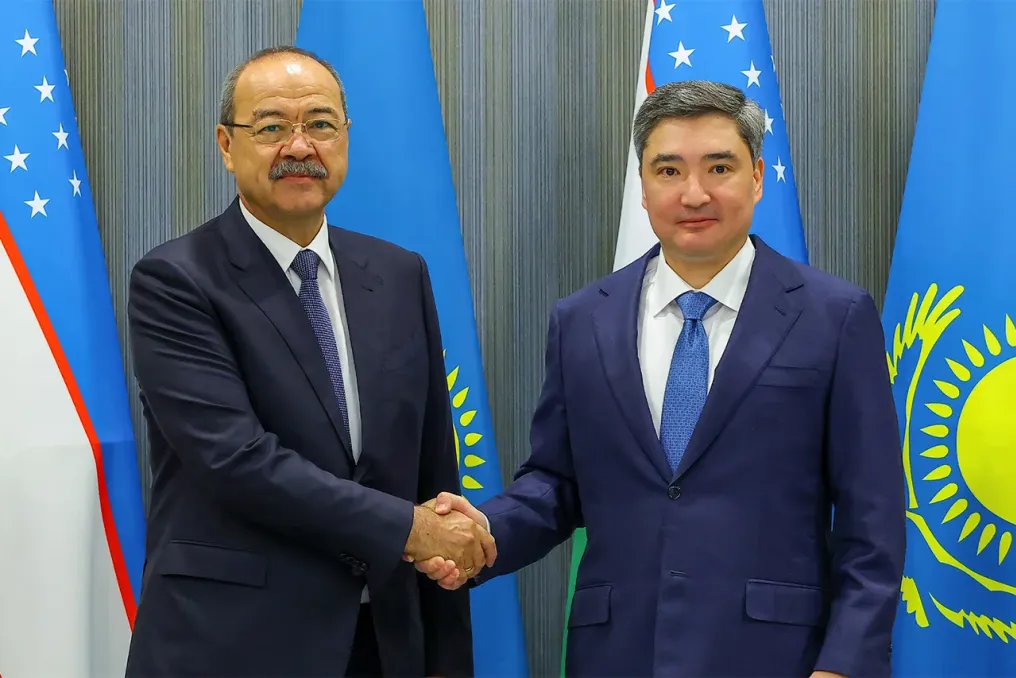
The First Minister of Uzbekistan, Abdullah Aripov, and the First Minister of Kazakhstan, Olzhas Bektenov, held the twenty-third meeting of the Joint Intergovernmental Commission on Bilateral Cooperation in Aktau. At this meeting, they reviewed the progress of previously reached high-level agreements and determined priority areas for further interaction, according to the press service of the Government of Kazakhstan.
According to Bektenov, cooperation between Kazakhstan and Uzbekistan continues to actively develop thanks to the political dialogue between the Presidents of Kazakhstan, Kassym-Jomart Tokayev, and the President of Uzbekistan, Shavkat Mirziyoyev. He noted that this process serves as an example for the entire Central Asian region. The results of the state visit of the President of Kazakhstan to Uzbekistan last November confirmed the high level of trust between the two states.
Aripov emphasized that the meetings of the leaders of the two countries in Bukhara, Astana, and Turkestan set concrete tasks for the governments to deepen cooperation. He expressed readiness to ensure the implementation of these tasks, noting that the negotiations will contribute to the development of trade, investment, industry, transport, interregional connections, as well as cultural and humanitarian relations.
According to data from the Kazakh side, bilateral trade reached a volume of 4.8 billion US dollars in 2025. Furthermore, from January to May 2026, trade turnover increased by 37% compared to the previous year, amounting to 2.3 billion US dollars. Participants focused on implementing the Roadmap for Investment and Trade, which is valued at 7.8 billion US dollars. Projects under this roadmap are designed to diversify trade, expand product supplies, and attract new investments.
Industrial cooperation became another important topic of discussion. Currently, both countries are working on 80 joint projects worth more than 1.8 billion US dollars. Of these, 15 projects worth 227 million US dollars have been completed, creating about 5,000 jobs. Six other projects worth 102 million US dollars are in the implementation stage, and 59 initiatives totaling 1.5 billion US dollars are under consideration.
The First Ministers also analyzed the state of transport routes and logistics corridors. Railway freight transport between the countries increased by 16% in 2025, reaching 32.3 million tons. To increase transport volumes, the parties developed a joint action plan aimed at increasing the capacity of railway corridors from 35 to 60 million tons. Kazakhstan proposed modernizing cross-border railway infrastructure and opening additional border crossing points.
The meeting also highlighted positive trends in the use of Kazakhstan's maritime infrastructure and the development of road transport. Participants reported that the introduction of the E-Permit electronic foreign permit exchange system has allowed the number of permits to increase more than tenfold over the past four years, while reducing border crossing time from nine hours to 30 minutes.
The sides reaffirmed their commitment to continuing cooperation in water resource management, taking into account the interests of both countries. They also stressed the importance of expanding cultural and humanitarian ties, including joint efforts to include historical and cultural sites of Kazakhstan and Uzbekistan in the transnational UNESCO nomination 'Great Silk Road: Fergana-Syr Darya Corridor.'
Following the expanded format of the meeting, the sides agreed to strengthen cooperation in industry, transport, transit, and other sectors of the economy. Aripov and Bektenov signed the protocol of the twenty-third meeting of the Joint Intergovernmental Commission on Bilateral Cooperation.