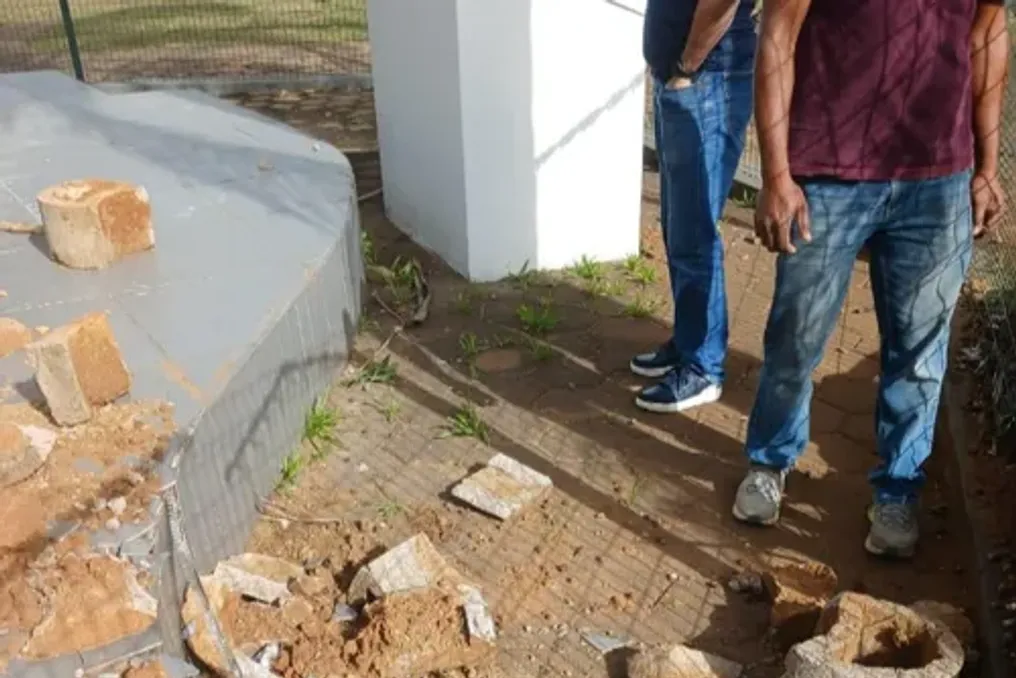
The 1860 monument in Vereulam, which pays tribute to thousands of Indian indentured workers who arrived in South Africa in 1860, was found with extensive damage. This act of vandalism caused widespread resonance among community leaders and cultural advocates, who emphasized the importance of preserving the diverse heritage of South Africa.
Terraforce bricks were thrown into the fenced area around the monument, damaging the pedestal. Additionally, a locked gate was broken, and the area was littered with trash.
Anand Jairaj, the foundation president who played a key role in the design and creation of the monument several years ago, described the incident as 'deeply disrespectful' to the memory of those whose sacrifices laid the foundation for the cultural and economic landscape of KwaZulu-Natal. He stated that the monument represents more than just stone and metal, as it reflects the resilience, suffering, and contribution of the ancestors of the community, and seeing it damaged causes pain to the community.
He noted that the monument in Vereulam is an important place of memory that attracts visitors, including descendants of indentured workers and scholars wishing to honor the arrival of the first group of Indian workers in 1860. These workers endured harsh conditions working on sugar plantations and became an integral part of South Africa's social and economic development. Jairaj called on authorities to take immediate measures to ensure greater protection of heritage sites.
Dr. Rajendran Govender, commissioner of the CRL Rights Commission, called the vandalism 'deeply regrettable.' He stressed that monuments and heritage sites are the collective memory of a community, serving as symbols that preserve the stories, struggles, sacrifices, and contributions of the people who shaped society.
Govender added that attacking a heritage site is not only criminal property damage but also a display of disrespect for the history and identity of the community. He believes that protecting these places is a collective responsibility involving the government, communities, heritage bodies, and civil society.
Professor Bridge Maharaj, Vice President of the South African Hindu Maha Sabha, stated that the incident causes deep concern and should be viewed as more than mere vandalism. He emphasized that the 1860 monument in Vereulam is a powerful symbol of the struggle, sacrifices, and achievements of the indentured workers who helped build the social, cultural, and economic foundations of the country. Maharaj condemned the deliberate damage, including the destruction of part of the pedestal, the breaking of the locked gate, and the scattering of trash, as a blatant act of disrespect to the chapter of South African history.
He also drew attention to serious concerns regarding the protection of heritage sites across the country and called on law enforcement agencies to conduct a thorough investigation. Simultaneously, he urges the public to recognize the importance of preserving heritage and report any acts of vandalism.
Selvan Naidu, director of the 1860 Heritage Centre, reminded that the call to commemorate the history of long-marginalized people was voiced in Nelson Mandela's speech at the Heritage Day in 1997. Naidu noted that the recent vandalism attempts to erase the presence and memory of the people, which is analogous to denying this history during the times of colonialism and apartheid, and urged authorities to act quickly to hold those responsible accountable.