During the release of the last fiscal quarter's financial results, Microsoft CEO Satya Nadella reiterated the company's commitment to enhancing the quality, fundamentals, and security of the Windows operating system.
During the release of the last fiscal quarter's financial results, Microsoft CEO Satya Nadella reiterated the company's commitment to enhancing the quality, fundamentals, and security of the Windows operating system.
In his video conference, the executive stated that Microsoft is dedicating efforts to make Windows superior for the user, implicitly referring to Windows 11. He declared: 'In Windows, we are investing to ensure the best quality and fundamentals, in addition to ensuring it is the best environment for running cutting-edge AI.'
Nadella added that he sees a great opportunity for Windows to establish itself as the primary destination for limitless intelligence, combining robust computational capacity on the device itself with security compatible with enterprise standards.
Although the statement was brief and ceremonial, it corroborates the perception that Windows 11 has structural flaws that require correction. However, the text points out that between 2024 and 2025, Microsoft seems to have given greater priority to integrating Artificial Intelligence features into the system over necessary adjustments.
In April 2026, Microsoft itself had indicated that Windows 11 needed several improvements, suggesting an excess in the insertion of AI features into multiple parts of the operating system. Satya Nadella's comment gains relevance in this context, as he confirms the continuous focus on AI development in Windows 11, but by mentioning the 'fundamentals,' he also signals the search to improve what already exists in the system.
Since April, various enhancements have been introduced or are in the process of being implemented in Windows 11. Among the recent examples cited, the mobile Taskbar functionality stands out, which returns a feature from previous versions of the system, and Cloud Rebuild, which acts as a useful recovery mode for Windows 11.
Additionally, Microsoft has been working on refining the internal search function of Windows 11. The company is also in the process of removing old Windows 11 interfaces, some of which refer to the Windows 95 design. Another recently launched, albeit minor, feature is Screen Tone in Windows 11.
The author of the text emphasizes that it is still premature to celebrate these advances, given Microsoft's reputation for making wrong decisions. However, visible progress is recognized. A notable detail is that Nadella refers generically to 'Windows,' and not specifically to 'Windows 11,' raising the possibility that the final result of these improvements may be reserved for a future version, such as the hypothetical 'Windows 12.'
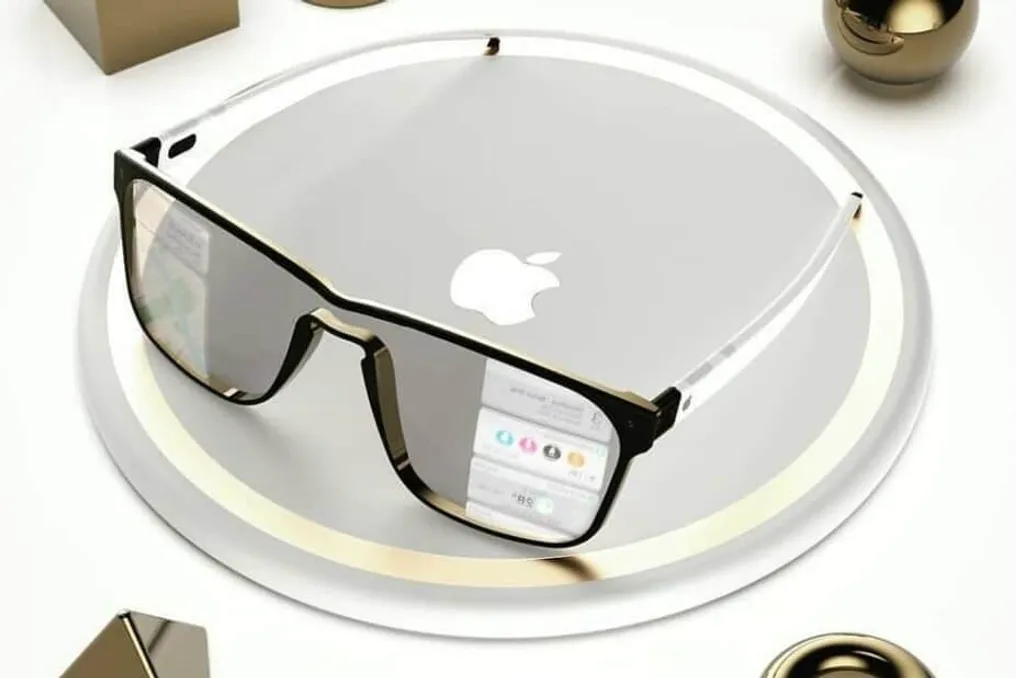
Apple has chosen to postpone the debut of its first smart glasses with the goal of improving product development and reviewing privacy issues. The initially scheduled date for the second half of this year has been changed, and it is now considered a possible reveal during WWDC, an event focused on the company's developers, which will take place in June of next year.
This decision comes amid growing alarm over discreet recordings made by similar devices, notably Meta's smart glasses, developed in collaboration with Ray-Ban. The company led by Tim Cook is currently evaluating various mechanisms to mitigate fears of misuse of cameras and consequently raise consumer confidence.
The project, which uses the internal code name N50, does not yet have a set date for reaching stores, although there is an expectation that its commercialization will occur before the end of 2027. This information was shared by Bloomberg journalist Mark Gurman and was also cited in reports attributed to CNET.
Apple's main concern lies in the use of cameras in public spaces. Criticisms directed at Meta's models highlighted the risk of recordings being made without nearby people knowing, in places such as beaches, restaurants, gyms, and public roads.
Among the solutions the company is considering is the implementation of a physical indicator that signals when the camera is operational. This approach would follow a model similar to the one adopted by Meta, which uses an LED light to alert those present that the device is capturing images.
Additionally, Apple is said to have investigated the feasibility of launching a camera-less version. Another alternative examined would involve keeping the sensor exclusively to power Siri's artificial intelligence functionalities, without allowing photo or video capture. However, this latter hypothesis is expected to have fewer chances of progressing, given that recording everyday moments is considered one of the major attractions of this type of device.
The N50 glasses are expected to operate as an extension of the iPhone, providing quick access to functions such as sending messages, making phone calls, and playing music. Siri, equipped with artificial intelligence features, will be the main point of interaction between the user and the hardware.
The cameras will also play a relevant role in interpreting the surroundings. The device may offer assistance in situations such as route guidance during travel or identifying elements visible to the user, such as animals and buildings.
According to the data released about the project, Apple plans to avoid the facial recognition feature, concentrating artificial intelligence processing directly on the device itself. This strategy aims to reduce the amount of data transmitted to external servers and lower potential risks associated with personal data exposure.
Apple's future glasses may feature various frame configurations. Larger models, with rectangular or oval designs, are being evaluated, as well as more compact versions with circular or oval shapes.
It is expected that the battery will provide enough autonomy to cover usage throughout a full day. The product will be designed as a complement to the mobile phone, intended for quick interactions and real-time information access.
Although Apple has not officially confirmed the launch, the delay suggests that the company seeks to refine the technology before entering a market characterized by uncertainties regarding public acceptance and privacy.
NASA plans to launch the CAPSTONE 02 mission in 2027. This mission will involve sending two small spacecraft to the lunar region to investigate how space vehicles behave when subjected to the combined gravitational force of the Earth and the Moon.
The project aims to validate various operational techniques, including formation flying, communication, and spatial orientation, in a scenario that cannot be completely replicated on Earth. The collected data will serve as a basis for future lunar exploration activities.
The probes will be manufactured by Terran Orbital Systems, Inc. They will operate close to each other in lunar orbit, exchanging functions during experiments to evaluate different control and positioning approaches.
CAPSTONE 02 will be the second mission within the CAPSTONE program. Its focus is to expand the understanding of cis-lunar space, which is the area simultaneously affected by both terrestrial and lunar gravity.
During the course of the mission, the two spacecraft will need to execute coordinated maneuvers. To do this, they will use navigation based on celestial observations, optical sensors, and information obtained from ground telescopes. These resources will enable the analysis of how the vehicles maintain their relative positions and navigate in trajectories known as three-body orbits.
NASA emphasizes that the tests conducted are directly related to future Artemis missions, where navigation systems will be crucial for operations involving spacecraft rendezvous. The agency stressed that the ability to transport crews between the lunar surface and orbit depends on the reliability of these systems under real space flight conditions.
Furthermore, the mission contributes to the development of commercial services and infrastructure around the Moon. According to Sean Fuller, NASA's Moon Base CAPSTONE program manager, this initiative represents an advancement in the capabilities required for future lunar activities.
Prior to CAPSTONE 02, the first mission of the program was launched in 2022. This small spacecraft, comparable in size to a microwave oven, tested communication technologies and pioneered the demonstration of a three-body orbit around the Moon.
The preceding flight used an orbit called a near rectilinear halo orbit, which is considered stable due to the approximate balance between the gravitational forces exerted by the Earth and the Moon. The results of this initial experience provide the foundation for the new tests planned for the next mission.
OpenAI announced on Friday, the 31st, that its artificial intelligence platform has surpassed the one billion active user mark and now serves over two million companies. This milestone was reached after the company implemented a reduction in the costs of some models in the GPT-5.6 series.
The company justified the price reduction with internal efficiency gains, which resulted in lower operating costs, enabling it to offer AI tools at a more accessible price. The changes primarily affected the GPT-5.6 Luna and GPT-5.6 Terra models, while the GPT-5.6 Sol maintained its original price.
This strategic move occurs amid growing competition in the artificial intelligence market, where other companies are reassessing their investments in the technology and seeking lower-cost solutions. OpenAI stated that the goal of this tariff reduction is to encourage new applications of AI.
OpenAI implemented an 80% cut in the price charged for GPT-5.6 Luna and a 20% discount on GPT-5.6 Terra. With these modifications, Luna is now priced at US$ 0.20 per million input tokens and US$ 1.20 per million output tokens, compared to previous values of US$ 1 and US$ 6, respectively. GPT-5.6 Terra saw its fee drop to US$ 2 per million input tokens and US$ 12 per million output tokens, down from US$ 2.50 and US$ 15.
GPT-5.6 Sol, presented by the company as the most sophisticated model in the family, had no change in its price. The company clarified that these discounts were made possible by improvements gained during system development, including the use of AI itself to optimize production software and refinements in the response generation process, known as speculative decoding.
According to OpenAI, these adjustments led to a 20% reduction in end-to-end operating costs and increased token production efficiency by over 15%. Furthermore, the company highlighted improvements in the context management of GPT-5.6 Sol, which raised its performance on the ARC-AGI-3 test from 13.3% to 38.3%, using six times fewer output tokens.
Addressing pricing policy, OpenAI stated that the decrease expands the range of economically viable tasks with artificial intelligence, declaring in a statement: 'When the cost of useful intelligence drops, more work becomes worthwhile.'
The price change happens in an environment of greater caution from corporate clients, who have questioned substantial investments in artificial intelligence without a clear projection of financial return. According to The Wall Street Journal, Sam Altman, CEO of OpenAI, admitted that the cost of services was becoming a barrier for some business users.
Competition also influenced this decision. OpenAI spent weeks analyzing the possibility of lowering tariffs, considering the emergence of more economical models offered by rivals, such as Anthropic, and by open-source Chinese systems. The company compared its new values with those practiced by competitors and noted that Anthropic's Claude Sonnet 4.6 costs US$ 3 per million input tokens and US$ 15 per million output tokens, placing it above the new range of GPT-5.6 Terra.
Beyond user base growth, OpenAI reported that the volume of interactions increases over time. The company informed that six months after registration, users send about 50% more messages daily and use ChatGPT for approximately double the types of tasks.
The company also highlighted the advancement in the use of artificial intelligence agents in software development. Data released by OpenAI shows that agents operated by Codex, a programming-focused tool, account for 99.8% of the output tokens consumed internally by the company weekly. Despite this expansion, the financial indicators presented in the text indicate that the organization still operates at a loss, with revenues of US$ 13.07 billion in 2025 and a negative result of US$ 38.5 billion in the same period, according to the American newspaper.