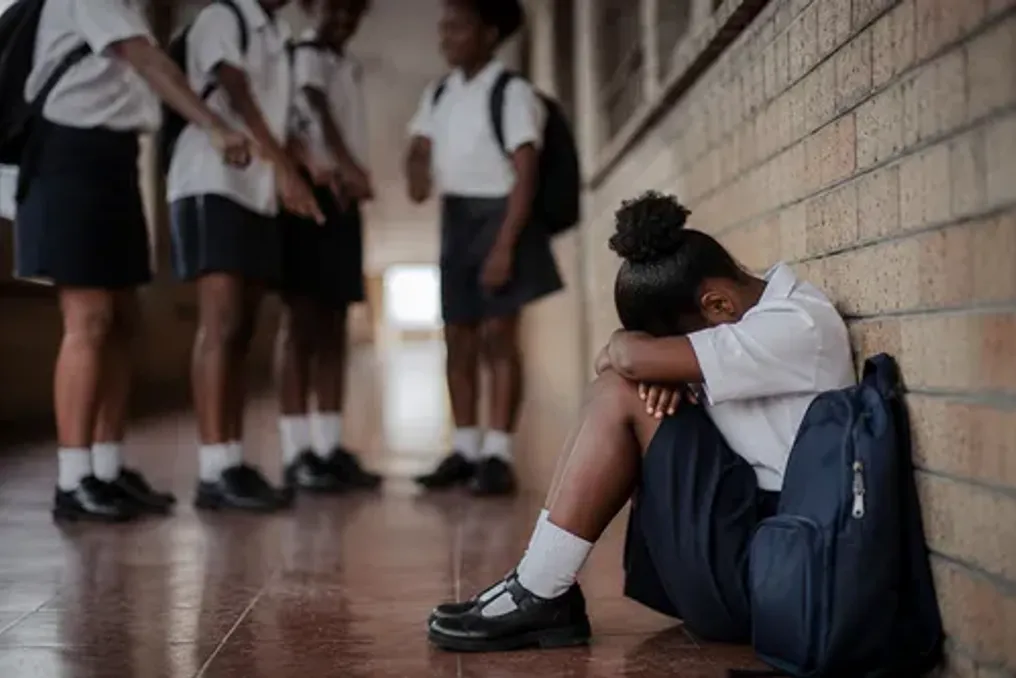
Every school day, thousands of children in South Africa arrive in classrooms where the learning process is overshadowed by fear, violence, and intimidation. As the issue of bullying continues to plague schools across the country, legal experts warn that educational institutions and provincial departments of education could face costly civil lawsuits if they ignore repeated warning signs, resulting in harm to students.
The scale of the problem is reflected in data published by provincial departments of education. In Gauteng, 1079 cases of bullying were registered in 2025, while the Western Cape recorded 149 incidents, a 28% increase from the previous year. The Eastern Cape provincial department of education reported that over 3400 students were affected by bullying during the year.
A new analysis conducted by Teneo Online School showed that searches for 'school bullying' increased by 202% in the week after classes resumed in the third semester on July 21st. Search interest remained relatively stable during the winter holidays before sharply rising, reaching about 1000 queries during the month when students returned to school.
Against this backdrop, Kirstie Haslam, partner and trauma specialist at DSC Attorneys, stated that schools have a legal obligation that extends beyond purely educational activities. According to her, the law does not require schools to prevent every instance of bullying, but it obligates them to act reasonably as soon as they know or should have known about a risk to a child. The key legal question almost always revolves around whether warning signs were recognized and action was taken in response.
Haslam noted that although bullying-related litigation remains relatively rare compared to medical malpractice or road accident cases, she observes growing parental awareness of schools' legal duties towards students. Many parents initially seek legal advice not to file a lawsuit, but because they feel their repeated complaints are not being taken seriously. Increasingly, they want to understand what obligations schools have when bullying becomes persistent or when warning signs are ignored.
She emphasized that the legal landscape has changed as South African courts increasingly reinforce the duty of care that schools owe to their students. In her view, South African courts have strengthened the principle that schools must care for students and can be held liable if reasonable steps are not taken to prevent foreseeable harm. With growing parental awareness, she expects to continue seeing increased legal scrutiny in cases where schools remain inactive despite repeated complaints or clear warning signs.
Haslam also cited court rulings, including the case of Mageni v Western Cape Department of Education, where the department was found liable after a student was seriously harmed by another student with a known history of violence; the case of MEC for Education v Rabie, which confirmed the school's duty to properly supervise students; and the case of M.M v Mpumalanga Provincial Department of Education, where the education authorities admitted negligence after a student was fatally stabbed at school.
She added that bullying can also have criminal consequences depending on the circumstances. If bullying involves acts such as assault, sexual violence, intimidation, malicious property damage, or distribution of explicit images, criminal charges may apply. A civil suit can also arise if a student suffers physical or psychological harm, and it can be proven that the school or education department negligently failed to protect them despite a foreseeable risk.
Haslam explained that schools and education departments found guilty can face claims for past and future medical expenses, psychological treatment, rehabilitation costs, compensation for pain and suffering, permanent disability, and, in severe cases, loss of future earning capacity. Ultimately, the financial consequences often confirm why early intervention is far less costly than addressing the aftermath of serious injury.
While legal experts speak of potential increased school liability, educators argue that schools must also be adequately equipped to meet these legal obligations. Lorvika Matthews, a representative of the National Association of Teachers in South Africa (NAPTOSA), stated that accountability is appropriate where schools ignore repeated reports of bullying. She stressed that whenever repeated reports are disregarded or proper procedures are not followed, accountability is fully justified. In her opinion, every report of bullying must be taken seriously and addressed immediately.
However, she insisted that responsibility must be distributed throughout the education system. Provincial departments of education are responsible for ensuring that schools are adequately resourced to meet their legal obligations, while parents and communities must also play a role in preventing violence and promoting positive behavior. Matthews pointed out that schools need clear protocols, timely support from departments, sufficient staffing, and access to specialists, including counselors, psychologists, and social workers. She noted that teachers cannot simultaneously fulfill the roles of educator, counselor, psychologist, and social worker without appropriate training and support.
Furthermore, she stated that bullying remains a symptom of broader societal issues. Bullying persists because it reflects wider social challenges, rather than being an issue that begins and ends at the school gates. Schools are often mirrors of the communities they serve. Students are exposed to violence, crime, poverty, inequality, family conflict, and harmful social norms, including machismo culture, which normalizes aggression as a means of asserting power. Cyberbullying also extends the conflict beyond the classroom.
Matthews said that while schools have implemented anti-bullying policies and awareness programs, 'they cannot solve these problems in isolation.' She added that parents, families, and communities bear a critical responsibility for demonstrating respectful behavior, while schools themselves require significantly more support.
The rise in concern over bullying is also reflected in how parents seek information. Tarin Yanks, Marketing Director at Teneo Online School, suggested that the trend in bullying search queries reflects the anxiety felt by many parents as children return to school. She noted that the surge in searches specifically at the beginning of the academic year indicates that the start of the semester might be a moment of real anxiety, not just apprehension. For a bullied child, the holidays end, and the horror begins again.
She strongly urged parents and schools to create safe spaces where children can speak openly. The most powerful thing a parent or school can do at this time of the calendar is to start the conversation early, ask how the child truly feels about returning, and create safety for them to be honest. Bullying depends on the child's silence. The most protective thing we can offer, whether in a physical school or a well-controlled online class, is an environment where the young person truly feels able to speak up and be heard.
Highlighting this issue during Mental Health Awareness Month, Tina Tiart, trustee and co-founder of 1000 Women Trust, described bullying as a 'growing crisis' and a 'national emergency,' warning that it contributes to worsening mental health among youth. She stated that bullying in South African schools is a growing crisis and a national emergency. Nearly 40% of students experience some form of bullying, and one in three adolescents is subjected to cyberbullying, which is a major contributor to poor mental health and can increase the risk of suicide among young people. Tiart called on the government and civil society to prioritize bullying prevention.
She strongly urged schools to strengthen their anti-bullying response measures and mental health services. 1000 Women Trust also calls on South African schools to adopt victim-centered anti-bullying policies and strengthen mental health services to address this issue urgently. Citing the Centers for Disease Control and Prevention, Tiart noted that bullying is recognized as a major risk factor for suicidal behavior and emphasized that prevention must be a shared responsibility of schools, families, and communities. She called for urgent action to address the destructive link between bullying and youth suicide.
For Haslam, the question ultimately boils down to one legal point: the law does not require schools to prevent every instance of bullying, but it requires them to act reasonably as soon as they know or should have known about a risk to a child. The legal question almost always revolves around whether warning signs were recognized and action was taken in response.
The Department of Basic Education has also acknowledged the growing prevalence of bullying. During a briefing in February 2026 before the Parliamentary Committee on Basic Education, the department reported that Gauteng continues to record an increase in reports of physical, verbal, and cyberbullying, placing significant pressure on schools and staff. It stated that the province is finalizing a Bullying Strategy aimed at strengthening prevention, intervention, and accountability, urging schools to respond promptly to incidents of bullying and violence.
}} , 3.