The tax authorities of Uzbekistan reported that 580,300 lease agreements were registered in the first half of 2026. These agreements generated 634.8 billion soms in accrued taxes, according to the Tax Committee.
The tax authorities of Uzbekistan reported that 580,300 lease agreements were registered in the first half of 2026. These agreements generated 634.8 billion soms in accrued taxes, according to the Tax Committee.
Of the total number of agreements, 403,400 were concluded between private individuals. The personal income tax accrued under these agreements amounted to 491 billion soms.
Compared to the same period last year, the number of registered agreements increased by 17.7%, and the amount of accrued taxes grew by 29.1%.
Additionally, 176,800 lease agreements were made between legal entities, which brought in 143.8 billion soms in accrued taxes. For the period from January to June 2025, the number of such agreements increased by 18.9%, and accrued taxes rose by 16%.
The Tax Committee also reminded property owners that income from renting housing to students is exempt from taxation. In the first half of 2026, the volume of this tax benefit reached 50.7 billion soms.
During the reporting period, over 82,400 registered agreements were concluded with students. The total number of students renting accommodation under registered agreements reached 111,964 people.
In the first half of 2026, Uzbekistan's airports demonstrated a 16% increase in passenger traffic. During this period, 64,831 flights were operated, which is an 8% increase compared to the same period last year. This information was provided by the press service of Uzbekistan Airports.
Of the total number of flights, 47,371 were directed to international destinations, and 17,460 were domestic. The total number of passengers served over six months reached 8,153,470 people, with international flights covering 6,698,358 passengers and domestic flights covering 1,455,112. Additionally, the volume of cargo and mail processed amounted to 51,546 tons, which is 33% more than in the first half of 2025.
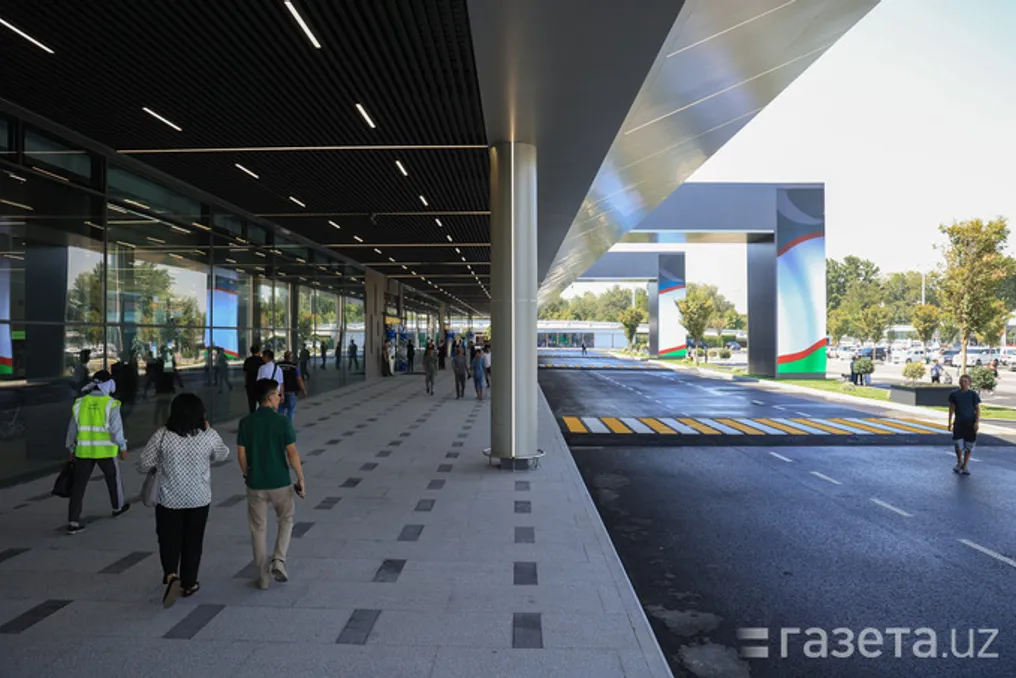
Tashkent International Airport became the leader in transport volumes. It served 40,283 flights (an increase of 7%), accommodated 5,364,282 passengers (an increase of 17%), and handled 48,170 tons of cargo and mail (an increase of 33%). The company attributes this growth of the capital airport to the expansion of its route network.
Significant growth in passenger traffic was also observed at Termez (a 52% increase), Urgench (a 24% increase), and Nukus (a 23% increase). These positive trends are due to the opening of new international routes and an increase in domestic flights during the tourist season.
Some airports recorded a decrease in indicators. Specifically, Fergana airports saw 11% fewer flights, Namangan reported an 11% decrease in passenger traffic, Karsh experienced a 6% reduction in flights and a 22% decrease in passenger traffic, and Navoi saw a 27% decrease in passenger traffic. Uzbekistan Airports explained this change by the structure of the route network, adjustments in demand in certain directions, and the impact of the current geopolitical situation, which led to schedule revisions.
Uzbekistan authorities are intensifying the privatization process, seeking ways to restore production capacities. In the near future, over 1,300 real estate objects, thousands of hectares of land, and state shares in several companies will enter the market.
During a video selection meeting dedicated to the results of socio-economic development in the first half of the year and determining priority tasks until the end of the year, it was noted that since the beginning of the current year, 57 industry and 76 regional enterprises have reduced their production volumes. This has resulted in the economy losing potential revenue of almost 11 trillion soums.
In light of the current situation, the Deputy Prime Minister was instructed to conduct an analysis of enterprise activities every ten days jointly with region governors and industry heads. It was emphasized that solving business problems must be done directly at the local level without delays.
The Industrial Council was tasked with developing proposals to help compensate for the production decline at 133 enterprises and restore production worth 11 trillion soums.
Special attention was paid to the privatization of state property. Currently, about 3,000 state assets worth a total of 22 trillion soums have been listed on electronic auctions. Nevertheless, regional authorities criticized the insufficient efficiency of state property sales.
A new privatization program will soon begin. According to the plan, the state intends to put 1,300 real estate objects worth approximately 100 trillion soums, 8,000 hectares of land plots, and state shares in 66 enterprises up for auction.
To stimulate business interest, the acquisition conditions have been eased: the initial advance payment amount has been reduced from 30% to 15%, and the remaining amount can be repaid in installments without interest charges.
Furthermore, the president previously criticized the work of local banks and warned of possible personnel changes.