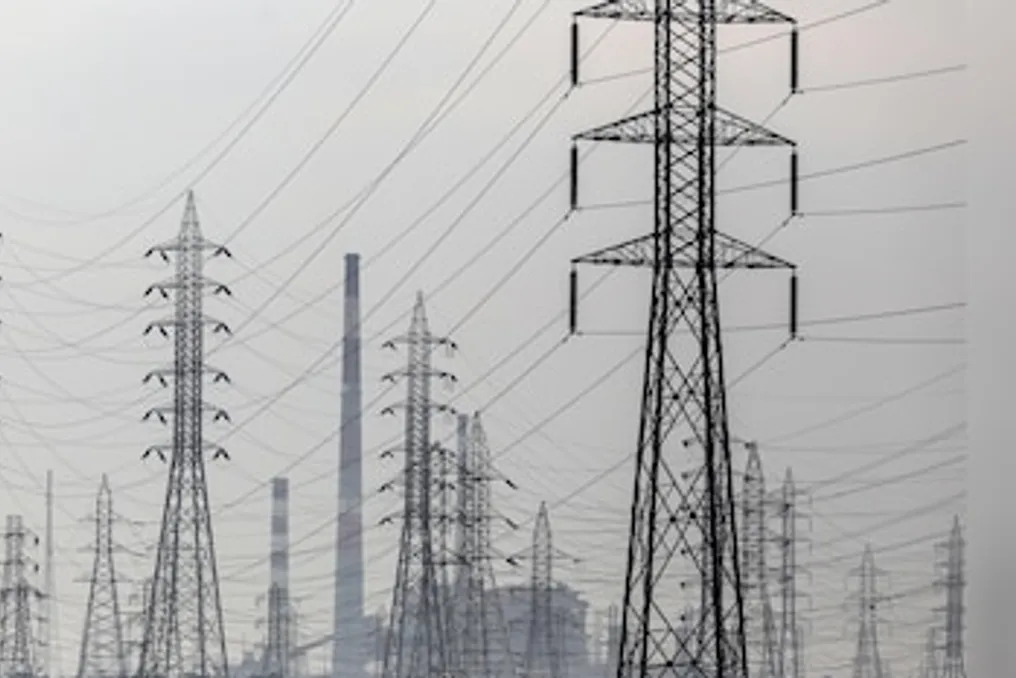
The Adani Group conglomerate presented proposals to the government of Odisha for the construction of two nuclear power plants, each with a capacity of 2800 megawatts, as well as an ultra-supercritical thermal power plant and a series of pumped storage energy projects, the total cost of which is estimated at approximately 1.5 trillion rupees.
If these proposals are approved, they will become one of the largest private investments in Odisha's energy sector and position the state at the center of India's next phase of nuclear energy expansion.
A delegation from Adani Group, led by Subrata Tripathi, President of Business Development at Adani Ports and SEZ, presented its proposals to Kanak Vardhan Singh Deo, Deputy Minister and Minister of Energy, in Bhubaneswar on Friday, according to officials.
The proposed investment package includes two nuclear power plants with a total capacity of 5600 MW, a thermal power plant with a capacity of 2400 MW, and numerous pumped storage projects to ensure reliable 24/7 power supply and support the integration of renewable energy sources. The state government has already approved Adani's 1.8 gigawatt pumped storage project in Nayagarh district.
The company forecasts that these projects together will create over 22,000 direct and indirect jobs and significantly increase power generation capacity in Odisha.
Officials noted that this is the second proposal for nuclear projects from a private company received by the state. Besides Adani, Tata Power has also offered to build a nuclear power plant in Malkangiri district, and NTPC has expressed interest in investing in the state's nuclear energy sector.
A senior official from the Department of Energy told Business Standard that 'the Adani proposal will undergo detailed discussion on project technical feasibility, land availability, regulatory clearances, environmental clearances, and implementation timelines before a final decision is made.'
The nuclear proposal is significant as it is one of the first major investment plans announced after the enactment of the Sustainable Use and Promotion of Nuclear Energy for Transformation of India Act (SHANTI Act), 2025, which opened India's civilian nuclear sector to regulated private participation.
This legislation is a key pillar of the Central Nuclear Energy Mission, which aims to achieve a nuclear power capacity of 100 GW by 2047, compared to India's current installed capacity of less than 10 GW.
The proposal comes at a time when Odisha is becoming one of India's fastest-growing industrial hubs. The state has attracted proposals for large steel plants, aluminum projects, green hydrogen facilities, and hyperscale data centers, all of which require reliable 24/7 power supply.
Adani Group is continuously strengthening its energy portfolio through thermal power, renewable energy, transmission networks, pumped storage projects, and green hydrogen initiatives. The company is also exploring nuclear energy opportunities in Gujarat and Madhya Pradesh. Nuclear energy will provide the group with a stable source of carbon-free base load power, complementing its rapidly growing renewable energy business.
Senior officials present at the meeting included Vishal Kumar Deva, Additional Minister of Energy, Bhaskar Jyoti Sarma, Chairman and CEO of Odisha Power Transmission Corporation Ltd (OPTCL), and Satyapriya Rat, Managing Director of GRIDCO.