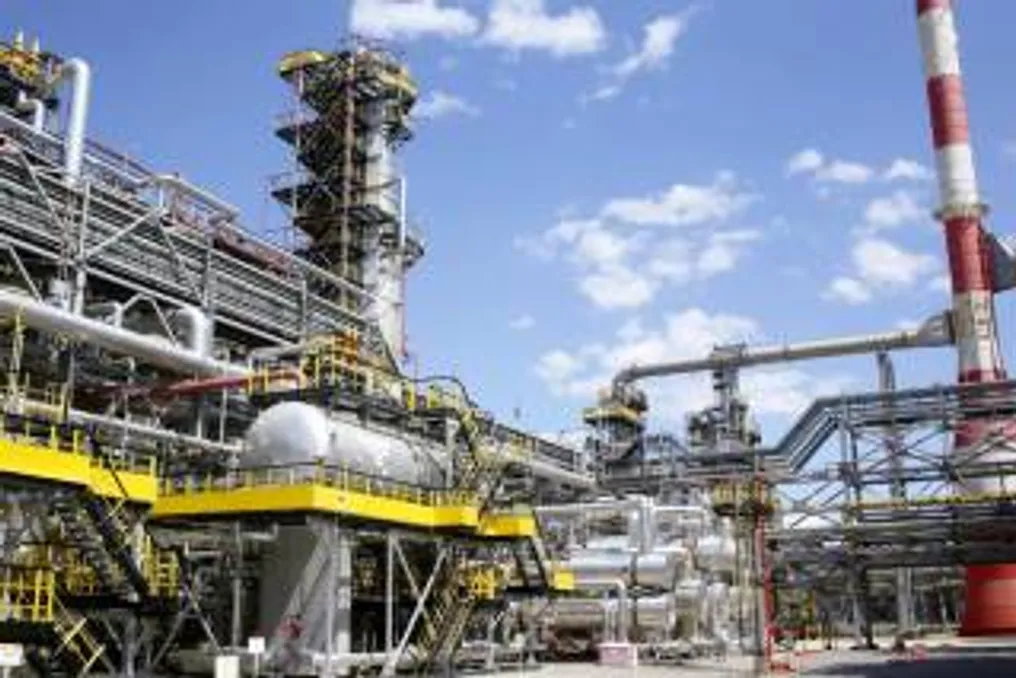
Strikes by the Armed Forces of Ukraine on Russian oil refineries located at a distance have caused serious damage in a vital sector of Russian industry. The total damage is estimated at approximately 12 percent of the total production volume.
Strikes by the Armed Forces of Ukraine on Russian oil refineries located at a distance have caused serious damage in a vital sector of Russian industry. The total damage is estimated at approximately 12 percent of the total production volume.
According to a report by the Financial Times, based on data and satellite intelligence analysis from S&P Global, as of July 27, only eight facilities among 26 damaged and closed oil refineries have fully restored operations: the Omsk plant, 'Taneko' in Tatarstan, 'Gazpromneftkhim Salavat' in Bashkortostan, 'Ufa-neftekhim', 'Permnefteorgsintez', Novoufimsky, Ukhtinsky, and Antipovsky plants.
Other facilities are in various states: eleven plants have partially restored production, while seven plants are not operating at all. Among these facilities are 'Kinef' and 'Rosneft' in the Leningrad region, which are considered the second most significant oil refineries in the country, as well as plants in Tuapse, Sizran, Kuibyshev, and Novokuibyshev.
The leaders among the ten largest oil refineries in Russia by production volume—the plants in Ryazan, Nizhny Novgorod, and Volgograd—were only able to restore half their operations, while the Moscow oil refinery was only able to restore one-third of its operations.
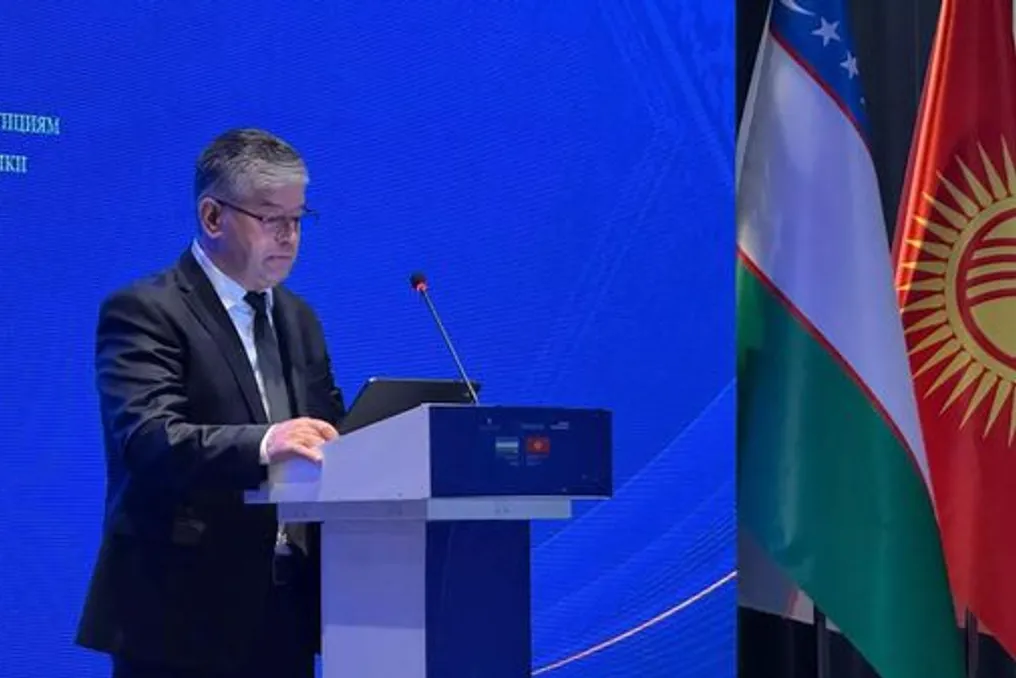
Ravshanbek Sabirov, head of the National Investment Agency of Kyrgyzstan, announced at the Kyrgyz-Uzbek business forum in Bishkek the countries' intention to increase mutual trade volume to $2 billion.
According to Sabirov, achieving this goal will be done through joint production and investment projects between Uzbekistan and Kyrgyzstan. He emphasized that developing industrial cooperation and accessing third-country markets through joint ventures will help increase trade turnover.
Sabirov noted that Uzbekistan is one of Kyrgyzstan's key strategic partners in the field of investment. Kyrgyzstan is interested in attracting Uzbek investors to projects in sectors such as energy, agro-industrial complex, construction, pharmaceuticals, digital economy, and services. One of the priority areas named is the creation of clusters for joint production and industrial sites.
One practical example of cooperation is the trade and logistics center created on the border of the Jalolobod and Namangan regions. Ulanbek Maksimbekov, CEO of 'Kyrgyz Eco Export', reported that over 12 thousand square meters of facilities have been built in this center, and roads, bridges, and electrical networks have been laid.
Based on this project, it is proposed to create a small economic zone. Initially, it will function as a trading platform, and subsequently, the placement of joint ventures and production capacities is planned. Maksimbekov added that negotiations are currently ongoing between the two parties, and the new center is intended to expand direct contacts between entrepreneurs from Namangan and Jalolobod.
The volume of non-performing loans (NPL) in the banking system of Uzbekistan continues to grow. According to data from the Central Bank, by the end of the first half of 2026, the volume of such loans reached 22.9 trillion sums. This figure is significantly higher than 18.1 trillion sums at the beginning of the year, an increase of 27 percent.
Although the growth of the credit portfolio is considered a natural process, the faster rate of increase in non-performing loans raises concerns within the banking system. Over six months, the total credit portfolio grew from 604 trillion sums to 643 trillion sums, representing an increase of 6.4 percent. Meanwhile, non-performing loans grew almost four times faster—by 27 percent.
The share of non-performing loans in the total credit portfolio has also increased. If this indicator was 2.99 percent at the beginning of the year, it reached 3.57 percent by the end of the half-year period. Analysts note that the majority of non-performing loans are concentrated in state-participating commercial banks. The volume of NPL in these banks increased from 12.8 trillion sums to 16.4 trillion sums over six months. This means that almost 72 percent of all non-performing loans in the country's banking system are concentrated specifically in state banks.
As a result, the share of non-performing loans in state banks rose from 3.17 percent to 3.89 percent. At the same time, the situation in banks with private and foreign capital remained relatively stable, with the NPL share increasing from 2.62 percent to 2.95 percent.
In terms of relative growth, the largest increase was recorded at TBC Bank, where the share of non-performing loans increased from 5.71 percent to 12.12 percent, becoming the highest in the system. Microcreditbank also demonstrated an increase in the NPL share from 4.41 percent to 7.86 percent, surpassing others in absolute volume of non-performing loans, which increased by almost 900 billion sums over six months.
Despite the overall trend of growth, some banks managed to improve the quality of their credit portfolio. The most significant positive changes were observed at Poytaht Bank, where the share of non-performing loans decreased from 24.40 percent to 7.32 percent. Kapitalbank reduced the volume of non-performing loans by almost 200 billion sums, bringing the NPL share down from 2.81 percent to 2.14 percent. Ipoteka Bank achieved a reduction in the volume of non-performing loans by 163 billion sums. Indicators also decreased at Hayot Bank (from 3.96 percent to 2.68 percent) and Ziraat Bank Uzbekistan (from 3.86 percent to 2.96 percent).
Furthermore, the share of non-performing loans remained at 0 percent in KDB Bank Uzbekistan and Octobank. Uzumbank, ApexBank, and Open Bank were among the banks with the lowest NPL rates, at 0.01 percent, 0.04 percent, and 0.35 percent, respectively.
In summary, the half-year results show that alongside the increase in lending volume, strengthening control over debt quality is required. Especially in state-participating banks, the high rate of growth of non-performing loans requires improving risk management mechanisms, credit assessment, and borrower engagement. Nevertheless, the successful experience of some banks in revitalizing their credit portfolios demonstrates the existence of effective approaches in this area.