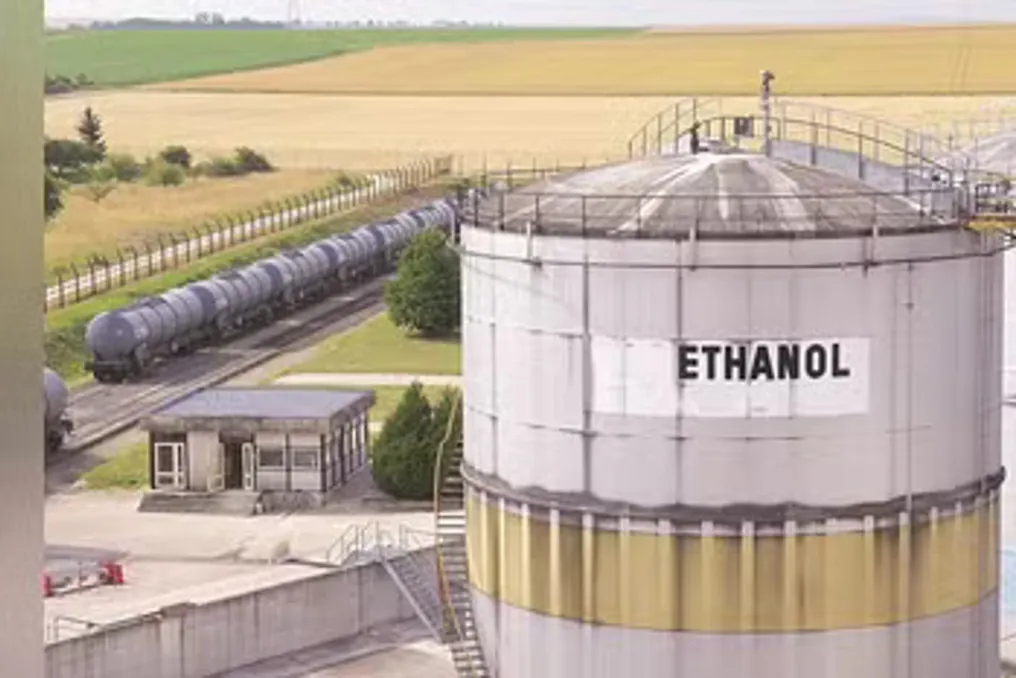
The Ministry of Petroleum stated on Friday that if India did not implement the ethanol blending program, gasoline in Delhi would cost around 125 rupees per liter when global crude oil prices reached $135 per barrel.
The Ministry of Petroleum stated on Friday that if India did not implement the ethanol blending program, gasoline in Delhi would cost around 125 rupees per liter when global crude oil prices reached $135 per barrel.
The Federal Public Prosecutor's Office (MPF) has filed a lawsuit seeking an injunction to prevent the implementation of the new composition of Brazilian gasoline, which involves a higher addition of ethanol to the mixture. Through a public civil action, the body seeks to suspend the governmental determination that raised the mandatory percentage of ethanol in gasoline from 30% (E30) to 32% (E32).
The request aims to keep the change suspended until detailed technical studies are conducted to confirm the safety of the new fuel for vehicles circulating in the country, thereby ensuring consumer protection and clarity in energy guidelines.
The core of the challenge presented by the MPF lies in the adopted procedure. The National Council of Energy Policy (CNPE) allegedly approved this modification on July 14th without conducting adequate impact analysis or presenting scientific proof that the measure is applicable to the national fleet.
The action argues that the Union used research data from the previous 30% blend, exploiting the existing 2% tolerance margin in those tests. However, the MPF points out that these studies were designed only to evaluate performance and drivability with E30, not to validate E32 as a definitive and compulsory standard.
According to the body, there is a lack of definitive evaluations regarding component longevity, emission levels, autonomy, and compatibility with the diversity of the fleet. Furthermore, the E32 specification includes up to 34% ethanol, a range that has also not been validated.
In practice, the action alleges that increasing the alcohol content can cause corrosion in metal parts, lead to premature wear of pumps, and generate failures in electronic injection systems, with the risks being most pronounced in motorcycles, older, and imported vehicles. The MPF considers that the State must be responsible for guaranteeing the safety of the product sold at gas stations, since the driver does not select the fuel according to their vehicle's design.
Anfavea also expressed concern, as it historically requires extensive engineering tests before allowing an increase in the amount of ethanol. Additionally, the MPF highlights a neglected environmental impact: even if ethanol helps reduce atmospheric pollution, accelerated wear of parts can result in faster disposal of materials such as metals, plastics, and rubbers, increasing the volume of automotive waste.
This discussion occurs shortly after the introduction of E30 itself. The 30% blend only came into effect on August 1, 2025, replacing E27, following tests conducted by the Mauá Institute of Technology and approval by the CNPE. Less than a year later, the government decided to advance to the next level, with E32 scheduled to begin on August 1, 2026, having an initial validity of 180 days, subject to extension.
The Executive Branch justifies the change as a strategy to decrease dependence on imported gasoline and achieve greater energy sovereignty, citing studies from the Mauá Institute that supposedly confirm the viability of E32 in light automobiles and motorcycles. The Future Fuel Law already authorizes reaching 35% (E35), provided its technical viability is proven, which is exactly the point the MPF contests.
Although the history of ethanol in India is largely associated with gasoline, biofuel is finding new applications, including aviation, industry, and clean cooking, which may determine its future development.
Road transport continues to account for the majority of global ethanol consumption. India achieved its target for blending ethanol into gasoline at 20 percent (E20) ahead of schedule. This program aims to reduce crude oil imports, decrease emissions, and support local agriculture.
Brazil remains the world leader in ethanol use. Gasoline sold in the country contains 27 percent anhydrous ethanol (E27), and its extensive fleet of flexible fuel vehicles can run on either hydrated ethanol (E100) or gasoline, allowing drivers to choose based on prices.
In the United States, E10 is the most common blend, while E15 is becoming increasingly available. E85, containing between 51 and 83 percent ethanol depending on the season, is sold for flex-fuel vehicles.
Other countries, such as Canada, Thailand, and Paraguay, have also adopted mandatory ethanol blending requirements as part of efforts to reduce fossil fuel consumption and support domestic bioethanol industries.
One of the fastest-growing areas is aviation. Unlike cars, airplanes cannot directly use ethanol or ethanol-blended fuel. Instead, ethanol derived from biomass such as corn and sugarcane is converted into Sustainable Aviation Fuel (SAF) through the Alcohol-to-Jet (ATJ) process.
This process involves a series of chemical reactions that produce SAF with characteristics similar to traditional Jet A fuel (ATF). The resulting fuel can be used in existing aircraft. India has also begun preparing for SAF as part of its overall aviation decarbonization strategy. In April 2026, the government amended the Jet Fuel Marketing Regulation 2001, including SAF-blended jet fuel under the scope of the ATF Control Order, thereby creating a regulatory framework for its adoption.
Several companies worldwide have commercialized or are scaling up the ATJ technology. LanzaJet, an American clean fuel producer, developed one of the world's first commercial ATJ production technologies, and its Freedom Pines Fuels plant in Georgia produces SAF from renewable ethanol. Another American firm, Gevo, is also developing ATJ-based production facilities using renewable ethanol as feedstock. Other technology developers, including Axens and Swedish Biofuels, are also advancing processes for converting ethanol into kerosene.
Ethanol is also used as a cleaner-burning fuel in industrial boilers and furnaces, replacing or supplementing fossil fuels such as heavy fuel oil and diesel. Industrial sectors, including food processing, pharmaceuticals, chemical industry, and distilleries, use ethanol for thermal process treatment, which helps reduce emissions and improve energy efficiency. Brazil is one leading example where sugarcane-based ethanol and other biofuels contribute to industrial energy needs.
Beyond manufacturing facilities, ethanol-based biofuel is already being used in parts of the hospitality sector, particularly for heating buffet dishes, catering services, and tabletop food warmers. These systems typically use denatured ethanol or ethanol-based gel fuel, which burns with minimal smoke, soot, or odor, making it suitable for indoor use in controlled environments. Ethanol is also widely used in portable camping and outdoor burners.
Ethanol has also become an alternative cooking fuel in some countries, especially in Africa, where it is promoted as a cleaner replacement for charcoal and kerosene. Unlike Liquefied Petroleum Gas (LPG), denatured ethanol is used in specially designed stoves. Kenya is one of the most prominent examples, where KOKO Networks created a distribution network supplying cooking ethanol through local fuel dispensers, making clean fuel accessible to urban households. Ethiopia promotes ethanol stoves through initiatives like Project Gaia, while similar programs in Nigeria are in the pilot stage, although implementation remains early.
India may soon add another application to its growing list of ethanol uses. According to a report by The Economic Times, the Union government is considering introducing ethanol as a cooking fuel, potentially positioning it as an alternative to LPG. The same report noted that several manufacturers have begun developing ethanol-compatible stoves and cooktops in anticipation of a possible policy decision.