An agreement on cooperation was signed in the city of Geneva, Switzerland, between the Agency for Technical Regulation and the international organization Better Cotton (BCI).
An agreement on cooperation was signed in the city of Geneva, Switzerland, between the Agency for Technical Regulation and the international organization Better Cotton (BCI).
A meeting took place in Geneva between Akmal Zhumanazarov, Director of the Agency for Technical Regulation, and Nick Wetherill, CEO of the international organization Better Cotton (BCI). During the negotiations, the parties discussed issues of sustainable development in the cotton spinning and textile industry in Uzbekistan.
The widespread adoption of international socio-environmental standards in the industry was also discussed, strengthening partnerships with cotton spinning and textile clusters, and applying environmentally conscious production principles.
During the meeting, opinions were exchanged regarding the improvement of the entire value chain—from raw material cultivation to finished textile production—in accordance with international requirements, as well as increasing the quality and competitiveness of goods.
Special attention was paid to the importance of international standards and conformity assessment mechanisms to increase the export potential of Uzbek cotton and textiles, expand opportunities for entering external markets, and eliminate technical trade barriers.
Following the discussions between the Agency for Technical Regulation and Better Cotton (BCI), a Memorandum of Cooperation was signed. It is expected that this memorandum will help bring international cooperation in the field of sustainable cotton farming to a new level, widely implement advanced foreign experience in the country, enhance the technical and institutional potential of the industry, strengthen the competitiveness of local producers in the global market, and reinforce the authority of Uzbekistan's cotton spinning and textile products on the international stage.
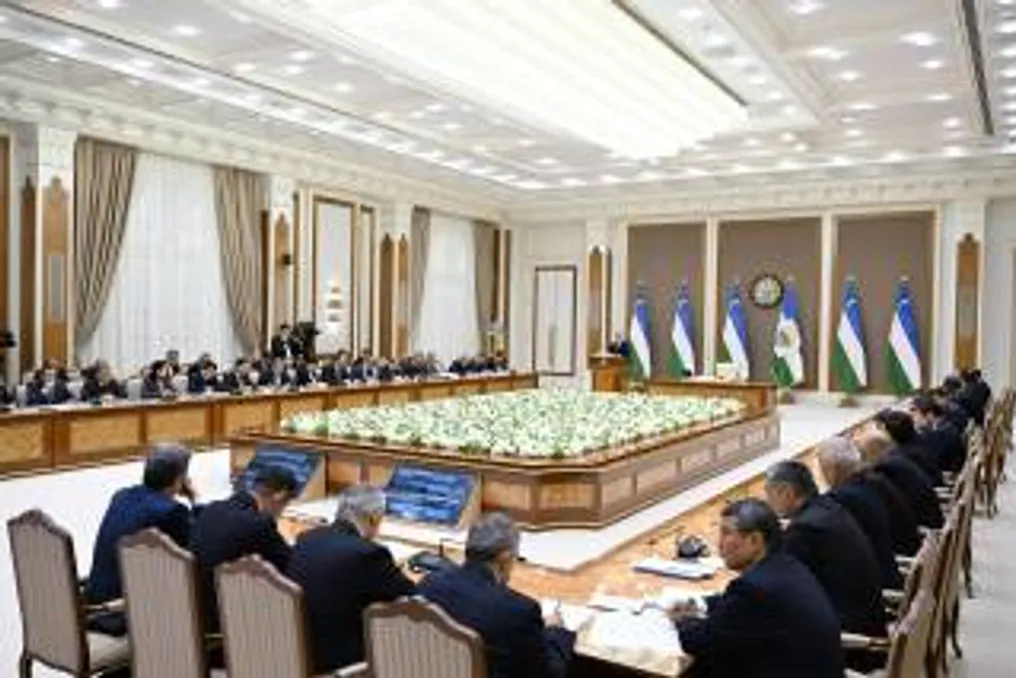
A video selection meeting chaired by the President continues, dedicated to discussing the results achieved in the first half of the current year and plans until the end of the year.
Currently, 2411 real estate objects remain unrealized on bank balances, totaling 9.3 trillion soums. A detailed analysis of each object on a bank's balance is being conducted. Special attention is paid to ensuring the rule of law regarding objects that are artificially held despite having buyers.
The situation where imports are growing faster than exports in some regions was criticized. Last year, in Tashkent region, imports exceeded exports by $1.9 billion, and in Samarkand—by $1.4 billion. In Andijan, this gap amounted to $866 million, in Jizzakh—$792 million, and in Bukhara—$662 million.
The head of state emphasized the need for every regional head to deeply study such situations and take concrete measures to increase the production of goods that can replace imports and be oriented towards export.