Since the beginning of this year, administrative fines have been applied to over 79,600 passengers in Tashkent who used public transport without a ticket.
Since the beginning of this year, administrative fines have been applied to over 79,600 passengers in Tashkent who used public transport without a ticket.
The stable and continuous operation of the public transport system largely depends on passengers adhering to established procedures and paying fares on time. This is crucial for ensuring regular bus movement, improving service quality, and enhancing passenger conditions.
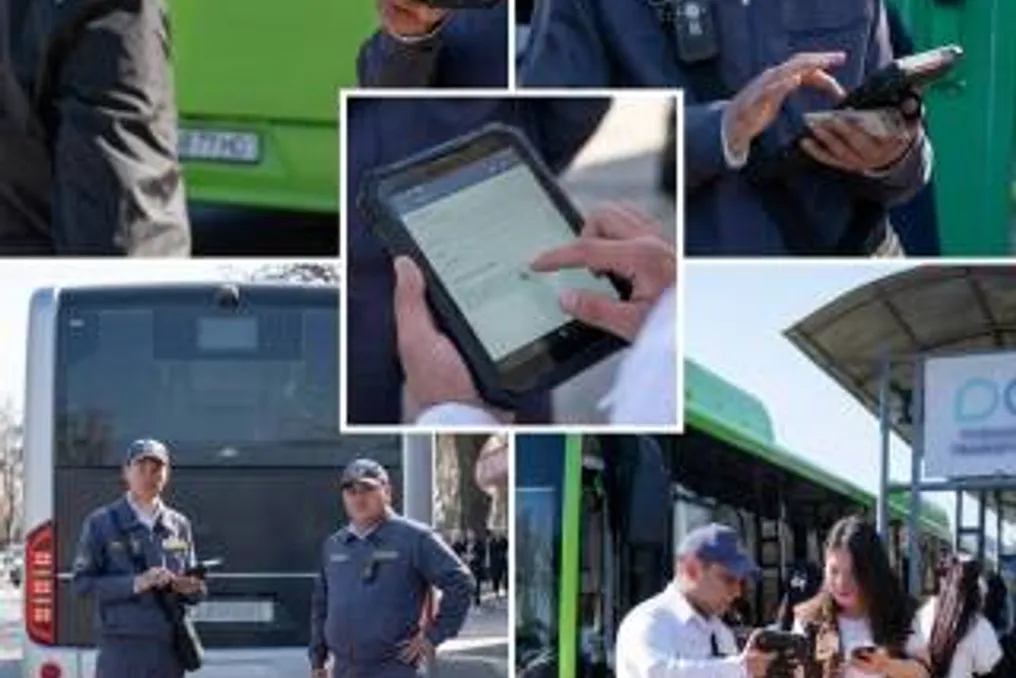
For this purpose, controllers from the state institution 'Monitoring and Supervision of Passenger Transportation in the City of Tashkent' conduct regular patrols aimed at strengthening payment discipline in public transport.
According to available information, 79,618 administrative protocols were issued against passengers traveling in buses without tickets during the past period of 2026, based on Article 144, paragraph 5 of the Criminal Code of the Republic of Uzbekistan.
In accordance with the legislation, a fine of one-eleventh of the basic calculation indicator is set for each violator, which amounts to 41,200 sums. As a result, the total amount of fines charged to passengers using transport without payment since the beginning of the year has reached almost 2 billion sums.
Experts emphasize that every paid fare contributes to the development of the public transport system, increasing the number of buses, ensuring regular movement, and improving service quality. Therefore, passengers are advised to pay their fares on time using electronic payment methods or according to the existing procedure, following the culture of using transport.
It is reminded that timely payment of the fare is more advantageous than paying fines, and every paid ride makes a worthy contribution to the development of public transport.
The Eurasian Economic Union (EAEU) aims to proactively identify new trade obstacles in external markets. The Eurasian Economic Commission has proposed that exporters utilize diplomatic missions to timely detect changes in technical and sanitary requirements in foreign markets, which will help prepare for new restrictions.
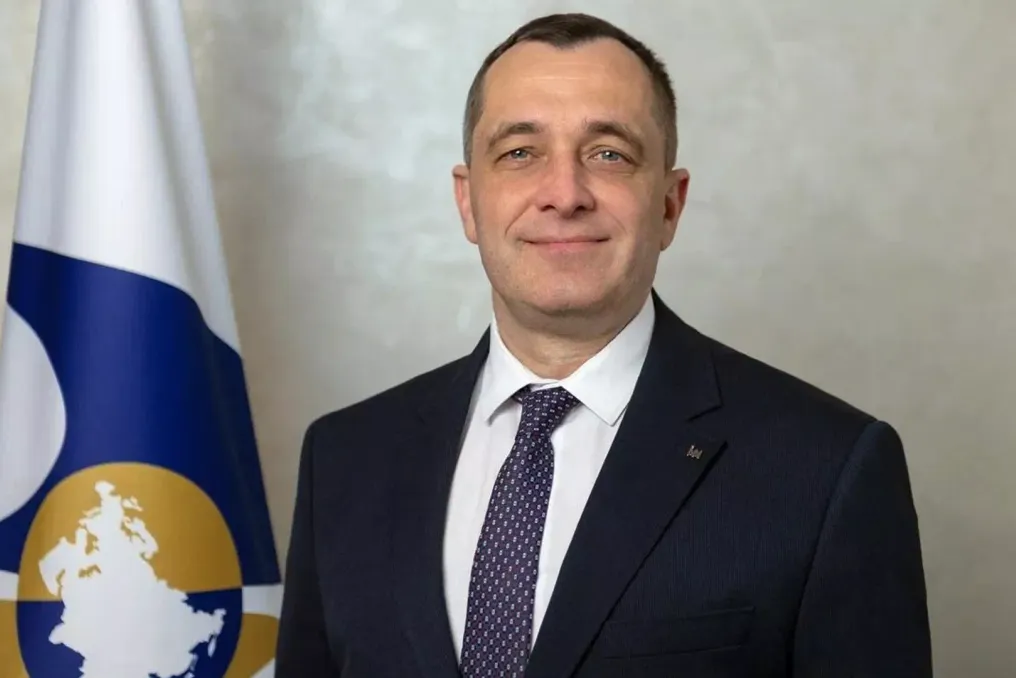
The Eurasian Economic Commission, through its Minister of Technical Regulation Alexander Subbotin, announced at a seminar in Minsk that unified product safety requirements within the EAEU contribute to simplifying internal trade and reducing barriers in external markets.
According to the minister, the common rules of the EAEU cover major categories of goods, including food products, children's goods, light industry, machinery, electrical equipment, vehicles, oil, and gas. He emphasized that sanitary, veterinary, and phytosanitary measures must simultaneously protect the population and the market, avoiding unjustified trade restrictions.
Subbotin noted that if the spread of diseases, quarantine objects, or dangerous products is detected, states are obliged to take immediate measures. However, any such restrictions must be justified and correspond to the level of threat.
The minister proposed using the capabilities of Belarusian diplomatic missions for the early detection of changes in technical and sanitary standards in external markets. This will allow exporters to receive information about new requirements in advance, adapt their products, and prevent unforeseen limitations in international trade.
According to EEC data, this issue is of great economic importance for Belarus, as the country's foreign trade volume is expected to reach almost $90 billion in 2025.
The Eurasian Economic Union (EAEU) is an international economic association that has been operating since January 1, 2015. Russia, Armenia, Belarus, Kazakhstan, and Kyrgyzstan are members of the Union. Uzbekistan obtained observer status in the EAEU in 2020. Moldova, Cuba, and Iran also hold observer status.
From January to June 2026, the average nominal wage in Uzbekistan was 7.09 million soms, with the highest figure recorded in Tashkent.
The wage for January-June 2026 reached an average of 7,911 thousand soms nationwide. This figure exceeds the same period last year by 18.4%. For comparison, in January-June 2022, the average wage was 3,551.6 thousand soms, which represents an almost twofold increase in the average salary over four years.
When comparing by region, the highest average wage level was noted in the city of Tashkent, where it reached 12.014 million soms. Following in terms of income level is the Navoi region, where the average salary amounted to 8.723 million soms.
The lowest values for the average wage were registered in the Kashkadarya region, where it was 4.865 million soms, as well as in the Surkhandarya region, where the indicator reached 4.937 million soms.
A modern, energy-saving greenhouse complex with an area of 940 hectares is being constructed in the Sherobod district of the Surkhandarya region. Construction is being carried out in accordance with the President's decree from March 25 of this year on additional measures to ensure the population has agricultural products during the autumn and winter period.
A free economic zone named 'Surkhon-Agro' is being created on the territory that will become the administrative center for the local population. This zone is intended to ensure orderly, convenient, and efficient operations, and it also provides numerous benefits to entrepreneurs engaged in production.
The complex is supplied with reliable electricity, natural gas, drinking water, and sewage water.
Mahmud Zoyirov, director of 'Surkhandaryo Suv Qurilish Invest', reported that to provide sufficient sewage water for the large complex, the capacity of the 15-kilometer R 13 canal in the Sherobod district is being expanded from 2.5 cubic meters to 6 cubic meters. Currently, cleaning and expansion works are underway, as well as preparation for concrete laying. Additionally, a 35-kilometer collector is being cleaned, and all works are planned to be completed quickly and with high quality.
Employees of the 'Hududgaz Surkhandaryo' branch are actively working to connect the new greenhouse complex to natural gas. Abror Haidarov, head of the gas supply department of the Sherobod district branch, noted that a 20-kilometer gas pipeline will be brought to the complex. Currently, two crews are laying a 219 mm diameter gas pipeline, and a gas pipeline exceeding two diameters was installed in a short time. Work continues smoothly.
A pipe is being laid over a distance of 7.1 kilometers to supply the free economic zone with clean drinking water. To date, builders have already laid more than three kilometers of pipes. After these works are completed, sewage networks will be installed. High-voltage power lines are also being installed at the complex.
According to specialists, after the full commissioning of the greenhouse complex, more than 126 thousand tons of products will be produced annually. Of this, 18 thousand tons will be processed locally, and 6,300 permanent and 8,000 seasonal jobs will be created. This project will allow for the modernization of agriculture in the region and increase the export potential of the region, contributing to energy saving. Participants in the free economic zone are provided with special tax and customs benefits, as well as other preferences.