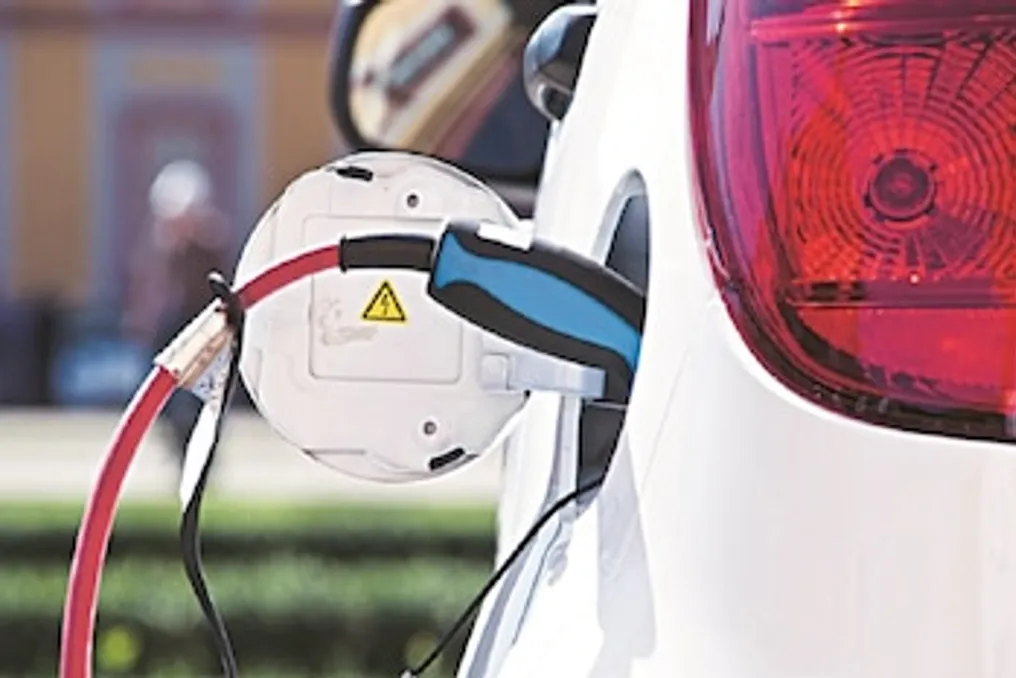
The penetration of electric vehicles (EVs) in India has increased more than elevenfold since the fiscal year 2020, yet the number of public charging stations remains low, accounting for only 52,718 against over 10 million registered electric vehicles.
Minister of Road Transport and Highways Nitin Gadkari stated in a written reply to an unstarred question in the Lok Sabha that as of July 26, 2026, 10,023,396 electric vehicles across all vehicle categories were registered in India. Furthermore, as of March 31, 2026, there were 52,718 public charging stations nationwide, which equates to approximately one station for every 190 electric vehicles.
These figures are based on data from the VAHAN database and the Bharat Heavy Electricals Limited (BHEL) portal.
How Fast is EV Adoption Growing in India?
The penetration of EVs in India has risen from 0.71 percent in the fiscal year 2020 to 8.26 percent in the fiscal year 2026, demonstrating a growth of more than eleven times over six years. The total number of registered electric vehicles across all categories has exceeded the 10 million mark.
According to Gadkari, the increased popularity of EVs is attributed to their lower operating costs and zero tailpipe emissions compared to internal combustion engine (ICE) vehicles. Stable registration growth has also been supported by policy backing from the Central Government and increasing consumer adoption of these vehicles.
Does India's Charging Infrastructure Keep Pace with Growth?
Despite the sharp rise in EV registrations, the development of public charging infrastructure is progressing significantly slower. The Minister did not specify the reasons for the low number of charging stations. Nevertheless, he noted that private companies are entitled to establish EV charging infrastructure in accordance with the Ministry of Power's Guidelines for Installation and Operation of EV Charging Infrastructure-2024.
What is the government doing to expand EV charging infrastructure?
Gadkari stated that the government supports the expansion of charging infrastructure through several schemes. Under the Faster Adoption and Manufacturing of Electric Vehicles (FAME-II) scheme, the government has allocated ₹912.50 crore for establishing public charging stations across the country. Additionally, ₹2,000 crore has been reserved under the PM Electric Drive Revolution in Innovative Vehicle Enhancement (PM E-DRIVE) scheme for deploying public charging stations nationwide, including on national and state highways.
The Minister mentioned that the Ministry of Heavy Industries is actively promoting the creation of EV charging stations under both schemes to ensure that the charging infrastructure keeps pace with the rapid growth in EV usage.
What Do the EV Charging Guidelines Say?
The Ministry of Power released the Guidelines for Installation and Operation of EV Charging Infrastructure-2024 in September 2024 with the aim of creating a unified and compatible charging network across the country. These rules allow any individual or legal entity to install EV charging stations without a license. Distribution Companies (DISCOMs) are obligated to provide electricity connections within three days in metropolitan areas, seven days in municipal areas, and fifteen days in rural areas.
Charging station owners can also opt for Low Tension (LT) connections for loads up to 150 kW. To incentivize daytime charging, electricity tariffs are set at 0.7 times the Average Cost of Supply (ACoS) during solar hours and 1.3 times during non-solar hours.
Government Planning to Improve Highway Charging Infrastructure
Furthermore, Gadkari detailed the government's plans: the National Highways Authority of India (NHAI), through the National Highways Logistics Management Limited (NHLML), plans to develop amenities along highways and expressways at intervals of about 40–60 kilometers. These facilities will offer public conveniences such as EV charging stations, fuel stations, eateries, restrooms, drinking water, parking, and short-term accommodation for travelers and truckers.
The government has already begun implementing such infrastructure in some states. For instance, under the FAME-II scheme for Assam, 117 public EV charging stations were sanctioned, with 88 operational as of July 1, 2026. Moreover, three amenity hubs equipped with EV chargers are currently functioning in the state.