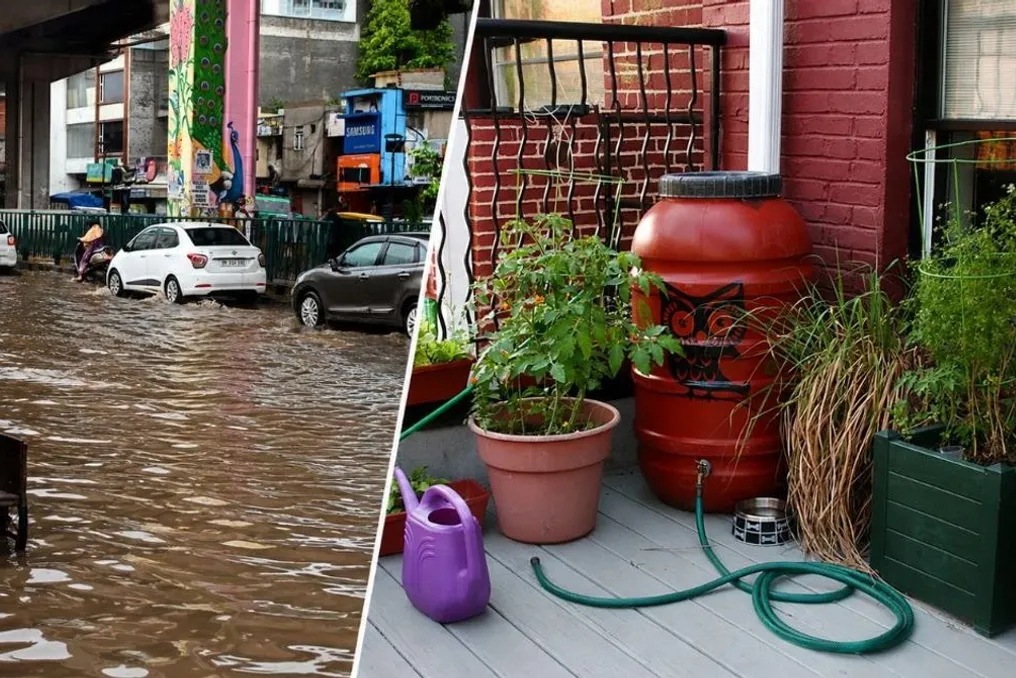
Residents of Bangalore are well acquainted with the seasonal cycle: the first heavy rains end the heat, flowers turn green, and the city temporarily earns the title of Garden City. However, shortly after this relief, problems emerge: roads are covered in brown water, basements flood, and a scooter ride that should take twenty minutes stretches to ninety. Six months later, the same residential complexes that were pumping water out of basements are forced to pay large monthly sums for water delivery.
Similar stories
Popular
A natural question arises: how can one city drown and simultaneously experience water shortages within a single calendar year? The answer is surprisingly simple: Bangalore does not have a problem with the amount of rainfall; it has a problem with rainwater management—the water arrives, but the city is organized in such a way as to get rid of it as quickly as possible.
Rain is not the problem. The problem is where it ends up.
Bangalore receives about 970–1000 mm of rainfall per year, comparable to cities that never face shortages. However, as researchers note, this precipitation falls only over about 60–70 days, and then it must provide for needs throughout all 365 days. A. R. Shivakumar, a scientist from the Indian Institute of Science and an employee of the Karnataka State Council for Science and Technology (KSCST), dedicated three decades to studying this temporal gap. He is known in the city as 'Bangalore's rain.'
According to reports by The Better India, Shivakumar has not paid the municipal water bill at his home since 1995. The house, named Saurabh, functions almost entirely on the rainwater he collects. When designing the house, Shivakumar conducted calculations based on century-old rainfall data for the city and found that even in the driest years, there was enough water; the problem lay solely in time and storage. He installed a set of rooftop tanks with a capacity of about 45,000 liters, placed high enough so that gravity provided supply without the need for pumps, allowing him to survive the dry period.
His conclusion is this: rain must be collected everywhere and whenever it falls, and if even half of the city's homes were equipped with collection systems, Bangalore might never face a water shortage. Instead, most of the water simply runs off. Since lakes, wetlands, and open soil have been replaced by roads, parking lots, and paving, the water that used to seep into the ground now flows across the concrete and disappears into storm drains. According to one widely cited estimate, the city allows about 23 TMC (thousand million cubic feet) of rainwater to leak away annually—water that instead overwhelms drains designed for a much smaller volume, which is one of the reasons for flooding in low-lying areas.
The local water authority, BWSSB, believes that collecting even half of the rainfall falling on Bangalore could provide an additional inflow of 10–15 TMC. Subajit Mukjeeki, a water conservation specialist known as the 'Water Hero of India,' who has advised over 200 households across the country on rainwater harvesting through his RWH India Helpline, succinctly frames the problem: rain falling on your roof should not end up on the road. He argues that every roof should become a source of water, not a feeder to the nearest drain, and this principle applies both in Mumbai, where he works, and in Bangalore, where the situation is even more evident.
Thus, every monsoon season, the city drains into the sewer system many times more than it will need later. And the first repair does not require a bulldozer; it can start with a balcony.
What is the real value of the rain outside the window?
Before spending money, it is useful to know how much water you are collecting. Water resource experts use a simple guideline: 1 mm of rain on 1 square meter of surface equals 1 liter of water. For a standard 2 BHK balcony, measuring approximately 2 by 3 meters, or an area of 6 square meters, the calculation is as follows:
Light shower of 10 mm → 6 m² × 10 mm = 60 liters
Moderate shower of 20 mm → 6 m² × 20 mm = 120 liters
Heavy shower of 40 mm → 6 m² × 40 mm = 240 liters
It is impossible to collect every drop due to wind, splashes, and evaporation, but even with half efficiency, one good monsoon downpour can accumulate between 60 and 120 liters in a barrel. Over all the more than 60 rainy days in Bangalore, this adds up to thousands of liters per year that would otherwise go down the drain. This is enough to maintain a living balcony garden during dry months, wash a scooter or bicycle multiple times, or handle all floor washing tasks—all without using purified drinking water or cisterns.
The point is: rain outside is not a meteorological report; it is a delivery. Here is how to start receiving this water.
What to buy right now: a balcony kit for 1200–2000 rupees
Installing a rooftop system on a building you do not own is impossible—that is the task of the housing association, and this will be mentioned later. But collecting rainwater on a balcony does not require a permit or a plumber. Here is a complete shopping list: the total cost is approximately between 1200 and 2000 rupees—these are one-time expenses that are less than one cistern filling in the middle of summer in Bangalore.
How to install and start using the system
After purchasing the kit, the entire installation takes one day: you need to install a tap near the base of the barrel and place the barrel on bricks or a stand so that a bucket can be inserted under the tap. Then, the opening should be covered with a net or mesh fabric, and topped with a lid. Water enters, while leaves, dust, and mosquitoes remain outside. The barrel must be placed when rain is forecast, moving it to the part of the balcony where the water fall is most direct. You do not divert the water through pipes; you simply collect what falls. The collected water should be used within a few days before it starts to stagnate: for plants, mopping floors, cleaning the balcony, or washing a scooter or bicycle. Important rule: untreated rainwater is unsuitable for drinking or cooking without proper filtration and disinfection. For everything else in the house, it is as good as tap water, and it is free.
The bigger question your barrel will ask you
When you watch the barrel fill up during a heavy downpour, the next thought arises: if my balcony collects as much as falls on my building's roof—where does all that go? That is where the real water is. And on this matter, Bangalore has already agreed with you on paper.
Rainwater harvesting is mandatory in the city with an amendment to the BWSSB Act adopted in 2009. Shivakumar, as noted in early TBI materials about his RWH work, helped shape this legislative momentum. Requirements apply to new buildings of 30 by 40 feet or more, as well as existing buildings of 40 by 60 feet or more, which explains why most residential complexes had to have a system to receive permission.
The law even provides a formula for calculating the required capacity: twenty liters for every square meter of roof plus ten liters for every square meter of paved open area—such as driveways and terraces. For a typical 30x40 foot house, with about 111 m² of roof and 46 m² of paving, this amounts to approximately 2680 liters of storage or groundwater replenishment capacity. It is not necessary to store the entire volume in a tank; some can be directed to a soak pit, and the rest to an infiltration well for groundwater recharge.
The problem lies in enforcement. According to information gathered directly from the field, only about one in five houses in Bangalore that are supposed to have a working system actually do. Many associations installed systems years ago to obtain permits, and then allowed them to clog—filters became blocked, pipes were disconnected during painting, and absorption pits were never cleaned. The rule is observed on paper but ignored on the roof.
This means that a useful action you can take, even as a tenant, is to ask questions. During the next rain, walk around the property and observe where the water from the roof actually goes: into an infiltration well or directly past the gate onto the road? Then ask a series of questions to your Residents' Welfare Association. Do we even have a rainwater harvesting system, and is it working today, or just on the day the building was approved? When was it last cleaned? Does the water from our roof really replenish our own well, or does it just disappear? How much did we spend on tanker water last summer? And—the question that usually prompts committee action—how much would it cost just to fix what we already have?
This last question usually hits the mark because repairing a non-functional system is almost always cheaper than paying for a tanker season after season.
The other half of the task: not only collecting rain but also sinking it. Storing water is only one side of the issue. The other is helping the water that cannot be stored return to the earth—to the aquifer that is quietly depleting through all wells. This refers to soak pits and filter pits: simple pits filled with gravel and stones that allow rain to slowly seep into the soil instead of running off as floodwaters. If such pits are created in sufficient numbers throughout the area, they perform two functions simultaneously: they reduce peak load on drains that cause floods, and they feed the aquifer that is drying up.
Shivakumar's personal garden pits significantly raised the groundwater level under his house over the year; the urban version is based on the same idea, scaled up. Construction is modest. Through his project Jal Tara, Mukjeeki organizes volunteers to dig pits about three by three feet and four feet deep, then directs rooftop water into them so it filters slowly rather than running down the street. His ambition for the city is deliberately detailed: ideally, filter pits should be installed every hundred meters—in his opinion, this is how one can stop rainwater from becoming floodwater and replenish the soil. This is a model tested in Mumbai, but the physics is universal, and nothing in Bangalore's soil or pavement will prevent it from working here.
There is a third lever of influence, and this is within reach of most households: stop sealing the ground in the first place. Driveways, courtyards, and gardens completely paved with cement leave no room for water to penetrate. Replacing part of the hard surface with gravel, grass pavers, or permeable blocks—or simply leaving some areas bare earth—allows water to seep where it fell. As Mukjeeki says, the most important thing many of us can do is create more soil: remove unnecessary concrete so the earth can absorb water again.
Bangalore has rain. It has a law. It even has a formula printed on the government website. What it mostly lacks is habit—a collective decision that water arriving free from the sky is worth preserving.
Perhaps the question facing the city is not how to stop floods or where to find more water. Perhaps it is quieter: how much of today's rain will still be here next April? This answer will not come from one balcony or one filter pit. It will come from a sufficient number of people—in enough apartments, at enough RWA meetings—who decide that rain is too valuable to send into the drain.
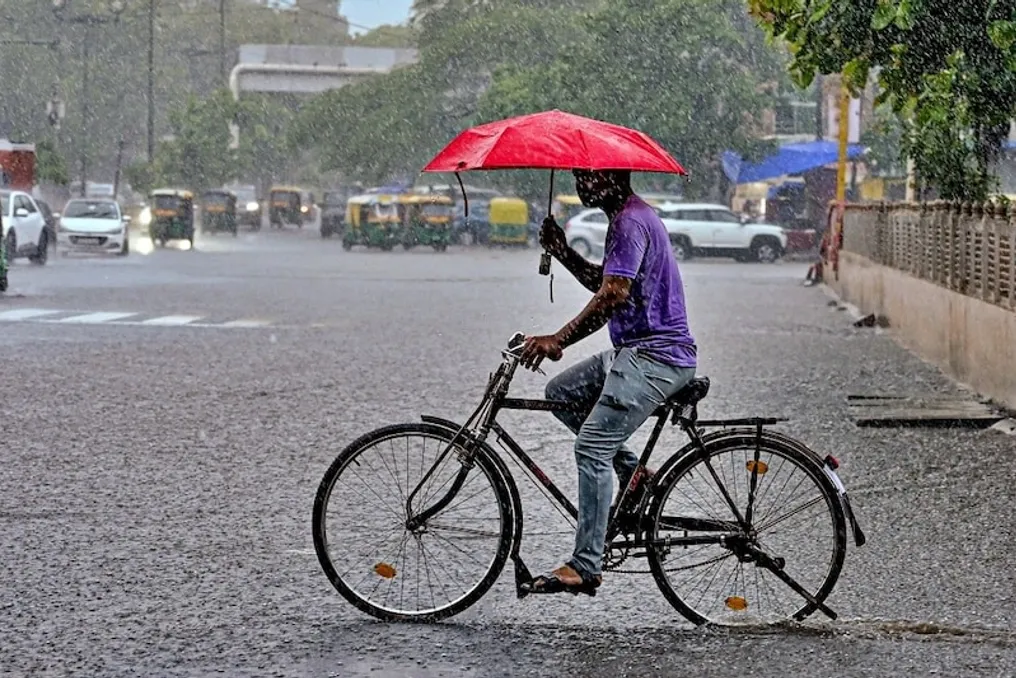
The monsoon has reactivated in Rajasthan. On Friday, rains fell in several districts, including Jaipur, Udaipur, Jodhpur, Bikaner, and Kotaputli-Bahror, with strong winds observed in Bikaner. Over the last 24 hours, light to moderate rainfall was recorded in eastern Rajasthan. The highest amount of precipitation, 69 mm, was registered in Kushalgarh Banswara, which is classified as heavy rain.
Light rains accompanied by thunder and gusty winds also occurred in the western part of the state. Meanwhile, the highest temperature in the state was recorded in Jaisalmer at 41.5 degrees Celsius, and the lowest was in Sirohi at 22 degrees Celsius.
According to the meteorological department, a low-pressure area formed over Eastern India has shifted west and reached the southern districts of Madhya Pradesh and Vidarbha. There is a possibility that it will weaken within the next 24 hours and turn into a low-pressure area with moderate indicators. Consequently, from July 31 to August 2, moderate to heavy rains are expected in some districts of Udaipur and Jodhpur, while light to moderate precipitation is forecasted for the districts of Jaipur, Kota, Ajmer, and Bikaner.
The meteorological department issued an orange alert for five districts and a yellow alert for the rest. Scientists suggest that starting August 3, the monsoon trough will begin shifting northward, after which rainfall activity is likely to move to the northwestern and northeastern parts of Rajasthan. Nevertheless, rains are expected to continue in the state from August 5 to August 6.
Meanwhile, NDRF commander Surendra Singh reported that the Indian Meteorological Department issued a 'red alert' for Vadodara and surrounding areas of Gujarat on July 31 and August 1. Due to this, three teams previously deployed in various parts of Gujarat have been recalled to headquarters. Starting July 22, they have been conducting rescue operations across Gujarat.