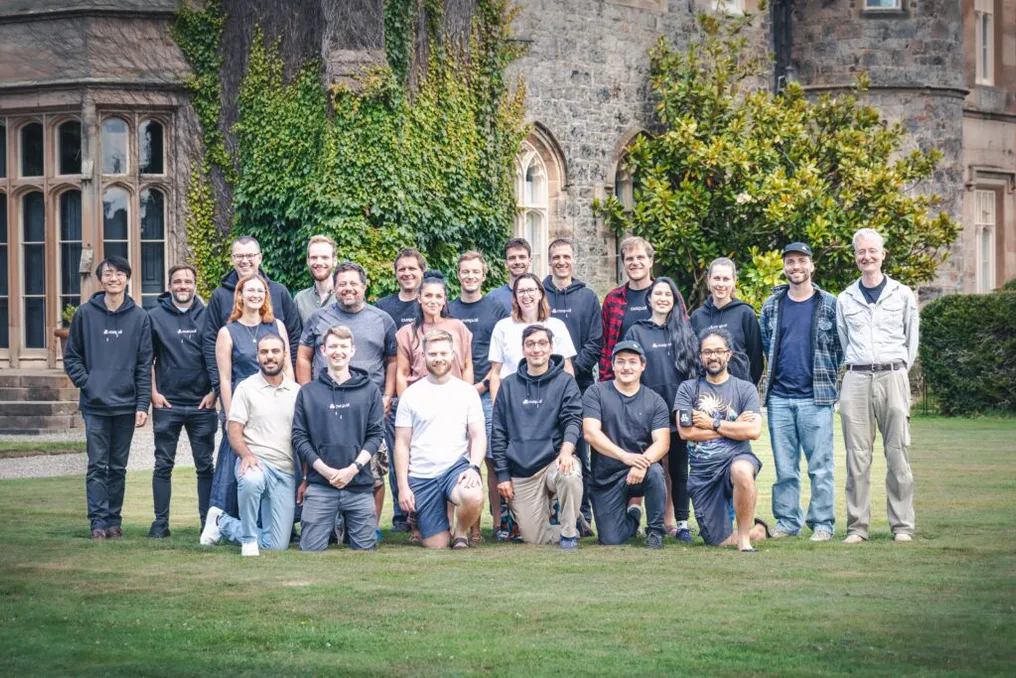
Simile has raised $200 million in a Series B funding round to develop agentic twins that will simulate the behavior of real consumers and employees.
Simile has raised $200 million in a Series B funding round to develop agentic twins that will simulate the behavior of real consumers and employees.
Traditional market research methods, such as surveys, online polls, and focus groups, are often characterized by high costs, slow pace, and limited sample sizes. Simile offers a solution to this problem by creating digital profiles based on real demographic, behavioral, and psychological data.
These digital profiles function as agentic twins, reproducing human memory while also altering personal preferences and purchasing habits over time. Instead of waiting weeks for survey or focus group results, companies can instantly interact with digital personalities that think, make decisions, and make purchases like real people.
Marketing teams gain the ability to run thousands of digital simulations in mere seconds. They can observe how target groups react to price changes, new advertising campaigns, or feature updates. This immediate feedback allows product managers to adjust their strategies long before a product's public launch.
Simile's development trajectory has been very rapid. Just five months ago, the startup emerged from stealth mode, receiving initial support from prominent AI figures, including Index Ventures, Fei-Fei Li, and Andrej Karpathy. The new $200 million funding confirms significant corporate demand for synthetic consumer research tools.
This large influx of capital followed just five months after the team came out of the shadows with a $100 million Series A round. Investors see synthetic users as a major shift in enterprise software. Global brands spend billions annually on market research, yet static PDF reports quickly become outdated.
In contrast, Simile provides living consumer models that are constantly updated, giving business leaders current market intelligence that traditional market research firms cannot provide. The application of agentic twins goes far beyond standard consumer surveys.
Consumer goods brand teams use them to evaluate new digital packaging designs, while financial institutions test core messaging for new credit card offers. Media companies even simulate audience churn for upcoming video streams before filming begins. Since these AI agents operate continuously, companies can conduct market experiments in minutes instead of months, leading to significant cost savings.
As synthetic research becomes an increasingly mature AI technology, it may soon become an integral daily tool for every major product team worldwide. With the new $200 million funding, Simile plans to expand its engineering structure and upgrade the architectures of its core models. Furthermore, the company intends to increase its library of global consumer personas to cover various international markets.
The tech startup Genius AI has raised $44 million in investment to capitalize on the growing demand in the personal interaction-focused service economy. With this Series D funding round, the company's valuation reached $1.15 billion.
Venture firm Lux Capital led the round. Other investors included Bessemer Venture Partners, Imaginary Ventures, L Catterton Growth, 2048 Ventures, and StepStone Private Ventures. These funds will allow Genius AI to shift its focus from beauty booking software to autonomous artificial intelligence tools for a wider range of in-person services.
The company, formerly known as GlossGenius, was founded in 2015 by identical sisters Danielle and Leah Cohen-Shohet. They initially created GlossGenius to help salon owners, aestheticians, and spa operators manage their daily operations. Danielle independently learned programming and wrote the initial code, and over time, the software became a dominant force in the market, helping small businesses process payments, book clients, and promote their services.
The company is now changing its name to Genius AI, signifying a broader mission. As Genius AI, the platform will support all in-person professionals. It is planned for use in medical spas, physical therapy centers, fitness studios, injections, and health clinics.
The physical service economy in the United States includes about eight million businesses generating over $2 trillion in annual consumer spending. Although studies show that business owners spend nearly 36% of their working time on administrative tasks, Genius AI aims to completely eliminate this bureaucratic burden. The platform goes beyond simple assistance tools and transforms into an autonomous AI agent capable of handling complex tasks end-to-end, freeing up business owners to interact with clients.
The company demonstrates impressive growth and operational scale. Currently, the system is used by over 125,000 businesses across half of the US zip codes. Genius AI reports that its platform is approaching $200 million in annual revenue. To date, the company's tools have helped clients save over 112 million hours of administrative work. To deepen penetration into the healthcare sector, the company has added full HIPAA compliance, allowing physical therapists and clinical specialists to securely store sensitive patient data. This gives Genius AI a significant advantage over traditional tools lacking privacy protection. As artificial intelligence automates office work, human care becomes even more valuable, as skilled professionals like masseuses and trainers provide care that computer code cannot replicate. The new funding is planned to be used to expand software development and increase the engineering team.
CuspAI, a Cambridge-based startup, has raised $450 million in a Series B funding round. These funds are designated for the launch of its ambitious AI Materials Foundry.
The company utilizes advanced generative artificial intelligence to design molecules that are necessary for the physical world but do not yet exist. The team's goal is to fundamentally change manufacturing methods across the board—from clean energy systems to advanced microchips.
The influx of new capital led to a sharp increase in CuspAI's market valuation, which now stands at an astounding $2.6 billion, up from $520 million in September 2025. The Series B round was co-led by Kleiner Perkins and NEA. Other significant participants in the round included Jeff Bezos through Bezos Expeditions, AMD Ventures, Lux Capital, and Sovereign AI Venture Fund from the UK.
This rapid growth followed a successful Series A round less than a year ago, which exceeded $100 million. This high level of interest from institutional investors underscores the technology industry's drive to solve problems in physical engineering, as investors view this as the next trillion-dollar frontier.
Unlike many AI models that can generate theoretical concepts that fail in real-world conditions, CuspAI employs a different approach. Founded in 2024 by Dr. Chad Edwards and Professor Max Welling, the startup merges generative AI with deep molecular modeling. Their patented software creates material designs that engineers can synthesize and build using standard production facilities.
The potential applications for these materials are vast, including next-generation semiconductors, efficient vehicle batteries, and carbon capture technologies. By focusing exclusively on real-world manufacturing constraints, the platform ensures that digital discoveries directly translate into physical hardware solutions.
Parallel to securing funding, the company has officially launched its long-awaited AI Materials Foundry. This initiative represents a large global network integrating clean data, computational power, laboratory access, and scientific expertise. Over 45 founding corporate partners have already joined the collaboration.
Major players such as NVIDIA, Meta, Samsung, Hyundai Motor Group, Lam Research, Tokyto Electron, and Henkel are also joining CuspAI's efforts. This coalition aims to completely bridge the gap between abstract AI code and heavy industrial manufacturing. The company is actively scaling its operational team to support this massive international growth. To solidify its expansion plans in Asia, CuspAI is opening a new corporate office in Singapore, supplementing its existing centers in Cambridge, Amsterdam, Berlin, and Tokyo. John Giannandrea, former head of Google and Apple, will lead operations in the US.