The United Arab Emirates (UAE) has unveiled new fuel prices that will take effect on August 1, 2026. According to the announcement, the cost of fuel will increase by 20 fils per liter across all fuel types compared to July tariffs.
The United Arab Emirates (UAE) has unveiled new fuel prices that will take effect on August 1, 2026. According to the announcement, the cost of fuel will increase by 20 fils per liter across all fuel types compared to July tariffs.
This increase occurs against a backdrop of persistent global market uncertainty, linked to the fragile regional truce and ongoing tensions in the region.
The new tariffs depend on the type of vehicle. In August, a full tank of gasoline will cost more than in July, ranging from 10.2 to 14.8 dirhams, depending on the car model.
Corresponding new prices have been set for compact cars with an average tank capacity of 51 liters. Sedans, which have an average tank capacity of 62 liters, are also subject to the new rates. Furthermore, updated cost indicators have been defined for SUVs with an average tank volume of 74 liters.
The United Arab Emirates (UAE) has published new fuel prices that will take effect on August 1, 2026. In July, prices saw a decrease after four consecutive months of growth, which was attributed to the war between the US, Israel, and Iran, as well as the closure of the Strait of Hormuz.
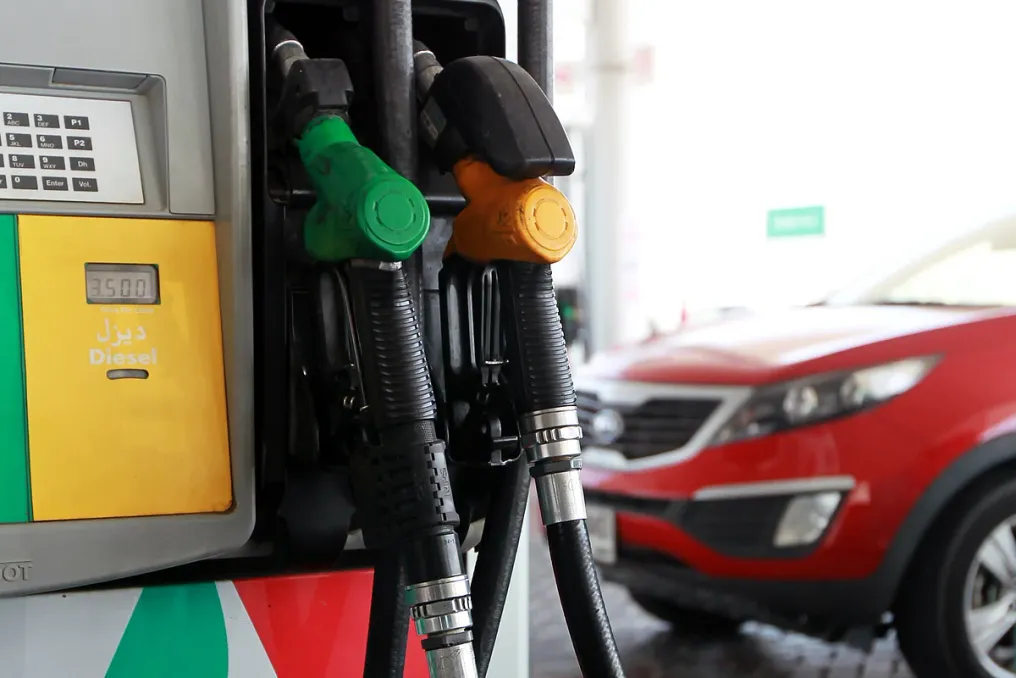
According to the announced tariffs, Super 98 gasoline will cost 3.6 dirhams per liter, compared to 3.40 dirhams in July. Special 95 gasoline will cost 3.49 dirhams per liter, while the current rate was 3.29 dirhams. Prices for E-Plus 91 gasoline have been set at 3.41 dirhams per liter, an increase from the previous rate of 3.21 dirhams.
Diesel fuel will be sold at a price of 3.8 dirhams per liter, which is higher than the current cost of 3.6 dirhams. Since the start of the Middle East war on February 28, retail fuel prices in the UAE rose by more than 60 percent before decreasing in July.
Monthly changes in gasoline prices in the UAE directly affect household budgets, as fuel is a necessary and regular expense for most families. Even a small price increase over time may require drivers to allocate a larger portion of their income to fuel. Furthermore, the conflict between the US and Iran resumed on July 29. Previously, oil prices sharply rose after US President Donald Trump threatened to 'hit Iran very hard' following Iran's missile attack on a US base in Jordan on July 28.
Car owners in the United Arab Emirates may see a decrease in fuel prices for the second consecutive month in August; however, the expected reduction is likely to be significantly more modest than suggested by recent fluctuations in global crude oil markets.
This forecast comes as the average price of Brent crude in July stood at around $87 per barrel, compared to $85 per barrel in June. Prices remain volatile due to ongoing tensions involving Iran, disruptions in regional shipping routes, and uncertainty surrounding the Strait of Hormuz.
According to Vijay Valechi, Chief Investment Officer at Century Financial, the decline in crude oil prices should affect retail fuel prices in the UAE, but not completely or immediately. He noted that some of the crude oil price reduction this month might carry over to gasoline prices next month, but low product inventories and inherent market inertia are likely to cause the drop at gas stations to be slower and smaller than implied by crude oil price swings, with the risk leaning towards renewed spikes rather than a smooth decline.
Valechi added that if crude oil prices stabilize around $79 per barrel in July versus approximately $82 in June, 'this mathematically indicates a second consecutive drop at gas stations,' with Special 95 potentially reaching about 3.13 dirhams per liter, and Super 98 around 3.24 dirhams per liter.
Fuel prices in the UAE steadily rose over three months, from April to June, due to the conflict with Iran. In July, prices fell after the US and Iran announced a ceasefire. Last month, Super 98 cost 3.40 dirhams per liter, Special 95 was 3.29, and E-Plus was 3.21. Diesel fuel was priced at 3.60.
Nevertheless, analysts warn that the geopolitical backdrop remains fragile and could quickly alter the trajectory of oil prices. Madhur Kakkar, founder and CEO of Elevate Financial Services, believes that markets are largely influenced by geopolitical events rather than traditional supply and demand fundamentals.
Kakkar stated that Brent enters August near $90 after sharp fluctuations, and this is how the market should be viewed, as it trades on headlines, not balance sheets. He expects Brent to average between low to mid-$90s in August, adding that any new escalation could push prices above $100 per barrel.
Market participants are also closely monitoring the reaction of major economies to oil price swings. Joshua Owen, CEO of Lunaro Financial Services, reported that traders are increasingly focusing on the threshold where higher energy costs begin to impact inflation and economic policy. He noted that since the start of the conflict, the US has softened its rhetoric and genuinely called for a ceasefire when Brent approached the $100 mark, while tensions resumed when the price neared the pre-conflict level of $70.
This dynamic suggests that oil may continue to trade in a wide range, creating uncertainty for fuel pricing models used in the region. Saxo Bank shares a similar view, forecasting continued volatility instead of sustained growth or decline. Hamza Dwaiq, Head of Trading (MENA) at Saxo Bank, stated that the market is balancing risks to oil supply against signs of gradual normalization of export flows.
For consumers in the UAE, this means that fuel prices in August are likely to remain sensitive to events in the Persian Gulf. While lower crude oil prices and expectations of reduced fuel costs support the argument for another drop at gas stations, analysts point out that supplies remain constrained, and geopolitical tension continues to add a risk premium to oil markets.
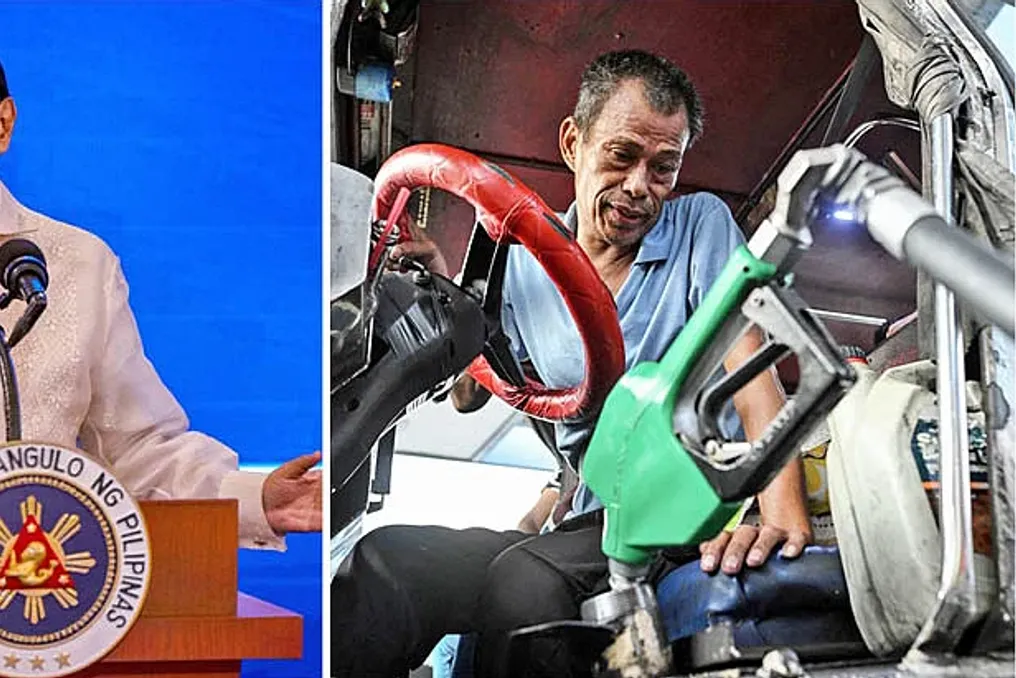
Fuel prices in the Philippines increased for the fourth consecutive week on Tuesday, July 21, due to ongoing tensions in the Middle East, which is driving up global oil prices. These recent increases at gas stations have been substantial, once again prompting transport workers to demand fare hikes nationwide.
The price increase for diesel fuel reached up to 11 pesos (0.65 dirhams) per liter on Tuesday, marking the most significant jump since the resumption of clashes in the Persian Gulf. Kerosene showed an even greater increase, rising by 12 pesos (0.71 dirhams) per liter, while gasoline rose by 4 pesos (0.24 dirhams) per liter.
On average, diesel fuel currently costs 78.59 pesos (4.69 dirhams) per liter, and gasoline costs 80.59 pesos (4.80 dirhams) per liter. Secretary of the Department of Energy Sharon Garin linked the monthly price increase to the escalating tensions in the Middle East but assured that the Philippines has a 49-day buffer in case supply routes narrow further due to the expanding war.
Armed forces from both sides warn of 'active combat operations' against vessels passing through the Red Sea, including those related to Saudi Arabia. Meanwhile, the Philippines sources 80 percent of its fuel supply from this region.
In the meantime, public transport federations have resumed submitting petitions demanding fare increases. Liberty De Luna, president of the Alliance of Concerned Transport Organizations (ACTO), stated that it is time for Philippine President Ferdinand Marcos Jr. to approve a basic fare increase of 1.00 peso.
De Luna recalled that although their petition was initially approved by the transport regulatory board in March, Marcos ignored it, opting instead to provide cash assistance packages and fuel discounts at certain gas stations in major cities. ACTO clarified that their petition for fare increases was submitted even before the conflict between the US, Israel, and Iran began in late February, and it originally called for a fare increase of 3.00 pesos for the first four kilometers of travel.
However, a group of passengers cautioned against fare increases, suggesting that public consultations should be held first. Passenger Forum representative Mike Kinto stated that fare increases should be a last resort, and the Marcos government should implement other forms of intervention.
In response to growing calls to suspend fuel taxes amid Middle East tensions, Marcos Jr. temporarily suspended excise taxes on cooking gas and kerosene. Nevertheless, despite special powers granted by Congress, the Philippine president refused to suspend the value-added tax and excise taxes on diesel fuel and gasoline.
Marcos justified his refusal by stating that canceling taxes on transport fuel would not bring tangible benefits to consumers but would instead lead to a loss of government revenue of up to 43.6 billion pesos (2.59 billion dirhams). However, higher fuel costs brought more benefit to the government than expected: imports of fuel reached 83.41 billion pesos (4.96 billion dirhams) by mid-April.
As compensation, the Marcos government allocated 15.375 billion Philippine pesos (916.4 million dirhams) in direct cash aid to low-income families and overseas workers to mitigate the effects of the new Middle East crisis and subsequent global oil shocks. Joseph noted that not everyone affected by oil shocks receives government aid. He emphasized: 'As a public transport driver, I worry about the cost of diesel fuel. It directly affects whether I can earn a living doing this job.'