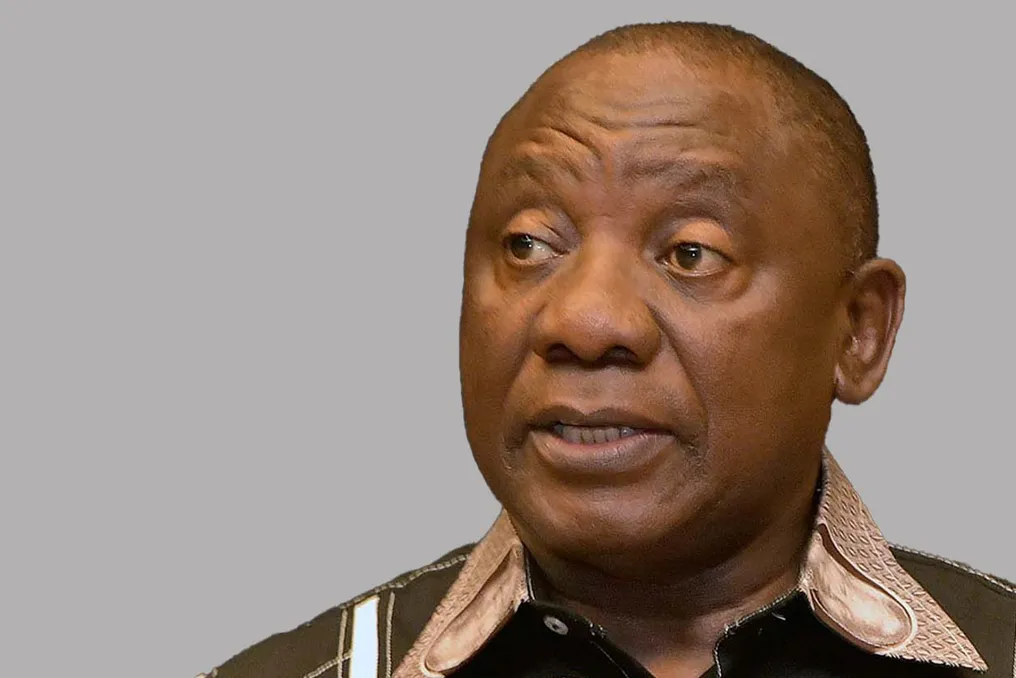
President Cyril Ramaphosa gave his consent to the report prepared by the Eskom restructuring working group. This report outlines the mechanism for creating a fully independent Transmission System Operator (TSO) that will own and control South Africa's transmission assets and manage the electricity market.
The Presidency stated on Friday that 'the TSO is a key factor for a successful competitive wholesale electricity market, which is expected to provide reliable and cost-effective energy supply.' The working group determined that the restructuring is feasible, aligns with international best practices, and can be achieved without compromising Eskom's financial sustainability.
The timeline for this process is limited. The Electricity Regulation Act with amendments requires the TSO to be established no later than December 31, 2029. Until that date, its functions are performed by the National Transmission Company of South Africa (NTCSA)—an Eskom subsidiary established in July 2024. NTCSA represents the current state, while the TSO is the independent entity it must become.
Eskom board directors will not be appointed to the NTCSA board, and no one will hold positions in both entities simultaneously. Decisions regarding access to the transmission network transfer to NTCSA, and subsequently to the TSO.
This recent move caused controversy. As early as December 9, Energy Minister Kgosiyenso Ramokgopa approved a revised plan for Eskom's split, under which NTCSA would remain a wholly-owned Eskom Holdings subsidiary and retain ownership of transmission assets, while the new TSO would operate outside Eskom as the system and market operator, central procurement agent, and ancillary service provider. In this scenario, the network would remain within the group.
Full Separation
Ramaphosa's address at the national conference in February changed this position, announcing the creation of a working group and confirming support for a TSO that owns the assets directly. Business viewed the December plan as a retreat from the agreed Operation Vulindlela stance, and Friday's approval definitively resolved the issue in favour of full separation. The working group's mandate explicitly states that ownership of the transmission network is separated from Eskom.
The working group was formed in early March, chaired by National Treasury CEO Duncan Peters, with participation from the Presidency, Treasury, Department of Energy, Eskom, and NTCSA. It was given three months, until the end of May, to prepare a high-level report. Ramaphosa extended this deadline to the end of June. The report was submitted on July 30 and approved the following day—two months past the initial deadline and one month after the extension.
Phase 2, which deals with developing the detailed transaction structure and implementation plan, is scheduled for the next three months: the same period allocated to Phase 1, which was exceeded. The delay drew attention. The Business Leadership South Africa indicator fell quarter-on-quarter for the first time in its history in the fourth quarter from April to June, and the electricity indicator dropped by 2.2%. BLSA called the transmission operator delays 'concerning,' warning that without them, 'a competitive market becomes impossible.'
Two conditions in the terms of reference will determine the feasibility of the reform: first, Eskom must not be in a worse financial position after the restructuring, provided the TSO itself is financially sustainable. This principle is under close scrutiny, given that Eskom receives support from a state debt write-off package, and rating agencies note risks during the separation process. The main challenge is separating the utility from its transmission assets without weakening it or shifting costs to tariffs or the state budget.
The second condition relates to municipal debt. The working group pointed to the rise in overdue municipal debt to Eskom, exceeding 114 billion rand, as a threat to the utility and the entire sector. Among the measures that need strengthening, stricter credit control, the implementation of smart meters, and agreements with distribution agents were named.
The reform has an opportunity cost while it is pending. Eskom holds 6.97 GW in cold reserve due to excess capacity, which accounts for approximately a quarter of the peak load of 28.72 GW recorded the week before July 23. This surplus allowed for the cessation of power cuts, but it came with aggressive curtailment of independent renewable energy generation, leading to compensation payments of 2 billion rand and some producers facing revenue losses of about 9%. The competitive market intended to be provided by the TSO is precisely the mechanism that will allow this energy to find application.
Ramaphosa noted that the report demonstrated 'how the government can ensure the change in the energy sector architecture as it continues to evolve,' adding that 'it is welcomed that all key stakeholders agree on this goal.'