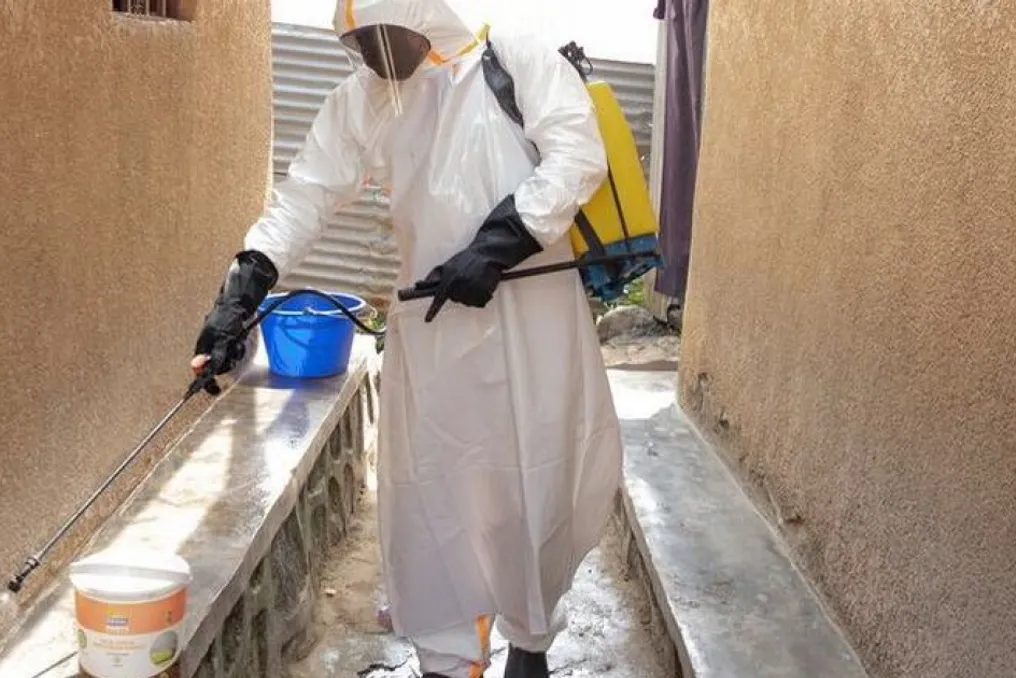
According to ABC News, citing the country's government, the total number of registered cases of hemorrhagic fever Ebola in the Democratic Republic of Congo has reached 3442. The number of deaths from this disease amounts to 1521 people.
According to ABC News, citing the country's government, the total number of registered cases of hemorrhagic fever Ebola in the Democratic Republic of Congo has reached 3442. The number of deaths from this disease amounts to 1521 people.
The situation intensified over the last week: the number of new cases increased by almost a thousand, and the number of victims by five hundred. Due to the rapid growth in morbidity and mortality, the outbreak has reached record proportions in the history of observations. Despite the efforts of the government and international organizations, localizing the epidemic remains a difficult task.
Meanwhile, neighboring Uganda announced the end of the infection outbreak on its territory. This decision was made after 42 days since the discharge of the last patient, which corresponds to double the incubation period of the disease. Uganda recorded 20 cases of infection, including two fatalities.
Information about the Ebola fever outbreak in Congo and Uganda, caused by the rare Bundibugyo ebolavirus, was disclosed on May 17, 2026. The World Health Organization immediately classified this situation as a public health emergency of international concern. Since there are no approved vaccines or drugs for this virus, clinical trials of two experimental drugs have been urgently initiated in Congo: a combination of two pan-ebolavirus monoclonal antibodies, MBP134, and a low-molecular-weight antiviral agent from the nucleoside analog group of remdesivir. These drugs are planned to be used both individually and in combination. Experts predict that this outbreak may prove to be the most severe in history, and its containment could take more than a year.
In another field, scientists analyzed data from a population natural experiment conducted in Great Britain. Bin Zhang and his colleagues found that restricting sugar intake during the first thousand days after conception helps reduce the risk of developing Alzheimer's disease and other neurological disorders later in life. The study used data from 60,400 people from the UK Biobank database who were born between 1951 and 1956.
During and after World War II, restrictions on the consumption of sugar and sweets were in effect in Great Britain until 1953: adults were allowed to consume less than 40 grams per day, children less than 15 grams, and during the first two years of a child's life, sugar was completely excluded from the diet. These restrictions were lifted after 1953. Researchers compared the probability of central nervous system disorders occurring in people who were subject to such restrictions in utero and in early childhood with those who were not exposed to them. The results of the work were published in the journal npj Aging.
Indian Railways is receiving high praise for its high-tech and fast Vande Bharat trains. However, this train has demonstrated an exceptional ability to help a person for the first time, achieving an incredible feat.
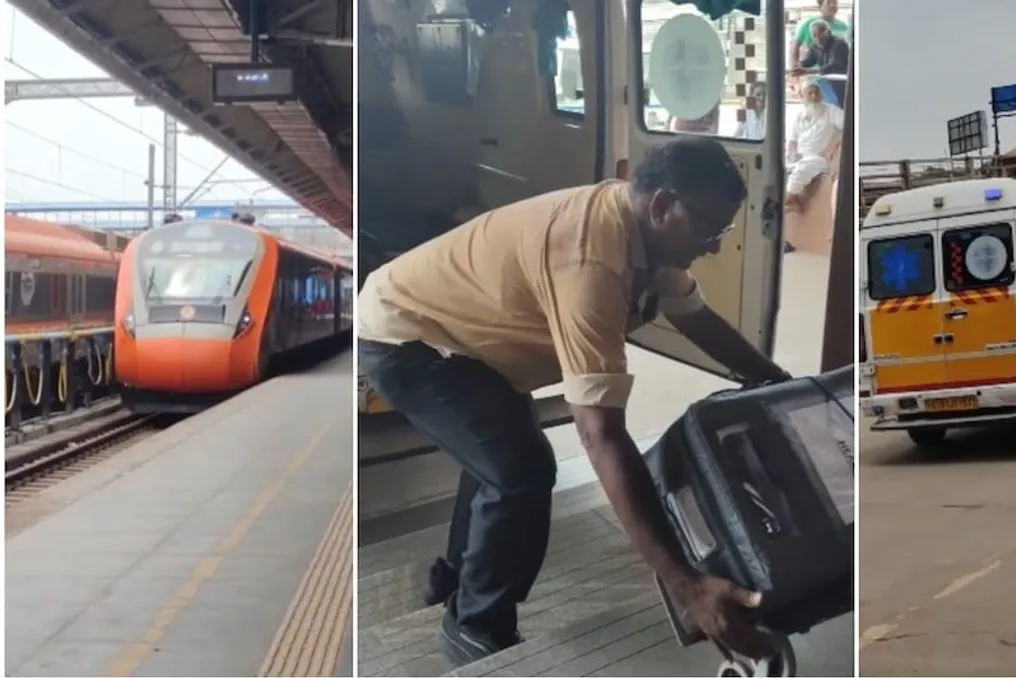
For the first time, a living human heart was successfully transported by the Vande Bharat train from Surat to Ahmedabad for transplantation. This marks a significant achievement for Indian Railways.
The main difficulty in heart transplantation lies in the need to adhere to strict time frames. A human heart after being removed from the body has a very short lifespan. Under these conditions, Indian Railways, with the support of the Railway Protection Force (RPF) and local police, organized the delivery of the beating heart from Surat to Ahmedabad.
For the first time, a living heart was successfully transported by the Mumbai Central-Gandhinagar Vande Bharat Express on the route from Surat to Ahmedabad. The heart was delivered to the Institute of Cardiology and U.N. Mehta Research Centre in Ahmedabad, where it was successfully transplanted into a patient. This train travels at a speed of 160 kilometers per hour, and the delivery of the heart over a distance of approximately 229 kilometers took about 2.5 hours.
To ensure smooth delivery, a 'green corridor' was established from the railway station in Surat to the hospital to avoid any delays due to road traffic. When the medical team arrived with the living heart at the Vande Bharat train, the train immediately departed at full speed, adhering to all necessary medical protocols.
Upon arrival in Ahmedabad, RPF and local police teams were already waiting at the station. Another 'green corridor' ensured the delivery of the heart from the station to the operating room without any delays. Previously, air travel or ambulance services were used for similar emergency medical transports, but Indian Railways utilized the speed of the Vande Bharat Express for the first time to successfully complete this mission.
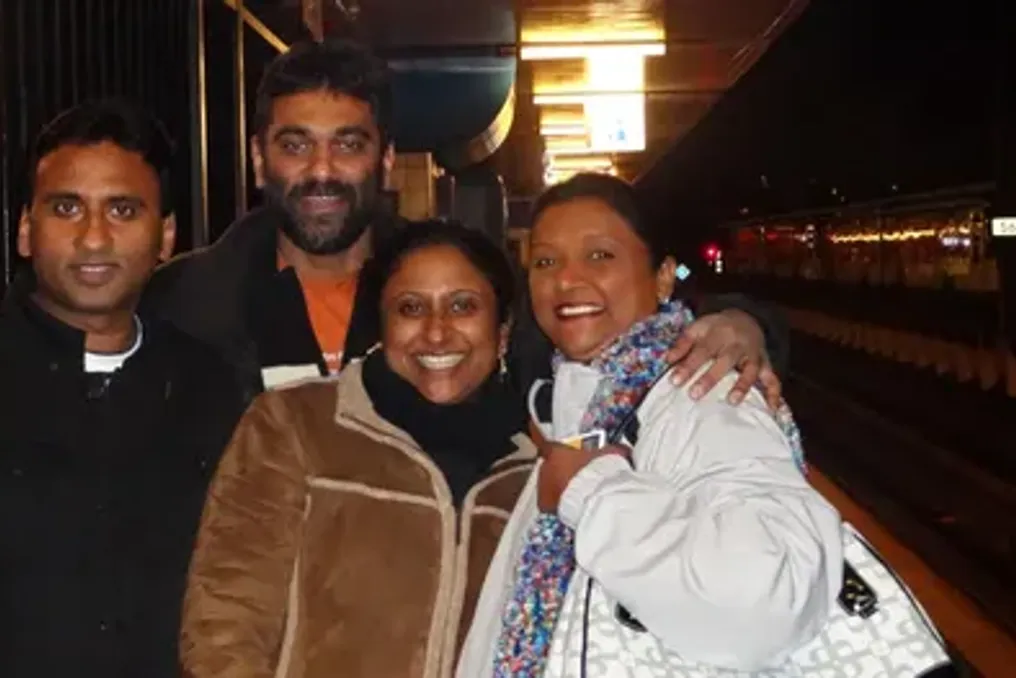
Kevin Naidu, a 60-year-old resident of Umlangi, serves as an inspiration by transitioning from a social and political activist to an optometrist and public health leader. He is among the 51 individuals recognized in the recently published book 'Unsung Heroes'—Volume Four.
Naidu shared his life story, which began with humble roots in Chatsworth. He grew up in Beyview with his parents, Shunmugam Naidu and Manormani Naidu, and three siblings: Kalavani Subramanian (deceased), Kumaran 'Kumi' Naidu, and Karmini Naidu.
He recounted growing up in a working-class family. His father worked as an accountant and a sports figure, particularly in football and cricket, while his mother was a homemaker. 'We grew up in a rather strict but supportive environment when one of the local gangs was outside your gate, and you couldn't go out because you would instantly be exposed to cannabis smoke in the air. So our parents tried to keep us on the right path. They involved us in extracurricular activities like sports and were strict about our studies,' he stated.
His mother passed away when he was 14, but the values she instilled in him and his brothers were never forgotten. 'It was a big change for us, but we were lucky that the values were already established. She was a caring mother and made us aware of what was happening around us and sensitive to the misfortunes of others. As a family, we were also active in the Sai Baba movement. My parents ensured we understood the scriptures and connected them to daily life. They always said, 'religion is not about how much you pray, but how you live your life.' We grew up in this culture, and as a result, became socially conscious.'
His education started at the state-funded Chatsworth Public School in Beyview, where he attended from first to fourth grade. 'It was a school of wood and iron with about 10 classrooms. Our ancestors built the school. The education we received was high quality and gave us a good foundation. It was also a small school, so there was a sense of warmth, and the teachers always encouraged us. I played sports and was an academically top student. I think the school really helped shape me into a well-rounded person.'
Subsequently, Naidu attended Depot Road Primary School and then Chatsworth High School from sixth grade until graduation in 1983. 'It was a strong school both academically and athletically at the time. I was active in sports again and excelled in my studies. What I liked most about the school was the diversity. There were children from different areas and religions. I remember celebrating Eid with my classmates from the Zanzibar community in their homes in Beyview.'
It was during this period that he began his social and political activism. 'I was only 14 years old, and my brother was a year older, when we joined Helping Hands. Initially, it was a social club founded by some teachers, but we soon turned it into a youth social movement. Kumi was the chairman, and I was the deputy chairman. We had initiatives to raise funds for our poverty alleviation programs, and we gathered youth through sports like football and athletics. We traveled by bus to Kerris Fountain to participate in matches against adult-led teams. We were never afraid to speak up when we arrived. However, Kumi and I played a central role in organizing boycotts against racism. This wasn't just opposition to racism, but a natural consequence of the values and religious lessons taught to us at home, especially about Hinduism being a triumph over evil and the need to oppose evil.'
At age 14, he and his brother, along with several other classmates, were expelled from school for the boycott. 'The school wanted to raise the flag on Republic Day, and we opposed it. We refused to let them do it and said it was not our republic. We were expelled, but we challenged the decision in court. They agreed that we could still take exams, but we couldn't attend school that year. All of us who were expelled gathered at my house to study together. We supported and motivated each other. It was a transformative year in my life. It shaped me as a social and political activist, as well as a person.'
His activities also attracted the attention of political parties. 'We were still doing grassroots work against the local government and the tricameral elections. This led to people like representatives of the Indian National Congress and the Black Consciousness Movement approaching us. Even high-ranking figures, such as Faruk Mir, sat in our living room and spoke with us. They saw young leaders in us. We joined the NIC and participated in their activities. We continued our work through Helping Hands. I remember traveling from Shalcross to Mbenhi Heights on weekends, boycotting the local government or the tricameral elections, and telling people why they should fight apartheid. It was not easy, as we, children, were telling adults what to do. Doors were closed to us or we were threatened with assault. But we continued the boycotts.'
In 1983, he joined the United Democratic Front (UDF), an anti-apartheid organization that united many anti-apartheid groups.
In 1984, he earned a Bachelor of Science degree from the then Durban-Westville University (UDW). 'Initially, I wanted to study medicine, but I did not achieve the necessary academic results because I was very busy during my final year with boycotts. However, after completing the four-year course, I decided to try applying to medical school. I was accepted provincially into a medical college in another province. At the time, I was the president of the Student Representative Council (SRC) at UDW. So I approached my colleagues and told them about the situation. They told me that I always lead them based on collective decision, and that the collective decided I could not leave. I had to quickly find something else to study, namely optometry. It was the best decision anyone made for me. Eventually, I became a global expert in my field.'
Naidu reported that as president of the SRC, they actively boycotted and protested against apartheid. 'UDW became one of the centers of protest. Students from all over the country talked about us and sought our guidance. However, this also put us under close scrutiny, and we began to be viewed as a threat to the State. In 1988, shortly after I picked up Lennie Naidu's parents following his murder to meet with the families of other murdered people, I was stopped by security police while driving on Higginson Highway in Chatsworth. It was a kind of high-speed chase, and when they managed to catch up to me, they pointed firearms at me. I had to stop. After being detained, I asked them why I was there? They replied, 'To teach you a lesson.' I asked them if I was a threat. I remember that this colonel told me that people like me, who unite people of different races into unity, like we did at UDW, pose a greater threat than people talking about militarism. After that, I was sent to eight months in solitary confinement at Westville Prison.'
After his release, he was issued a restraining order. 'This was difficult because I had to report to the police station daily and could not leave Durban or attend political rallies. I was still the president of the SRC and found ways to do so. In 1991, the restraining order was lifted. I learned a lot during this period, especially that leadership is about setting a personal example. You cannot preach what should happen if you yourself are not doing it. Another thing is that many activists, including myself, were willing to give their lives for the struggle, and many of us view this life as a bonus. I didn't expect to live to thirty.'
After obtaining his Bachelor of Optometry degree, Naidu received a Fulbright scholarship to study in the USA. Concurrently, he obtained a Master of Public Health degree from the Pennsylvania College of Optometry and a Doctor of Optometry degree from Temple University in Philadelphia.
In 1995, he returned to UDW as an optometry lecturer, and a year later, he was appointed head of the optometry department. 'In the US, I studied clinical and public health, so I returned with a combination of skills.'
In 1997, presenting research at the World Optometry Council conference in South Korea, he met a professor, and together they founded the non-profit organization International Center for Vision Education, which was later renamed the Brian Holden Vision Institute. 'I will never forget that day. The person before me presented a paper on how optometry is managed in Africa. Then, during my presentation, my first slide read: 'Optometry is in crisis in Africa.' Here I am, this young man among all these senior specialists in the field, saying the complete opposite of the previous person. I explained that in Africa, optometry is not a primary priority in public health. Furthermore, I said that having an optometrist does not mean success; serving people through optometry means success. The next day, I sat in the back of the conference hall, feeling defeated, when I was bombarded with questions after my presentation. The presentation was unsuccessful. Professor Brian Holden, who was from Australia, gave his presentation when he quoted what I said. I looked up and thought: who is this, and he just quoted me? He told the audience that they should listen to me and that he supported me. Later that evening, we had dinner together, and that night we agreed to found the organization. We had offices in Sydney, Australia, and Umbile, Durban.'
Through this organization, they conducted several research projects and established a fund. 'Our research was sold to large companies, and the funds raised were channeled back into conducting further research and a significant portion into the fund. Through the fund, we were able to open optometry schools in Malawi and Mozambique, as well as support the development of schools in Haiti and Vietnam. We also supported curricula and opened clinics worldwide. We helped entrepreneurs, including women from India and Pakistan, start their own optical shops.'
After Holden's death in 2015, Naidu moved to Australia. 'At the time, he was the CEO, and I was the deputy. Upon hearing the news, I packed my things and left within two hours. I needed to be there to support our demoralized staff. After that, I took over as CEO and continued our work, including research. About three years later, I retired and planned to return to South Africa. However, less than 48 hours later, I was invited by the OneSight Essilor-Luxottica Foundation, based in Singapore. I accepted the position of Senior Vice President. I joined them because of the work they were doing. They were creating entrepreneurs in rural areas, such as India and Bangladesh. Since then, we have helped 37,000 people open their own optical shops and connected them with optometrists using technology. Today, I also hold the position of Global Head of Advocacy and Partnerships. I returned in 2020.'
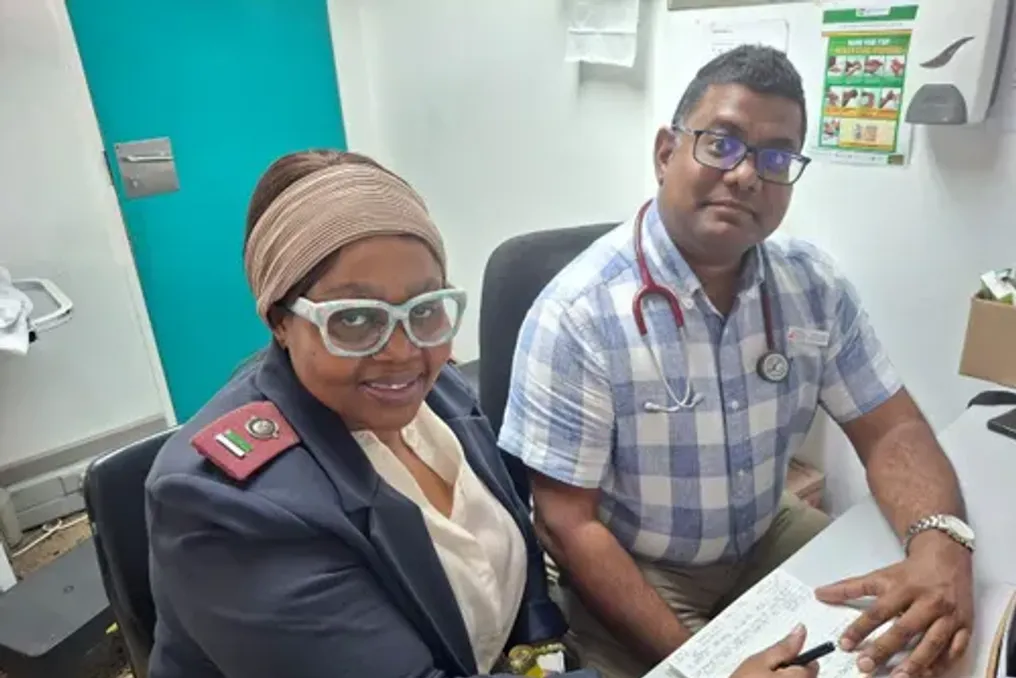
_Dr. Rishigen Viranna has taken the position of head of the Usizo Lwethu Sibaya clinic at the Denis Hurley Centre (DHC) in Durban, succeeding Sister Tobile Mthembu.
This was publicly announced by the DHC director, Dr. Raymond Perry, on Friday. Viranna previously served as a member of the KwaZulu-Natal provincial legislature.
Perry stated that Viranna decided to apply for the vacant position after providing five months of informal assistance. Mthembu held this role as the fourth manager for over two years.
Viranna is originally from Umhlanga and has traveled the world working as a doctor with Doctors Without Borders, gaining experience in Nigeria. His mother, Prema, who contributes monthly to the centre, advised him to volunteer at the clinic.
He received his medical degree from the University of Pretoria and subsequently completed internships and public service at a state hospital in Kimberley and at Mahatma Gandhi Hospital in Durban. According to Perry, the disillusionment he experienced there prompted him to leave medicine and enter politics, aiming to address problems at their root.
Viranna worked for eight years as an MPL member, participating in the DA Health Committee. He also spent two years in Sweden, where he obtained a master's degree in global health. He noted that this experience taught him that proper administration can solve local health issues, but there is a lack of political will to hold people accountable.
Viranna stated his vision: 'My goal is to provide people with the necessary medical care when they need it so they can live fulfilling lives.' He emphasized the presence of an excellent team to achieve this goal. He also mentioned that the values learned in school, such as love, care, and respect, align with the principle of 'seva' which he adopted from his Hindu family.
Dr. Perry added that Viranna possesses both high academic achievements and extremely relevant practical experience working with marginalized communities and advocating for their rights.