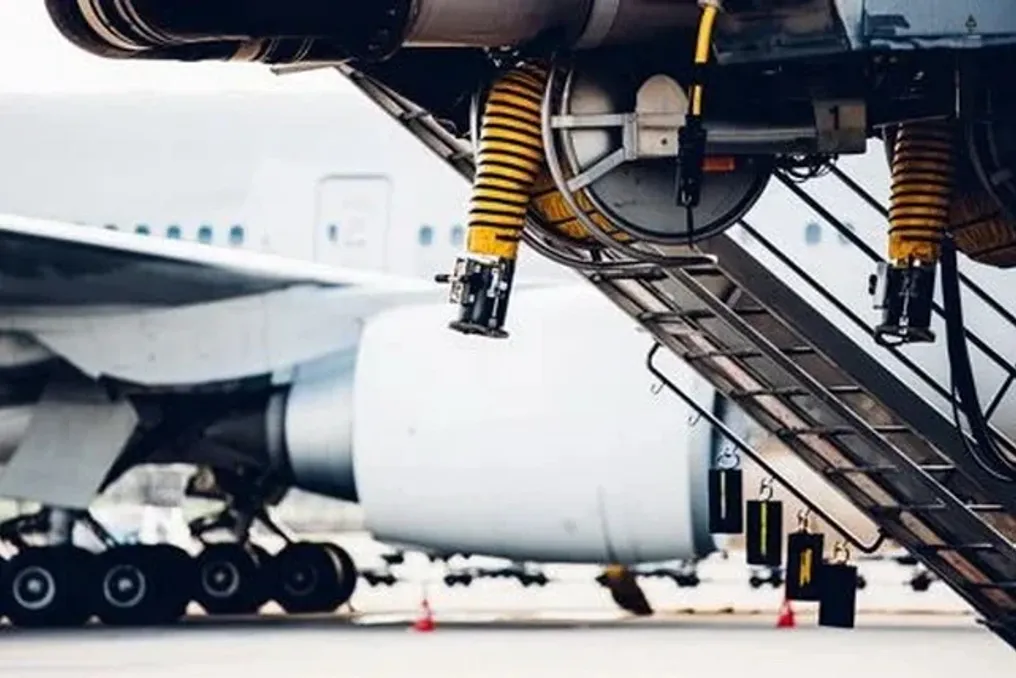
According to data from the International Air Transport Association (IATA), global demand for air cargo increased by 8.5% compared to the same period last year in June 2026.
According to data from the International Air Transport Association (IATA), global demand for air cargo increased by 8.5% compared to the same period last year in June 2026.
The indicator, measured in tonne-kilometers of cargo, showed a growth of 9.6% in the international operations segment. The overall capacity growth was 4.4%, and 4.9% for international flights. IATA Director-General Willy Walsh noted that demand growth was observed in all regions of the world, with North America contributing the most to the increase.
Walsh emphasized that the rate of demand growth exceeded the rate of capacity growth both globally and in most regions, with the exception of Latin America and the Caribbean. Furthermore, demand grew faster than global trade turnover, which was supported by the supply of high-tech products and urgent shipments.
These trends allowed Walsh to express optimism about the second half of 2026, but he also pointed out persistent risks. These include the ongoing conflict in the Middle East and increased US attention to tariff policy.
Global trade turnover grew by 5.2% year-on-year in June. Aviation fuel prices decreased by 20% compared to May but remain 45.8% higher than last year's level.
The global manufacturing Purchasing Managers' Index (PMI) fell by 0.5 points to 53.0, and the new export orders index remained below the 50-point threshold for the fourth consecutive month, reaching 49.4. This indicates that the growth in air transport is driven by specific trade routes rather than a broad increase in global exports.
North America showed the strongest growth among regions, where demand increased by 13.1% and capacity grew by 6.2%. In the Asia-Pacific region, the largest market with a 35.8% share of the global market, demand grew by 7.9%, and capacity increased by 4.3%. In Europe, demand rose by 6.9%, while capacity increased by 3.7%.
In the Middle East, demand grew by 5.6%, and capacity by 2.5%. However, IATA noted that this figure is distorted due to a weak base comparison, as June 2025 was particularly difficult for Middle Eastern carriers due to conflict-related disruptions.
Latin America and the Caribbean showed the worst results: demand grew by 3.5%, while capacity increased by 9.8%. In Africa, demand increased by 4.7%, despite a 7.1% decrease in capacity.
Trends on major trade routes were mixed. The Asia-North America route showed the highest growth at 14.7%, marking the fifth consecutive month of expansion and accounting for 23.5% of the industry's total volume. Intra-Asia cargo grew by 7.2% (the 32nd consecutive month of growth), and the Europe-Asia route expanded by 7.1% (the 40th consecutive month of growth), while the Africa-Asia route increased by 0.9% (the 12th consecutive month of growth).
Routes related to the Persian Gulf continue to face pressure due to the Middle East conflict. Europe-Middle East shipments decreased by 41.1% for the fourth consecutive month, and the Middle East-Asia route fell by 4.1%. Europe-North America shipments remained unchanged.
Mayuri Nitin Kale, a graduate of the engineering faculty, made a decision that differed from the aspiration of many engineers to get a job in a large company. After graduating, getting married, and having a daughter, she was offered a position in a corporation with an annual income of 500 thousand rupees.
However, this job required moving to Pune, which would have meant living far from her young daughter. Therefore, she declined the offer and chose a different path.
Instead of working in a corporation, Mayuri stayed in Nashik and opened a small juice stall. This decision proved successful, and today her business reportedly brings in about 5 million rupees per year.
According to available data, Mayuri rejected the company's offer solely because she did not want to be separated from her daughter. While some viewed this choice as a career sacrifice, others considered it an opportunity to find a balance between work and family life.
Mayuri had no business experience and did not start with large investments. She started with a small juice stall in Nashik, whose main goal was to offer customers fresh juices. Over time, thanks to consistent service quality and growing demand, her venture began to expand.
Media reports indicate that this business currently generates approximately 80,000 rupees monthly, with an estimated annual profit of around 5 million rupees.
Mayuri's story refutes the notion that success is achieved solely through a traditional corporate career. Although starting a business involves its own risks and difficulties, her journey demonstrates that small businesses can become big with hard work.
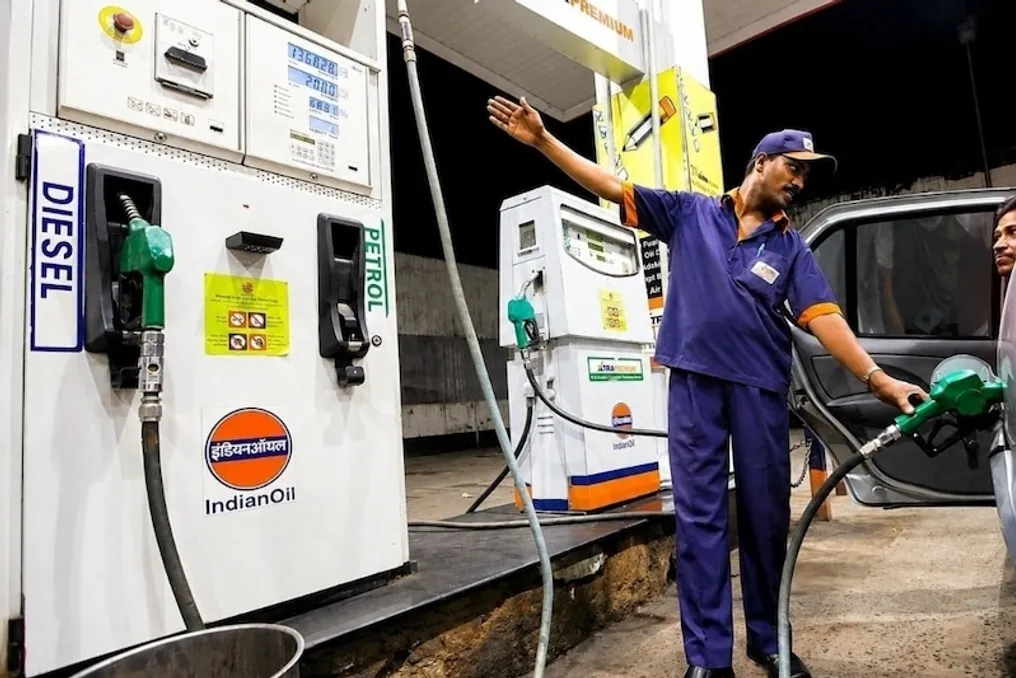
The government made a significant statement regarding its E20 policy, insisting on its immutability. According to the statement, despite high global crude oil prices during the conflict between the US and Iran, petrol prices did not rise significantly due to the implementation of the E20 policy.
Despite waves of discontent over E20, the government issued its fourth clarification on the matter within a week. It reported that in the event of an escalation of the conflict in the Middle East, petrol prices could reach 125 rupees per liter.
The Ministry of Petroleum explained in detail that during the war in Iran, global crude oil prices rose to $135 (equivalent to approximately 13,000 rupees) per barrel. This sharp price increase occurred because Iran closed the Strait of Hormuz following joint attacks by the US and Israel. This strait is a route for the import of oil and gas for the world, accounting for 20 percent.
The Ministry specified that when the price of crude oil in India reached approximately $135 per barrel, the projected price for unleaded petrol in India was around 125 rupees per liter. However, thanks to the addition of 20 percent ethanol, the average petrol price remained stable at about 95 rupees per liter.
The government noted that consumers paid 94.77 rupees per liter because 20% of the blend was domestic ethanol. Without this addition, petrol prices could have been 125 rupees per liter. Thus, during the crisis, consumers saved about 30 rupees per liter at the pumps.
Recently, the policy of blending 20% ethanol into gasoline has faced harsh criticism from opposition parties and consumer groups. Many vehicle owners claim that using E20 gasoline has led to reduced fuel efficiency and increased maintenance costs. Nevertheless, the government rejected these claims, stating that while E20 may reduce fuel consumption, its drawbacks are disproportionately smaller.
The government emphasized that one of the main advantages is reducing India's dependence on volatile global oil prices. India is the second-largest importer of crude oil, accounting for about 85% of the share. When the conflict in Iran began and the Strait of Hormuz was closed, petrol prices did not change for two months. The government eventually raised prices by only 7.5 rupees per liter in May.
Furthermore, the government stated that blending ethanol does not require taxpayer subsidies; it is a form of energy insurance for India. The Ministry also refuted claims about the use of subsidized grain, clarifying that rice obtained at concessional prices from the Food Corporation of India (FCI) is not used to produce ethanol. The Ministry strongly stressed that food security is not compromised, and ethanol is never produced at the expense of the poor.
Reliance Jio has released a new product called JioTag2. This compact device is designed to provide users with tracking functionality without requiring the installation of any SIM card.
The JioTag2 can be attached to backpacks, wallets, keys, and other electronic gadgets, making it easy to locate an item if it is lost. It is worth noting that the first version of the JioTag was introduced by Reliance Jio in 2023.
This device from Reliance Jio functions as a multi-platform tracker and integrates with the ecosystems of most smartphones, helping users find lost items.
JioTag 2 features dual compatibility, working with most mobile operating systems, including the ability to interact with Apple's Find My and Google Find Hub.
JioTag 2 includes several special features, including an audio signal, Bluetooth Low Energy technology, and access to a global community network.
Regarding audio alerts, this tracker is equipped with a built-in loud speaker with a power of 120 dB. When a sound playback command is issued through the connected application, the tracker generates sound, simplifying the search process.
The second advantage of JioTag2 is its use of Bluetooth Low Energy technology, which causes it to consume very little energy. Furthermore, a global community network service is integrated into it. If the tracker is lost outside the normal Bluetooth range, it uses a community-based location system.
JioTag2 does not require a SIM card to operate. This tracker functions entirely on a beaconing protocol, so neither a SIM card needs to be inserted nor any services paid for its operation.
JioTag2 has an IP64 rating, which guarantees its resistance to dust and water. It is equipped with a replaceable battery, and the company states that one charge can last up to a year. The battery is also supplied in the company's retail packaging.
The price of JioTag2 is 1249 rupees. It is available in several color options: black, green, and red, and is currently available on Amazon India.