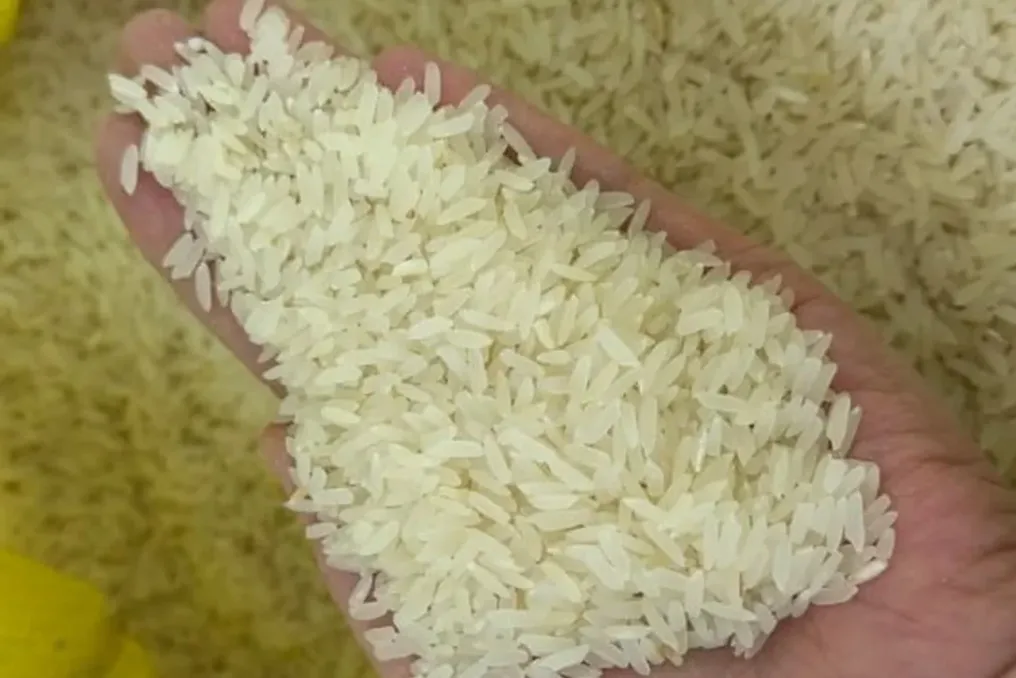
According to the press service of the Intellectual Property Agency of Uzbekistan, Khorezm rice has been officially registered as a geographical indication.
According to the press service of the Intellectual Property Agency of Uzbekistan, Khorezm rice has been officially registered as a geographical indication.
The rice grown in the Khorezm oasis is distinguished by its high quality, special aroma, and unique culinary properties. These characteristics are due to the natural conditions of the region, such as the waters of the Amu Darya, fertile soils, and favorable climate, as well as centuries-old cultivation traditions passed down from generation to generation.
Obtaining the status of a geographical indication provides legal protection for the name 'Khorezm rice' and confirms the direct link between the product and its place of origin. Furthermore, this status protects traditional production and preparation methods, guaranteeing compliance with state quality standards.
A geographical indication is an intellectual property object used to identify goods whose specific quality, reputation, or other features are directly related to a particular geographical area. This status contributes to the preservation of local production traditions and increases the product's recognition both in domestic and foreign markets.
Mammalian teeth generally possess two distinct specializations: crushing or cutting. However, the ideal shapes to fulfill these functions are inherently contradictory.
In the human dental structure, for example, there is a basic division: premolars and molars are adapted for grinding and crushing food, while canines and incisors are used for tearing and cutting. This organization imposes a trade-off: a tooth may be excellent at grinding but poor at piercing, or it may be extremely sharp for cutting, sacrificing crushing ability.
This concept of evolutionary compensation is common in various biological processes. Over the last 66 million years, mammal teeth have followed this principle, making it extremely rare to find a single tooth capable of performing both cutting and crushing with equal mastery.
A recent investigation sought to unravel the evolutionary origins of this dilemma. Researchers analyzed the dentition of carnivorous species to identify mechanical constraints in different dental shapes that favored this specialization.
The study, published on the 16th in the journal Science, involved analyzing the jaws of 250 species, including dogs, cats, and bears, as well as extinct mammals like creodonts. The focus was on 'carnassials,' teeth highly specialized in tearing flesh and bone, which evolved independently in several predator lineages.
Each tooth was digitized using high-precision 3D scans and subsequently replicated by 3D printers. These replicas underwent mechanical tests to determine how each tooth shape performed its respective function.
To assess cutting ability, the teeth were pressed against a medicinal gelatin designed to simulate animal tissues and muscles. To test crushing, the teeth were applied onto 3D models imitating the physical characteristics of bones.
Upon concluding the experiments, scientists managed to map which shapes were best suited for each task. Blade-shaped, elongated, and pointed teeth demonstrated greater competence in slicing simulated meat, although with a very narrow margin of error, where small changes in shape could drastically reduce their cutting effectiveness.
In contrast, teeth optimized for crushing showed greater tolerance to shape variations without significant performance loss. In the tests, the teeth that best withstood crushing pressure were characterized by being wider, possessing thick and rounded, bowl-like edges.
These two patterns are clearly opposite. Because of this, researchers identified only two species whose teeth could crush and cut with equivalent competence: the Spotted Hyena (Crocuta crocuta) and the Asian Palm Civet (Paradoxurus hermaphroditus), representing less than 1% of the animals examined.
Despite this, the finding is notable when considering the evolutionary origin of mammalian teeth. Current dental arches, with their highly specialized teeth, derive from a tribosphenic dental ancestor, which, unlike them, possessed both functions. Although the new experiments suggest this ancestral form had limitations, it is from it that various mammal species developed distinctly specialized teeth, generating the vast diversity of dentitions observed in carnivores, omnivores, and herbivores, a unique characteristic in the animal kingdom.
Swapnil Rao and Mrunmayee Deshpande Rao, known as Neil and Momo, gave up their demanding city careers for a more relaxed life on a farm in Mahabaleshwar. Their farm demonstrates that the principles of sustainable development begin with everyday decisions.
After acquiring degraded land, they spent a full year observing it. They note that they simply had to observe, listen, and try to understand the needs of the land, as nature itself showed them the way.
Their small house is built using local laterite stone and lime instead of cement, and it is equipped with natural ventilation and solar energy, proving that thoughtful design can reduce energy consumption daily.
For their fruit orchard, they collect rainwater, and domestic greywater undergoes natural filtration through reed beds before being used to water banana plants.
Every food waste part is composted and returned to the soil. Instead of creating waste, they turn food scraps into nutrients that support the health of their farm.
The farm grows vegetables, fruits, spices, and local trees together. This rich combination has led to the return of over 40 local species of birds, pollinators, frogs, and beneficial insects.
All products, from handmade soap to shampoo bars, are packaged in biodegradable, recycled, or handmade paper. As Momo says, 'Zero plastic, always.'
Their workshops include an audit of simple living that encourages people to reduce waste. One participant even deleted all their e-commerce apps after going through this experience.
Guests are served traditional Maharashtrian dishes made predominantly from produce grown on the farm itself. Fresh, seasonal food becomes the most memorable part of the visit.
Over five years, these daily choices have transformed barren land into a healthy ecosystem. Momo concludes: 'When the land starts singing back to you, when the frogs croak at night, and the birds greet you in the morning, then you understand that this is real work.'