Zimbabwe has added to its paleontological record with the discovery of a new dinosaur species that inhabited the region approximately 210 million years ago.
Zimbabwe has added to its paleontological record with the discovery of a new dinosaur species that inhabited the region approximately 210 million years ago.
According to Algoa News, the recently identified dinosaur, named Musango matusadonaensis, was found among fossil remains extracted near the shores of Lake Kariba in northern Zimbabwe in 2018. An international group of paleontologists officially described this find in the journal Journal of Systematic Palaeontology.
This dinosaur lived during the Late Triassic period, when dinosaurs began to spread across the planet but had not yet become the dominant land animals on Earth. Unlike the giant long-necked dinosaurs that appeared millions of years later, Musango matusadonaensis was significantly lighter. It reached a length of about 4.5 meters and weighed approximately 222 kilograms, comparable to the size of an adult pig.
The species name comes from the Shona word musango, meaning 'living in bushes,' reflecting the animal's habitat. Researchers believe this finding changes perceptions of prehistoric ecosystems in Southern Africa.
According to Paul Barrett, a researcher from the Natural History Museum in London, it was previously thought that the dinosaurs inhabiting Southern Africa were largely similar. However, new data suggests that various species of dinosaurs existed in the region, occupying separate ecosystems, indicating much greater biodiversity than previously assumed. Barrett noted that current discoveries may only be a small fraction of what is still hidden.
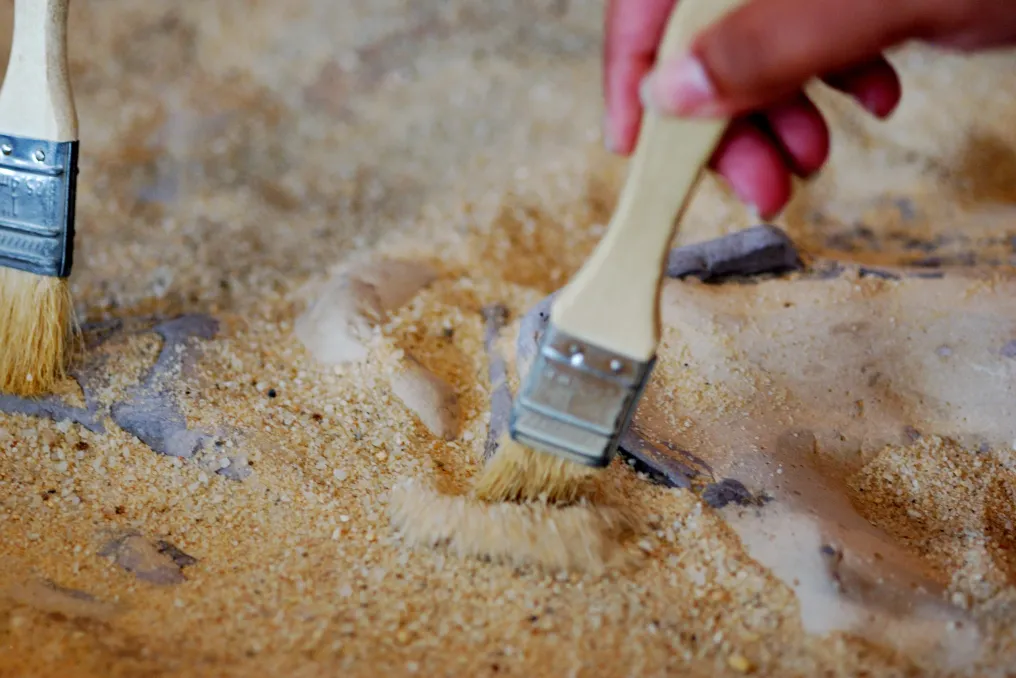
The fossil is one of the most complete skeletons of a dinosaur of its age found in Zimbabwe. Scientists were able to reconstruct the bones of the spine, ribs, limbs, and feet, allowing them to estimate the dinosaur's age at death to be approximately eight years old. The bones also showed signs of serious injury or infection sustained by the animal during its life.
Although the animal's skull has not yet been found, scientists speculate that Musango was likely herbivorous or omnivorous, feeding on vegetation growing along ancient rivers and streams. This discovery follows another important paleontological breakthrough in Zimbabwe: in 2022, the discovery of Mbiresaurus raathi was announced, considered the oldest known dinosaur in Africa. This small dinosaur, dated to approximately 230 million years ago, reached a height of about one meter, had a long tail, and weighed up to 30 kilograms.
Together, these discoveries help scientists reconstruct the early evolution of dinosaurs on the African continent, suggesting that much more is yet to be revealed beneath the ancient landscapes of Southern Africa.
Tyla's performance in Lagos as part of her 'A*POP World Tour' was removed from the official schedule following discussions related to boycott calls that arose amid conversations about xenophobia.
According to Nigerian content creator Solomon Buchi, the concert in Lagos is no longer listed in the official tour schedule. This was first reported by the news outlet 'African Folder,' which noted the disappearance of this date from the singer's list of performances.
This change occurred after Buchi criticized Tyla for her lack of public comment regarding xenophobic attacks that took place in South Africa, urging Nigerians not to support the show. In a video posted on Instagram, he stated: 'This show should not happen. This is the only time we should unite and stand up for something.'
Buchi's comments relate to the history of xenophobic violence in South Africa, where foreigners, including Nigerians and other African migrants, have been victims of attacks for years. Major outbreaks in 2008, 2015, and 2019 drew international attention, leading to the displacement of thousands of people and heightened diplomatic tensions between South Africa and other African nations.
Buchi expressed disappointment with Tyla's silence on these issues, arguing that her performance in Nigeria ignored the experiences of those affected. He emphasized: 'Not after the xenophobic attacks we saw in South Africa, and how immigrants were treated, especially Nigerian immigrants. Not a single word from Tyla.'
The content creator added that his call was not aimed at personal disagreements with the singer but served as a broader statement. He explained: 'It's not about Tyla. I don't have a conflict with her. It's about coming together as people and saying: 'No, we have a voice, and that voice matters.'
As of now, Tyla and her team have not made public statements regarding the alleged cancellation of the concert, and an official reason for the date's absence from the schedule has not been provided. This situation has sparked mixed reactions online: some users supported the boycott call, while others argued that artists cannot be held responsible for broader political and social issues.
Uzbekistan has decided to update its approach to the production of national souvenirs to make them more relevant, convenient, and attractive to visitors to the country. To implement this task, a contest named Uzbek Gift Contest has been launched.
The contest aims to give designers and artisans the opportunity to develop new products that harmoniously combine ancient craft techniques with modern concepts. The main objective of the initiative is to create souvenirs that reflect the cultural heritage of Uzbekistan while meeting the requirements of foreign guests—they must be compact, practical, and easy to transport.
The organizers of the event are the Committee for Tourism, the 'Hunarmand' association, and the Academy of Arts. In the initial stage, which runs until August 16, participants must submit their sketches and concepts across 25 different fields of decorative and applied arts. The most successful projects will move to the second stage, where their realization will be entrusted to artisans.
The period from August 20 to September 20 will be dedicated to creating physical samples of souvenirs based on the approved concepts. When reviewing the works, criteria such as originality of the idea, quality of craftsmanship, national color, ease of use, and final price of the item will be assessed. Winners are determined at each stage, and authors of the best works will receive a monetary award of 5 million soms.
The organizers emphasize that the project goes beyond simply creating goods for tourists; its goal is to form modern symbols of Uzbekistan that can represent the country's culture abroad and become part of its guests' experiences. Furthermore, Uzbekistan plans to significantly boost support for people in creative professions, paying special attention to creative associations in the fields of theater, cinema, music, dance, opera, folklore, pop music, as well as fine and applied arts.
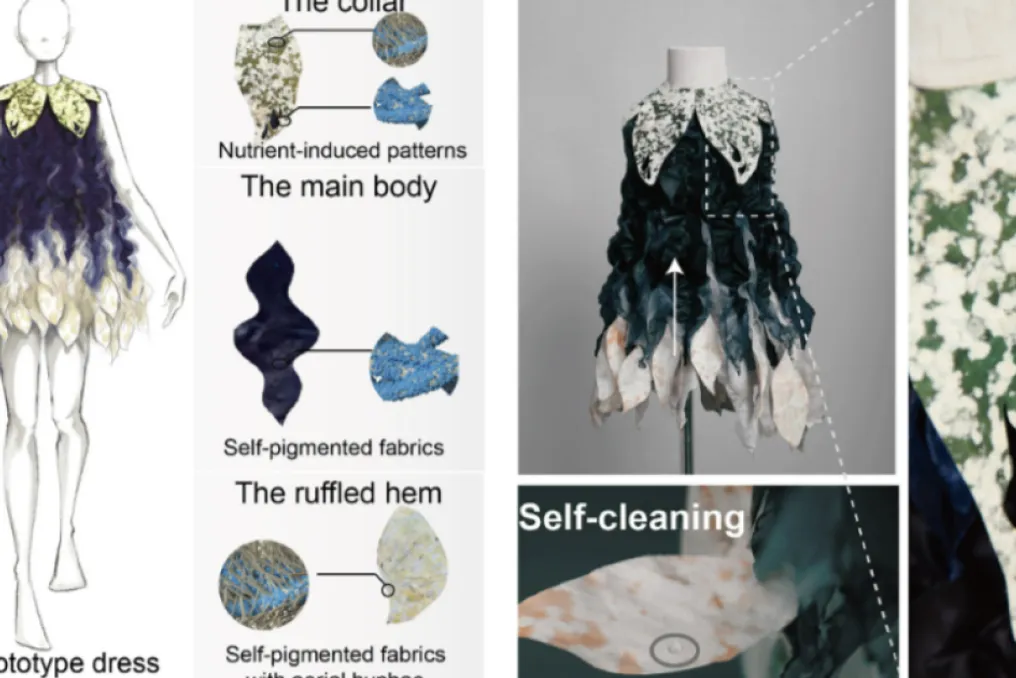
Chinese material science specialists have developed a functional living fabric made from mycelium. This material possesses self-healing and self-cleaning properties. By using genetically modified yeast, the fabric can be dyed in various colors, and hyphae from another fungus provide protection against ultraviolet radiation. These findings were reported in the journal Science Advances.
Although mycelium-based materials have been used for the past decade to create furniture, packaging, footwear, clothing, and even eco-friendly coffins, mycelium is most often subjected to thermal treatment or prolonged drying. This results in a leather-like material that, while biodegradable, is significantly less durable. Although living mycelium materials and devices are more complex to produce and less common, this area of research is not entirely new.
Under the guidance of Chao Zhun from the Shenzhen Institute of Advanced Technology, Chinese material scientists combined two different approaches to create wearable programmable fabric from living mycelium. The authors first grew granules of the fungus Cordyceps militaris mycelium, and then formed thin sheets from them. Initially, the material was too brittle, so glycerin was added to the composition before rolling. After testing various compositions, the team settled on a concentration of ten mass percent glycerin, which increased plasticity by about one and a half times without significantly reducing strength.
Since the fungal cells in the thin sheet remained viable, the fabric retained the potential for further growth. When nutrient medium was applied to specific areas, new aerial hyphae began to develop. Furthermore, the fabric has repair capabilities: holes can be closed by adding fresh mycelium granules, which securely fix to the original material upon drying via hydrogen bonds. Minor damage can heal itself simply by lightly spraying the material with water. The authors also noted that the resulting aerial hyphae give the surface hydrophobic properties, causing water droplets to form spheres and easily roll off, carrying away contaminants.
To change the color, researchers used genetically modified yeast, Saccharomyces cerevisiae. These yeasts attach to the mycelium surface and produce pigments of various shades. Different strains of yeast synthesize red, blue, purple, or orange pigments, allowing the fabric to take on the desired color without using traditional dyes. Protection against ultraviolet light was provided by another fungus, Aspergillus niger. Its melanin-rich hyphae form an additional living layer on the surface of the fabric that effectively absorbs ultraviolet radiation.
The researchers manufactured a dress from the resulting sheets, whose parts were joined without the use of threads or glue; after wetting, they bonded strongly due to hydrogen bonds. The dress, dyed with yeast and containing no metal or plastic elements, is completely biodegradable and decomposes entirely in compost in just forty days. The authors assessed the potential for industrial implementation of the material. They predict that with an annual output of thousands of tons of fabric, the cost will be around $13 per square meter, with nearly 40% of the expenses attributed to the nutrient medium for fungal cultivation. The researchers believe this figure can be lowered by replacing some ingredients with inexpensive agricultural waste.