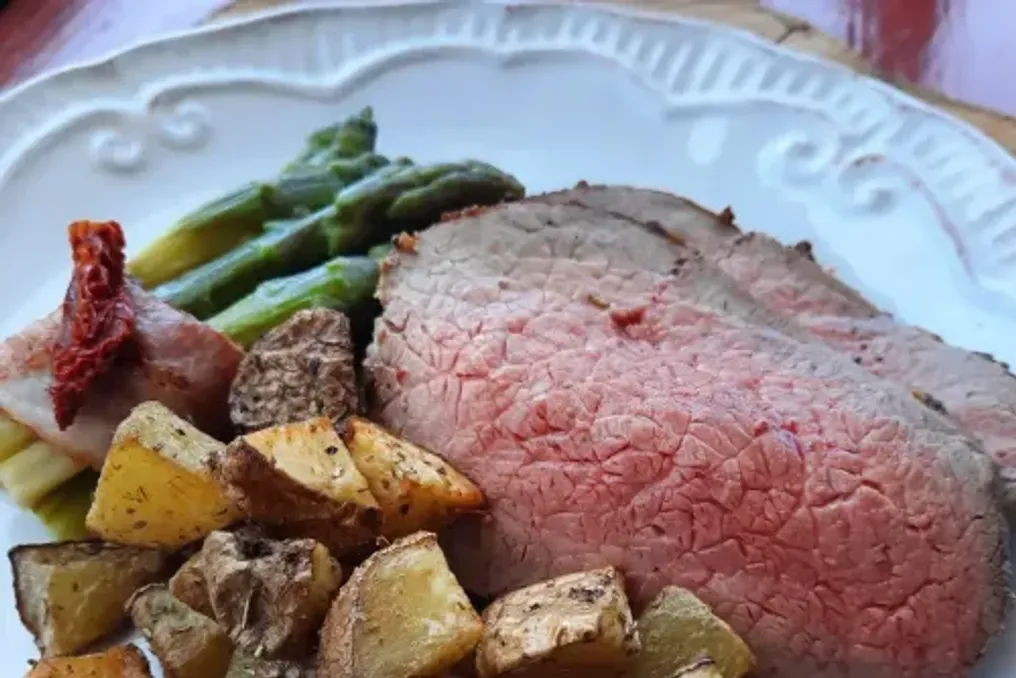
Roast beef is an excellent option for a complete Sunday lunch that avoids the high costs associated with lamb leg.
Preparing Classic Roast Beef
Silverside is an affordable cut of meat that can become an impressive dish for a family gathering, provided it is not overcooked in the oven. The seasoning is simple: olive oil, black pepper, salt, garlic powder, and onion powder are used. This results in an aromatic crust around tender slices of beef, ready to be served with roasted potatoes, vegetables, and gravy.
Step-by-Step Instructions
First, preheat the oven to 160°C and place the rack on the bottom or second-to-last level. Then, place the silverside in a baking dish or heat-resistant container. In a small bowl, mix olive oil, black pepper, salt, garlic powder, and onion powder. This mixture is rubbed evenly over the entire surface of the beef.
The beef is placed in the oven and baked for approximately one hour. After an hour, begin checking the internal temperature using a kitchen thermometer, inserting it into the thickest part of the roast. Continue baking until the center reaches at least 63°C. Cooking time may vary depending on the shape, thickness of the roast, and individual oven characteristics, so rely on the temperature readings rather than just the clock. After removing it from the oven, let the meat rest for 10 minutes before slicing. Then, slice the silverside thinly across the grain and serve hot with roasted potatoes, vegetables, and gravy.
How to Keep Silverside Juicy
Since silverside is a lean cut, the biggest mistake is leaving it in the oven for too long. A meat thermometer is especially useful here. Instead of assuming that a 1-kilogram roast will take a certain amount of time, start checking the temperature after about an hour. Insert the thermometer into the thickest part of the meat, avoiding the baking dish itself. As soon as the beef reaches the desired temperature, remove it from the oven and let it rest. For food safety, whole beef roasts must reach a minimum internal temperature of 63°C, followed by at least three minutes of resting.
The Importance of Cutting Against the Grain
The way the roast is sliced affects its tenderness when eaten. Before slicing, carefully examine the beef to determine the direction of the muscle fibers. It must be cut perpendicular to these fibers, not along them. Thin slices cut against the grain are easier to chew, which is especially important when dealing with lean cuts like silverside. For a Sunday lunch, you do not need to spend a lot of money on lamb leg to create a generous dish; well-prepared silverside will handle this task excellently. The main secret is simple: season well, monitor the temperature, let the meat rest, and slice it thinly against the grain. Add potatoes, vegetables, and gravy, and you will have a roast that more than deserves to be the centerpiece of the family table.