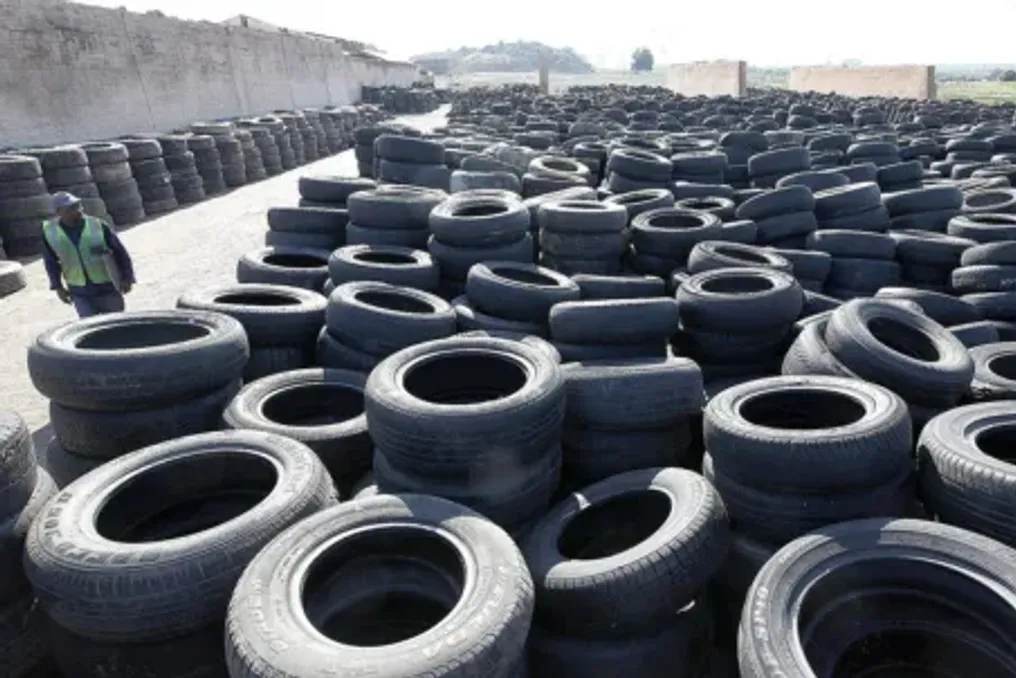
Stacey Jansen from REDISA states that the South African Recycling and Economic Development Initiative (REDISA) was illegally liquidated during the tenure of former President Jacob Zuma.
Environmental Problem in South Africa
South Africa produces over 70,000 used tires daily, with less than 30% being recycled. This situation poses an extreme environmental and public health threat. Tires that are not recycled accumulate on city outskirts and around informal settlements. There, they are burned to recover scrap metal, releasing carcinogens and heavy metals into the air breathed by the poorest segments of the population, as well as leaching toxins into groundwater.
History of REDISA
Initially, REDISA was created and funded by the industry through a producer responsibility system, rather than by government funds, specifically to address this problem. Between 2013 and 2017, the organization built a national collection and processing network, increased the number of tire recyclers from 12 to 32, raised the recycling rate from 4% to 55%, facilitated the creation of over 3,000 jobs and about 250 small businesses, and gained international recognition.
Illegal Liquidation and Legal Proceedings
However, REDISA was illegally closed during the Zuma administration, and the management of tire waste was transferred to a state structure through which contracts could be issued. In 2019, the Court of Appeal upheld REDISA's legality, ruling its liquidation illegal. REDISA is currently pursuing a lengthy damages lawsuit against the relevant liquidators.
Consequences of Closure and Current Difficulties
The consequences of REDISA's cessation of operations are still visible: many tire depots are overflowing, waste collection has collapsed, and thousands of jobs lost by collectors and transporters have not been recovered. The Department of Forestry, Fisheries and the Environment spent seven years and millions of rands trying, but failing, to develop a functioning plan for managing industrial tire waste. In response to the current situation, the department announced a tender to create 32 depots capable of holding over one million tons of used tires. Data from the Waste Management Bureau needed to solve the problem remains incomplete, inaccurate, or outdated. The problem is much broader, as potential is not being realized: effective management of all 13 waste streams in South Africa could increase GDP by 1.5 percentage points.
Importance of Criticism and Dialogue
Any official responsible for these issues deserves thorough scrutiny. Expressing concerns through all legal channels is not a sign of ill intent. Organizations whose arguments are ignored on their merits present their position publicly, often with professional support. If every interested party criticizing a minister or pointing out departmental shortcomings appears as an organizer of a conspiracy against the minister, supported by a communications firm, then the legitimate defense of interests becomes impossible, and normal democratic competition ceases to function. The standard political response to accusations of inefficiency has turned into a claim of a 'political attack.'
Position Regarding Legal Proceedings
Even alleged legal proceedings between the department and REDISA do not render interaction inappropriate. The mentioned lawsuit concerns a damages claim against the liquidators, not against the department. The department was drawn into the case because it granted blanket immunity to the liquidators, which is an extremely unusual step that the department must explain. However, if anticipated litigation is grounds for refusing any contact, out-of-court settlements will never happen. Illegal actions must be justly resolved, and this requires communication, not silence.
South Africa faces serious problems, but it often lacks the discipline to focus on them. The tire waste crisis is enormous, compounded and solvable. It deserves attention that is currently being spent on smoke screens of unfounded conspiracy theories.