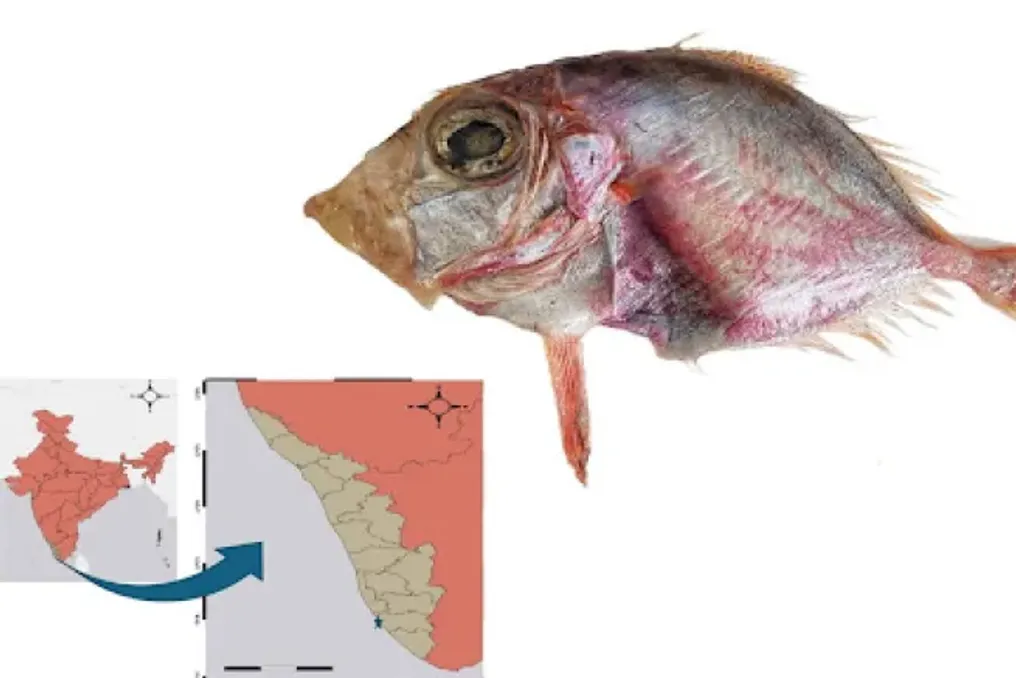
Marine scientists from the Central Institute of Marine Fisheries ICAR-CMFRI have discovered a new species of deep-sea fish in the dark waters off the southwest coast of India. This species, named Cyttopsis indica or Indian porgy, highlights the vast biodiversity yet to be uncovered in the poorly studied depths of the Indian Ocean.
Location and Conditions of Discovery
The new species was identified during biodiversity surveys conducted at the fishing port of Sakthikulangara in Kerala state. The specimens were initially collected by commercial trawlers operating at depths of 350 to 500 meters along the continental slope of the Lakshadweep eastern sea.
Scientific Confirmation of New Species
Although the fish initially resembled other known porgy species, detailed laboratory analysis showed that it is a separate branch of the evolutionary tree. To confirm the discovery, researchers employed integrated taxonomy, combining traditional physical examination with modern genetic testing. DNA analysis of the fish, particularly a gene used for DNA barcoding, revealed a genetic difference of 4.6% to 11% compared to its closest relatives.
Physical Characteristics of Cyttopsis indica
Molecular data proved that the Indian porgy is a unique species, distinct from the Atlantic Pink Porgy and the Pacific Small Porgy. Physically, Cyttopsis indica differs in several ways: it has two hard spines in the anal fin and a specific number of scales, 68–78, along the lateral line. Unlike its Pacific counterpart, which often has a noticeable black spot on its body, the Indian porgy has a uniform pinkish-silver coloration. Furthermore, it has a wider space between the eyes and a shorter head region behind the eyes compared to Atlantic species.
Significance of the Discovery
The scientists chose the name indica in honor of its habitat, referring to the Indian Ocean where the fish was first found. Researchers consider this discovery an important reminder of the hidden diversity in the oceans, where species can look almost identical to the naked eye but are biologically distinct. They hope that this finding will pave the way for more targeted research into the mysterious creatures inhabiting the deep-sea twilight zones of India.