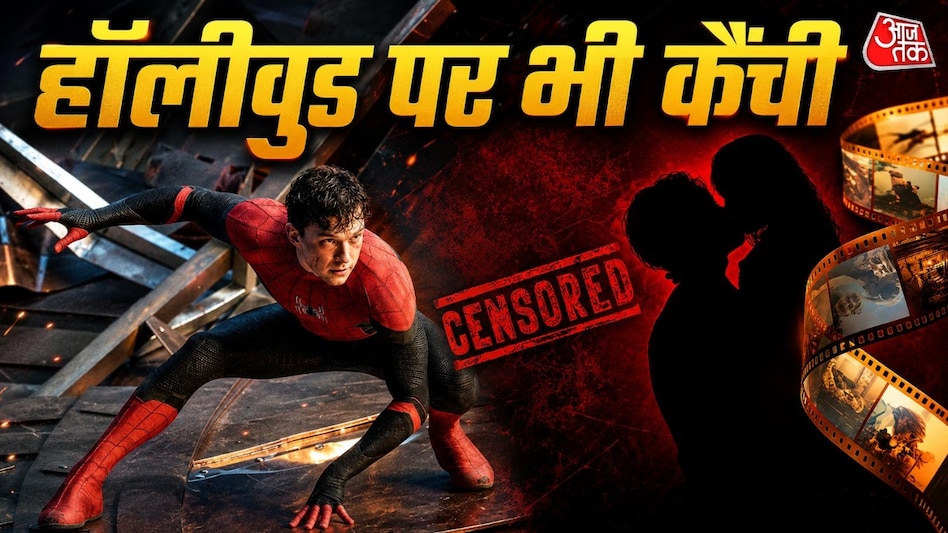
Recently, the Central Board of Film Certification (CBFC) required the creators of the upcoming film 'Spider-Man: No Way Home' to remove an eight-second kissing scene, reigniting the discussion about censorship. However, this is not the first instance where the Indian censorship body has interfered with scenes from Hollywood films.
Requirements of Indian Law
Before foreign films can be released in India, they must undergo screening to ensure compliance with local cultural norms and regulations. The CBFC frequently makes strict decisions regarding explicit, intimate, and kissing scenes, whether it involves the James Bond franchise, 'Oppenheimer,' or superhero stories.
Examples of Strict Censorship
Daniel Craig's film 'Spectre' (2015) became one of the most controversial cases in censorship history. It was mandated to significantly shorten the kissing scene between James Bond and Madeleine Swann, reducing the romantic sequence, which was originally about 40 seconds long, to just 22 seconds. There is an unofficial CBFC guideline stating that the duration of kissing scenes in films should not exceed set limits.
In the film 'Superman' (2025), the CBFC also intervened in two major moments of kissing between Superman (David Corenswet) and Lois Lane (Rachel Brosnahan). Among these was a long, aerial kiss lasting about 33 seconds, which was required to either be removed or substantially shortened. The board deemed these scenes excessively erotic before issuing the UA 13+ certificate.
In Christopher Nolan's masterpiece 'Oppenheimer' (2023), the CBFC did not ban kissing scenes, but it made changes to several intimate moments. CGI technology was used and a visual effect of black clothing was added to conceal nudity in the scene between J. Robert Oppenheimer (Cillian Murphy) and Jean Tatlock (Florence Pugh). Fewer changes were made to the kissing scenes.
'Deadpool' (2016), which is full of explicit humor, violence, and profanity, underwent serious clean-up before its release in India. At the direction of the CBFC, intimate and kissing scenes deemed too explicit were shortened, and many curses and graphic shots were muted or completely removed. After all these edits, the film was granted an A certificate.
David Fincher's film 'The Girl with the Dragon Tattoo' (2011) faced heavy censorship due to its dark content, nudity, and violence. According to Indian certification rules, many intimate scenes, including kisses and sexual contact, were either completely excluded or heavily shortened.
The strictest approach by the CBFC was demonstrated in relation to 'Fifty Shades of Grey' (2015). Due to extremely explicit scenes, long kissing moments, nudity, and BDSM content, the board demanded significant revisions. However, instead of showing it with such changes, the production company Universal Pictures decided not to release the film in Indian cinemas at all.
In the romantic drama 'Love and Other Drugs' (2010) starring Jake Gyllenhaal and Anne Hathaway, the CBFC required the creators to add numerous romantic adjustments to obtain permission for screening in India. This included shortening some kissing scenes and completely editing more explicit episodes.
Martin Scorsese's film 'The Wolf of Wall Street' (2014) only managed to reach the Indian audience after numerous changes. Numerous kissing scenes, intimate, and explicit moments were removed from it. Furthermore, extensive cuts were made in scenes related to nudity, drug use, and the use of profanity.
The psychological thriller 'Black Swan' (2010) attracted the council's attention due to its explicit content and nudity. Before granting permission for cinema release, the council ordered substantial reductions in popular kissing and intimate scenes between Nina (Natalie Portman) and Lily (Mila Kunis).
In 'Blue Valentine' (2010), the explicit display of adult intimacy between lead actors Ryan Gosling and Michelle Williams was deemed too daring by the CBFC for Indian cinemas. As a result, long kissing scenes and other intimate moments had to be significantly trimmed before the release.