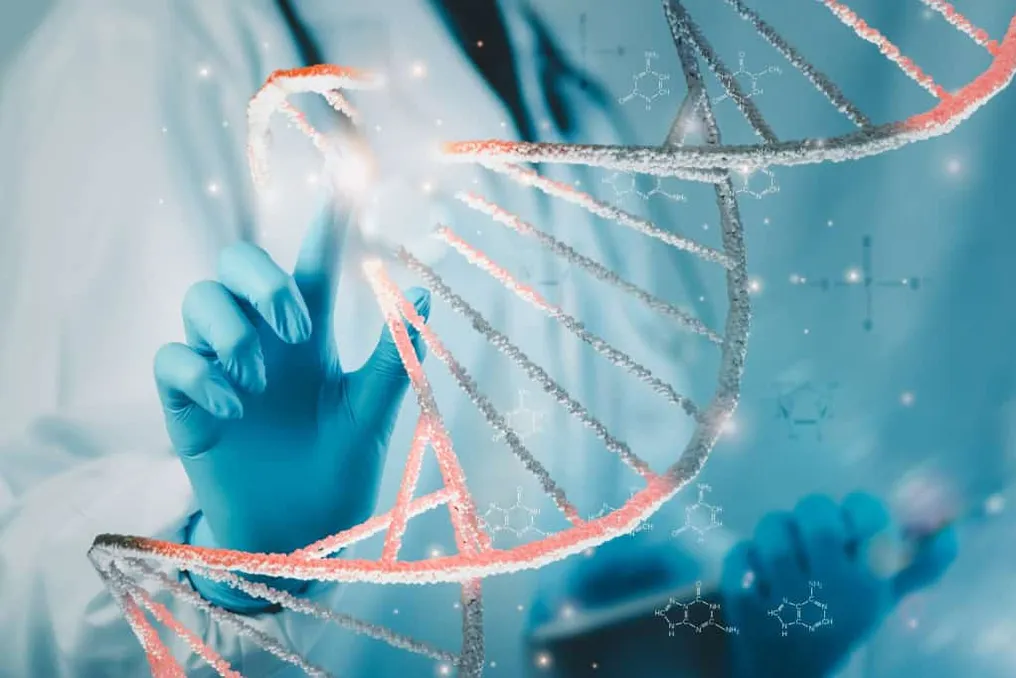
A new genomic analysis procedure has made it possible to discover traces of two extinct archaic human lineages, whose genetic materials were preserved in the DNA of currently living individuals. This research was published in the journal Science this Thursday (30) and was conducted by researchers from the University of California, Berkeley, in the United States.
Discoveries and the New Method
One of the extinct lineages left its genetic mark across the entire contemporary human population. The second, classified as 'super-archaic', dates back to a period close to two million years ago. Priya Moorjani, an evolutionary geneticist at UC Berkeley and co-author of the study, informed Live Science that these populations could have existed hundreds of thousands or even over a million years ago, but their genetic legacies persist in our current genomes.
The scientists developed a methodology capable of examining and comparing more than 500 modern human genomes from various global regions. Using this data, they were able to reconstruct the complete genealogies of every genetic segment of each person, mapping all the moments when genetic lineages separated or merged.
The focus of the investigation was on ancestors who showed significant genetic differences compared to modern humans, suggesting a separation that occurred long ago. Unlike previous methods, this new approach eliminates the need for fossil DNA samples to identify ancient genetic sequences in the current human genome.
Recovering Hidden Genetic History
Moorjani emphasized that it is no longer necessary to wait for exceptional fossil preservation to gain knowledge about disappeared human populations. She explained that the genomes of living people carry traits of these ancient ancestors, and genealogical methods allow for the recovery of part of this hidden history.
The technique was experimentally validated, correctly identifying Neanderthal and Denisovan ancestors in modern human genomes, in addition to revealing unprecedented cases of interbreeding with extinct groups. The study also contextualizes the research, mentioning that most people without sub-Saharan ancestry possess between 1% and 2.4% Neanderthal DNA, while Asians and Oceanians show between 0.1% and 6% Denisovan DNA. However, the scarcity of ancient DNA samples made it difficult to identify other extinct lineages with which Homo sapiens might have interacted.
Universal Lineage and Ancestral Candidate
The DNA of the first phantom lineage was detected in all modern humans, indicating a crossbreeding with Homo sapiens in Africa more than 50 thousand years ago, prior to the species' most recent migration out of the African continent. This genetic material corresponds to approximately 0.5% to 1% of the current human genome, a proportion similar to that found in the Neanderthal DNA of many living individuals.
The scientists estimated that this phantom lineage diverged from the ancestors of modern humans about 800 thousand years ago, coinciding approximately with the period of separation of Neanderthals and Denisovans. Yulin Zhang, a computational biologist at UC Berkeley and co-author, commented that previous publications suggested phantom ancestry but did not clarify whether this unknown ancestry was exclusive to Africans or when the introgression event occurred. He stated that they managed to locate and map the genomic locations of this lineage in modern humans, proving that this ancestry is present in all humans, not just in Africans.
A possible candidate for this lineage is Homo heidelbergensis, a species that inhabited Africa and Europe between about 700 thousand and 200 thousand years ago, according to the authors. Chris Stringer, a paleoanthropologist at the Natural History Museum of London, although not involved in the research, agreed with this hypothesis, observing that H. heidelbergensis was present in Africa for at least 300 thousand years.
Super-Archaic and Oceanian Peoples
Additionally, the researchers found evidence that populations in Oceania inherited characteristics from a 'super-archaic' human lineage. This lineage separated from the ancestors of modern humans about 1.8 million years ago, before the emergence of the common ancestor between modern humans, Neanderthals, and Denisovans.
This super-archaic DNA represents, on average, about 0.002% of the analyzed Oceanic genomes and appears in regions associated with Denisovan DNA, suggesting that it reached modern humans through interbreeding with Denisovans. Fernando Villanea, a population geneticist at the University of Colorado Boulder, suggested that the age of this super-archaic DNA may indicate that it arrived in Denisovans—and subsequently in modern humans—from Homo erectus.
Villanea added that H. erectus skulls found in Yunxian, China, exhibit some similarities with Denisovan fossils, but warned that only a limited amount of H. erectus genetic material has been examined so far. These findings corroborate Villanea's view that 'hybridization is the norm and not the exception' in human evolution, helping to redefine scientific thinking away from a notion of human exceptionalism, showing that 'we are the product of multiple species.'
Future Genomic Implications
The DNA segments of these lineages are dispersed throughout the human genome, but are more concentrated in areas related to the immune system and metabolic function. Moorjani justified this by saying that the need to adapt to new pathogens and food sources was a crucial driver of human evolution, and that mating with extinct groups allowed modern humans to acquire potentially advantageous DNA.
Stringer assessed that the new technique provides 'indirect ways to reconstruct parts of the genomes of more primitive species, such as H. erectus and H. heidelbergensis'. In the future, scientists plan to apply the method to detect more phantom lineages, focusing on regions such as Africa and South Asia, which are poorly represented in ancient DNA studies. Moorjani also pointed out that the technique can help researchers investigate the evolutionary trajectory of other species where the fossil record is scarce or nonexistent. She concluded that human history is revealing itself less as a simple family tree and more as an intricate network of populations interconnected by recurring events of divergence, migration, and mixing.