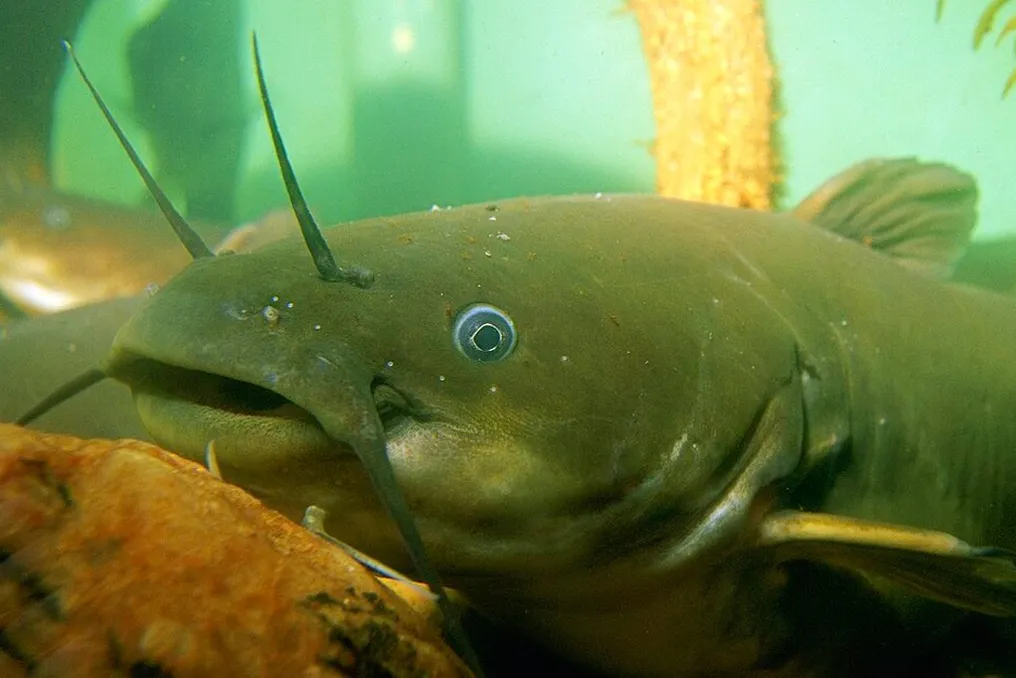
An unprecedented discovery has revealed the first contagious type of cancer in fish, affecting brown bullhead catfish in a lake located on the border between the United States and Canada.
An unprecedented discovery has revealed the first contagious type of cancer in fish, affecting brown bullhead catfish in a lake located on the border between the United States and Canada.
In Lake Memphremagog, situated on the border between Canada and the United States, catfish of the species Ameiurus nebulosus had been showing abnormal signs for over ten years. Local fishermen observed the presence of dark tumors on the fish years earlier, and later, biologists confirmed that it was an atypical case of skin cancer.
An article published in the journal Nature classifies this condition as the first documented transmissible cancer in fish globally. Initially, investigations focused on possible causes such as environmental contamination or viral infections, but these hypotheses did not provide satisfactory explanations.
The biologists responsible for the study expanded the research focus, proceeding to sequence the individual genomes of the fish in an attempt to identify DNA mutations responsible for the cancer. It was during this process that indicators of a transmissible tumor were detected.
The main characteristic is that the tumors possessed DNA distinct from that of the catfish carrying them. The cancerous cells from different individuals of fish shared thousands of genetic variations, constituting their own genetic lineage, separate from the healthy cells of the hosts. This indicated that all cells had a common origin and were being transferred from one animal to another.
Although melanomas are considered rare in catfish, in Lake Memphremagog, more than a third of the specimens presented such tumors since 2012. These manifested as intense black skin lesions, often accompanied by scabs on the skin. In some cases recorded by biologists, the tumors progressed from superficial lesions to reaching the brain, liver, and other internal organs.
Julie Dragon, a data scientist at the University of Vermont, USA, and co-author of the research, stated that the effects of this cancer on the health of the catfish are not yet fully understood. She emphasized that the tumors appeared in both young and older fish, adding that 'we have no evidence of a drastic age-related change suggesting that this is killing the fish' in an interview with Nature.
With this finding, the number of known cases where tumor cells naturally transmit between animals is reduced to four. The other examples include a sexually transmitted tumor in dogs, two distinct types of cancer in Tasmanian devils (Sarcophilus harrisii), and tumors affecting bivalves, such as mussels and oysters.
Michael Metzger, a biologist at the Pacific Northwest Research Institute in Seattle, Washington, proposes the theory that the transmission of tumors in catfish occurs through direct contact, following the pattern observed in dogs and Tasmanian devils. Dragon mentioned that her team confirmed, in a yet unpublished study, the existence of transmissible melanoma in Ameiurus nebulosus in other locations. Furthermore, she began searching sports fishing platforms for signs, citing that 'there are fishermen posting photos that show characteristics very similar to this condition.'
Meanwhile, the scientific community debates whether the emergence of these transmissible cancers is linked to broader ecological changes or if technological advancement has facilitated their identification. It is relevant to note that although the type of tumor affecting dogs emerged more than 6,000 years ago, other types may have appeared much more recently.
The National Commission for Indian System of Medicine (NCISM) issued a warning regarding the practice of labeling duly registered AYUSH doctors with terms such as 'quacks' or 'fake doctors'.
The Commission stated that such remarks lack legal basis and may violate the legal and constitutional rights of these specialists.
This statement was made in New Delhi and is likely to intensify the discussion surrounding the legal status of traditional medicine practitioners.
Anvisa decided to withdraw a specific batch of the medication Paramol 750 mg from the market after finding that the tablets showed signs of possible fungal contamination.
The determination covers batch number 114053, consisting of 200 tablets, and was manufactured by the company Belfar Ltda. This action prevents the distribution, sale, and use of the affected product.
According to Anvisa, dirt was observed on the tablets suggesting the presence of mold, a type of fungus commonly known as mildew. Paramol, whose active ingredient is paracetamol, is intended for the treatment of mild to moderate pain and fever control.
Individuals who possess this medication are instructed to check the identification on the packaging and immediately stop using it if the product belongs to batch 114053. The health agency provided several recommendations:
This measure, formalized in the Official Gazette of the Union, aims to remove the units related to the identified batch from commerce, thus preventing any potential risks to consumers. Anvisa emphasizes that consumers must follow the agency's guidelines and seek professional guidance before replacing the product.