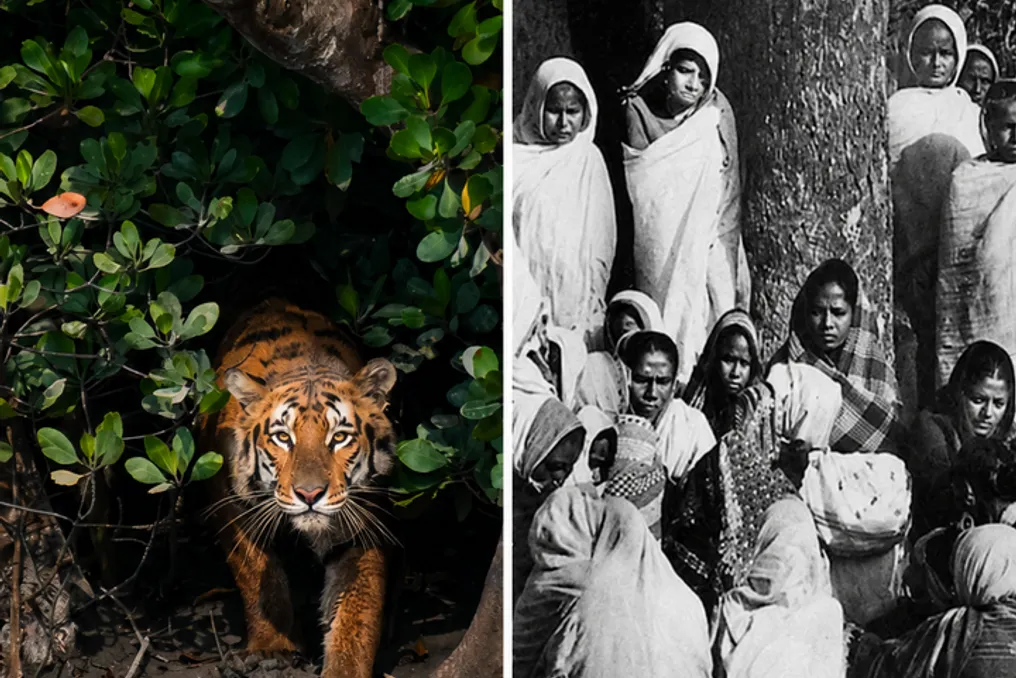
The Sundarbans supports the lives of thousands of families, but any trip into the forest for fishing, crab catching, or honey gathering can turn into a tragedy. For many women, this has led to them becoming 'tigress widows.'
Tragedy and Stigmatization
Since 2000, about 300 people have died due to tiger attacks. For many of these widows, the grief continued long after their husbands' deaths. They were called 'swami khejos' or 'husbands devourers'; they were accused, ostracized, denied compensation, and left to raise their children alone.
Ecosystem Restoration Initiative
Years later, the social enterprise i-Behind The Ink (IBTI), with support from Conservation International, invited these women to participate in restoring the disappearing mangrove forests of the Sundarbans while providing them with livelihoods. Today, these women collect seeds of rare Sundari trees, care for fragile saplings, and plant them along the eroding riverbanks.
Results of Conservation Efforts
Each tree they plant strengthens the natural defense of the Sundarbans against cyclones. By 2025, 59 women joined this initiative, restoring 100 hectares by planting over one hundred thousand mangrove trees. As one of the 'tigress widows,' Heta Mridika, says: 'One tree is one life.' Women who lost their husbands in the Sundarbans are now protecting the future of this region by planting one mangrove tree each.