The provided text is a paid subscription and contains only advertising calls to action, not factual news information about choosing injectors.
Similar stories
flatout.com.brJuly 30, 23:03
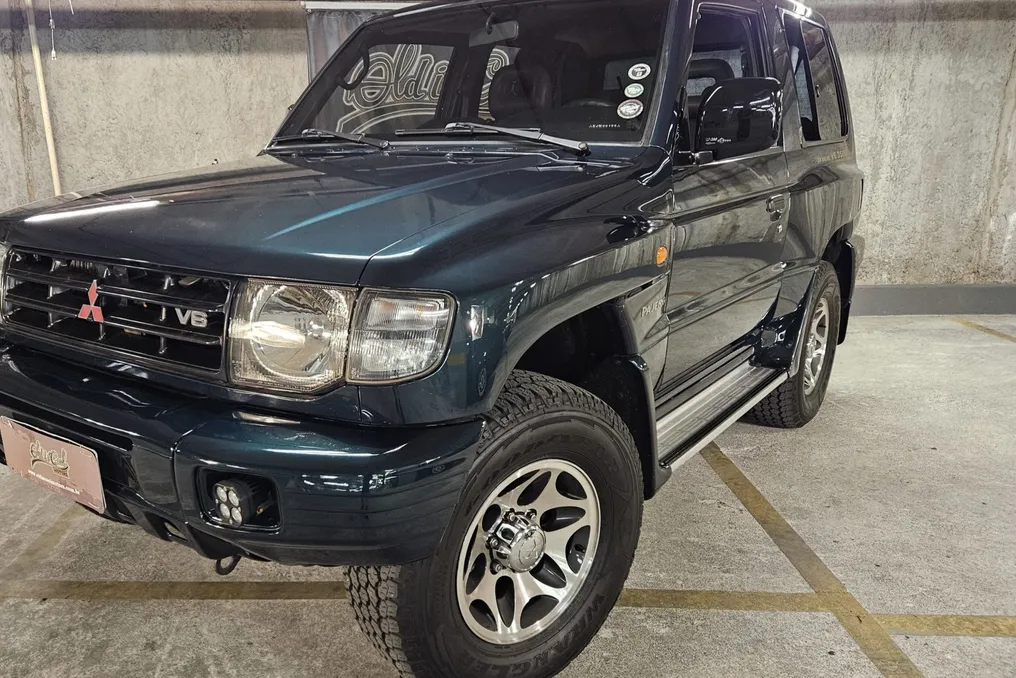
Mitsubishi Pajero GLS-B V6 manual: analysis of a classic off-road model
There is a combination of features highly desired by enthusiasts: short wheelbase, two-door body, genuine 4x4 with low range, V6 engine, and notably, a manual gearbox. Although such specifications are rare in new vehicles, they can still be found in used and neo-classic models, offering very attractive options.
Mitsubishi Pajero SWB Features
This set of elements defines the Mitsubishi Pajero in its 'Half-Lost Find' version. Despite some variants being seen only as common urban SUVs, the correct version represents a highly coveted addition for collectors of classic off-road vehicles. While the traditional four-door version served many families in the 90s and 2000s, the short-wheelbase (SWB) two-door variant provided ideal proportions for off-road use.
With minimal front and rear overhangs, a superior center approach angle, and greater agility, the short Pajero transcended the idea of a discreet vehicle, aligning itself with the essence of the prototypes that established the three-diamond brand as dominant on the planet's toughest terrains. This compact geometry was not just an aesthetic choice; it formed the basis of homologation and the agility formula of Mitsubishi in the world's most rigorous off-road competitions, such as the Dakar Rally.
Competitive Legacy and Off-Road Culture
Between the 90s and mid-2000s, Mitsubishi achieved one of the strongest hegemonies in the history of world motorsport, winning 12 Dakar victories, seven of them consecutively (2001-2007). The Pajero became the main competitor in the dunes, led by legendary figures. Kenjiro Shinozuka was the first Japanese driver to win the rally in 1997. In 2001, Jutta Kleinschmidt made history by becoming the first and only woman to win the Dakar overall classification. The dominance continued with Hiroshi Masuoka's two championships in 2002 and 2003, and with the performance of Stéphane Peterhansel, known as 'Monsieur Dakar', solidifying the Pajero as a resilient icon in the desert sand and rocks.
This competitive tradition deeply influenced Brazilian off-road culture. The passion for cross-country rallies grew in the country, driven by the Rali dos Sertões and the creation of the Mitsubishi Cup in the 2000s, where the Pajero SWB established itself as the ideal tool for driving. Pioneers like Klever Kolberg and André Azevedo, who also represented Brazil in the African dunes, helped create the model's mystique in Brazil. Later, champions like Guilherme 'Guiga' Spinelli reinforced the perception of Mitsubishi as a benchmark in engineering and resistance to face the mud, dust, and irregular terrain of the country's interior.
Vehicle Details and Mechanics
It is this heritage that makes the unit advertised by Old is Cool Motors a remarkable find. It is a 1999 Pajero GLS-B, featuring the classic dark green paint and a mechanical configuration rare in the national market. Under the hood is the 3.0 V6 12V engine from the 6G72 family. This engine, with an cast iron block and single overhead camshaft, has a reputation for extreme durability, built for extreme conditions. The gasoline V6 generates approximately 150 hp and a considerable torque of about 24 kgfm at low RPMs, designed to be a linear, robust, and reliable unit, capable of propelling the utility vehicle up any steep incline.
The main appeal of this vehicle lies in its five-speed manual transmission. Most V6 Pajeros imported to Brazil in the 1990s came with a four-speed automatic gearbox, which, while comfortable for the city, reduced engine thrust and made driving slow due to the torque converter, besides not optimizing fuel consumption. The manual gearbox transforms the nature of the car, eliminating hydraulic drag, allowing the extraction of raw power from the V6 right above idle speed, and giving the driver total control of traction in delicate off-road maneuvers, while providing the characteristic metallic sound of the V6 engine.
Super Select 4WD Traction System
In sync with the manual gearbox is the Super Select 4WD (SS4) system, considered a masterpiece of Mitsubishi engineering and a milestone in the 90s industry. At that time, most 4x4 utility vehicles used conventional part-time systems, prohibiting engaging four-wheel drive on dry asphalt because the absence of a center differential caused transmission locking in curves, potentially damaging gears and tires. Mitsubishi overcame this limitation with an innovative transfer case, equipped with a center differential and a viscous coupling (VCU).
Super Select offers four modes controlled by a physical lever on the console. In 2H mode, the vehicle operates only with rear-wheel drive, which eases steering and improves fuel economy on roads. When switching to 4H—operation possible while moving up to 100 km/h—the system divides torque 50/50 between the front and rear axles through the center differential, allowing indefinite driving on dry asphalt, wet cobblestones, or rainy slopes with greater stability and grip. For truly unstable surfaces, 4HLc mode locks the center differential, ensuring firm traction to overcome mud, loose gravel, and soft sand. Finally, the 4LLc position activates the reduction gear, multiplying torque and keeping the center locked, transforming the Pajero into a vehicle capable of climbing cliffs or navigating deep gullies with precision.
Design and Interior Finish
All this mechanical complexity is enveloped by the body featuring the Blister Fender design, a detail appreciated by global 4x4 enthusiasts. Introduced in the final redesign of the second generation (often called 'Generation 2.5'), this feature replaced the old bolted plastic fender flares with fenders molded directly into the steel body panel. This robust and voluminous look, inspired by the legendary homologation Pajero Evolution, gave the car a much more aggressive presence. Beyond aesthetics, the Blister marked the last evolution of the Pajero built on the classic ladder frame with a rigid rear axle, before the third generation migrated to the monocoque structure.
Inside, the Pajero offers a striking contrast typical of the automotive industry of that era. The cabin mixes the refinement of a nineties executive sedan—with gray leather seats and wood details on the console and dashboard—with the functional instrumentation of a transcontinental expedition vehicle. The trunk, with the rear seat in the normal position, holds just over 200 liters, which may require the installation of a roof rack, such as those from Thule. Above the wood trim, the iconic central housing with analog altimeter and inclinometer stands out, essential on severe trails. It is a union of vintage luxury and top-of-the-line comfort of the turn of the millennium with the mechanical rusticity of a pure utility vehicle, presenting a solidity and finish quality that is hard to find today.
Model Conclusion
Finding a well-preserved second-generation Pajero with a short body is already a difficult search in the current market. Locating a 'Blister Fender' V6 manual model in such condition is finding something extremely rare. Offered at a price comparable to a new entry-level hatchback, the buyer acquires much more than a 'mom's car'; they obtain a manifesto against today's electrified and sterile SUVs—representing the peak of root 4x4 construction with a ladder chassis, old-world luxury, pure mechanics, and the victorious prestige of the Dakar Rally, complete with documentation.

olhardigital.com.brJuly 30, 22:40
Selection of smartwatches with different price ranges for various user profiles
The smartwatch market offers diverse options to meet virtually all needs, from daily use to high-performance sports. Three notable models have been selected in their respective categories, currently available on Amazon Brazil.
Options for casual use and fitness
The Samsung Galaxy Fit3 features a sophisticated design and a 1.6-inch screen, serving as a complete wrist tracker. It integrates heart rate monitoring, sleep tracking, physical activity logging, and water resistance, maintaining a discreet and elegant look. This model is considered a well-balanced option from Samsung for those who want to advance beyond a simple bracelet without opting for a very large smartwatch.
Meanwhile, Xiaomi has established the Redmi Watch 5 Active as one of the most comprehensive alternatives in the affordable line. This watch has a large screen, real-time health monitoring, which includes blood oxygen and heart rate measurement, in addition to offering multiple sports modes and long battery life, making it ideal for those seeking functionality without spending much.
Model for endurance athletes
For athletes and outdoor activity enthusiasts, the Garmin Enduro 3 represents the pinnacle in terms of durability. With a 51mm titanium gray case, it features integrated GPS and wrist heart rate monitoring. Its design aims to support prolonged expeditions and intense training. One of the most notable aspects of this category is the battery life of the Garmin Enduro 3, complemented by advanced navigation and athletic recovery features, making it a serious tool for dedicated athletes.
It is important to note that product availability and conditions on Amazon may change at any time. Interested parties are advised to check the links immediately to ensure purchase before stock runs out.