K2 Space has successfully raised $500 million in a Series D round, increasing its market valuation to $6.8 billion. This valuation is more than double the company's worth after the Series C round, which took place in December.
K2 Space has successfully raised $500 million in a Series D round, increasing its market valuation to $6.8 billion. This valuation is more than double the company's worth after the Series C round, which took place in December.
Co-founder and CEO Karan Kundur, along with his brother Neil, founded K2 Space four years ago. Their core idea was that future space missions would focus on larger satellites rather than smaller platforms.
The company's theoretical assumptions have been practically confirmed: K2 Space launched the Gravitas satellite, which is already operating with a 20-kilowatt Hall thruster in orbit, demonstrating high power. This serves as proof that heavier satellites can perform communication and defense missions inaccessible to smaller platforms.
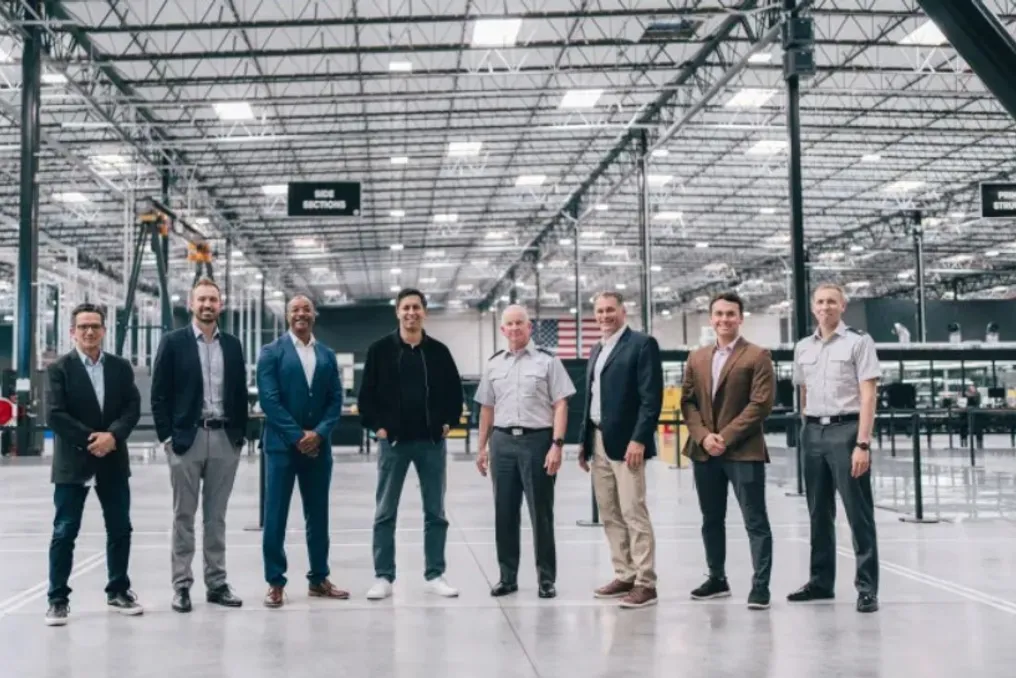
To support this potential, the company established its own manufacturing base early on. The K2 factory in Torrance spans 180,000 square feet and is capable of producing up to 100 satellites annually. Over 85% of each satellite platform's components are manufactured at this facility, which investors view as a key factor allowing the company to scale production from a few to hundreds of units without facing production bottlenecks that slow down competitors.
A significant step was securing contracts. The Space Force selected K2 as a supplier of satellite bus for its Protected Tactical Satcom-Global program, marking the company's first contract with the Pentagon. Additionally, commercial satellite operator SES requested an initial batch of 30 satellites for its meoSphere network, and defense contractor Anduril signed an agreement to manufacture satellites for the Golden Dome missile defense program.
According to K2, the company has secured commercial and government contracts valued at over $1 billion. The next mission is scheduled for the second quarter of 2027, when a series of satellites will be launched, and a large 100-kilowatt 'Gigabit' class satellite is planned for the second half of 2028.
Investors supporting K2 view this round as a bet on infrastructure. Lucas Oliveira, Senior Partner at Kleiner Perkins, noted that 'every important mission in space comes down to power and mass, and K2 understood that before anyone else.' Tengbo Li, General Partner at ICONIQ, stated more broadly: 'We believe space will become one of the defining frontiers of the coming century, and K2 is creating the platform to power the next generation of the space economy.'
GIFT Nifty indicators signaled a possible positive start to trading for the Nifty50 index, as global technology stocks demonstrated significant growth. GIFT Nifty futures were valued at 24,447 points, corresponding to an increase of 89 points.
In the Asia-Pacific region, South Korea's Kospi index rose significantly by 15 percent. This growth was driven by a sharp increase in the value of semiconductor industry giants—SK Hynix and Samsung—which rose by 25 and 20 percent, respectively. During early trading, the Kospi index showed a gain of 13.63 percent.
Other major markets also showed positive momentum: Japan's Nikkei 225 increased by 5.35 percent, and China's CSI 100 grew by 1.83 percent.
The significant rise on Wall Street stock exchanges was triggered by outstanding quarterly results from Amazon and Microsoft. The Dow Jones Industrial Index rose by 1.19 percent, and the S&P 500 by 1.66 percent. The composite Nasdaq index closed the trading session with a gain of 2.78 percent.
Regarding commodities, oil prices continued to decline. This occurred after a coalition led by Saudi Arabia proposed strengthening defense cooperation in the Red Sea, which reduced concerns about further supply disruptions from the region. The July contract was valued at $88.18 per barrel, down 0.95 percent.
Futures for gold and silver also fell: gold dropped by 0.22 percent, and silver by 0.1 percent.
Various first-quarter reports were presented during the day from companies such as Aadhar Housing Finance, Aarti Drugs, ABB India, Aditya Birla Capital, and others. Information was also provided on upcoming Initial Public Offerings (IPOs), including G.V. Electricals and Fusion Klassroom Edutech, which will open for subscription on Friday. MV Electrosystems and Juniper Green Energy will enter the second day of subscription on Thursday, and Manipal Health Enterprises will open the final subscription day aiming to raise 9,275.22 crore rupees.
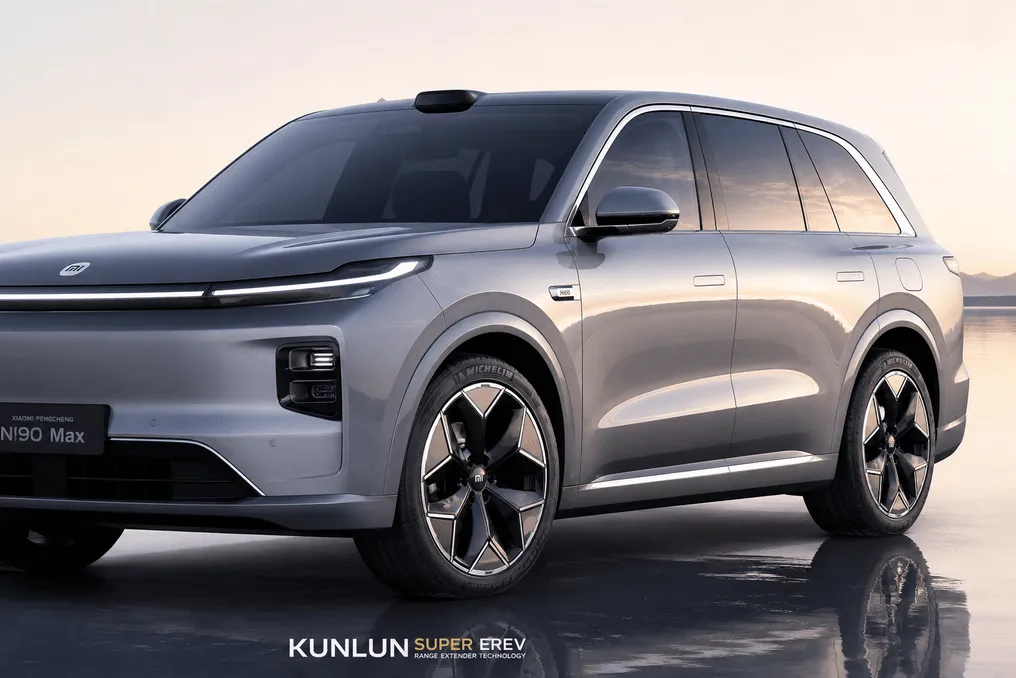
Xiaomi has unveiled its Kunlun platform, which comprises seven core components and fifty-seven redesigned parts. Thanks to this development, the N90 Max model achieves a combined range of 1705 kilometers under CLTC standards and a WLTC fuel consumption of 6.26 liters per 100 kilometers.
Xiaomi's founder and CEO, Lei Jun, presented the Xiaomi Kunlun ultra-long-range system during the Pengcheng technology launch event on July 30th. At this event, the Kunlun platform, Xiaomi's ultra-long-range powertrain, and the full-cycle Kunlun safety system were introduced. The Xiaomi Pengcheng N90 Max model became the first vehicle equipped with this system, demonstrating a fuel consumption of 6.26 L/100km under WLTC and a range of 1705 km under CLTC.
Creating this ultra-long-range system required the development of seven key components and the redesign of fifty-seven elements. This marks Xiaomi's systematic entry into the electric vehicle segment with extended range, currently dominated by companies such as Li Auto, AITO, and Leapmotor. The system supports gasoline with octane ratings of 92, 95, and 98, and the maintenance interval is three years or 30,000 kilometers after the first service, significantly reducing operating costs.
Xiaomi has established a differentiated strategy for the Pengcheng brand, focusing on long-distance travel for purely electric models. The vehicle is equipped with a 76 kWh battery, providing a pure electric range of 505 km under CLTC, which is one of the largest in its class. This allows for daily trips without engaging the engine, while retaining the extended-range engine for long journeys. The preliminary price starts from 259,900 yuan, with a launch scheduled for September 2026.
The Pengcheng N90 Max is a full-size SUV that was described in early reviews as imposing, occupying a competitive niche alongside flagship models from AITO and Li Auto. Xiaomi has opened six exclusive Pengcheng stores across the country where all staff are authorized to sell the vehicle, differing from the traditional dedicated sales team model. The company also clarified that the three-year or 30,000-kilometer service interval applies exclusively to the extended-range engine, not the entire vehicle, which remains subject to standard maintenance schedules.
This launch expands Xiaomi EV's strategy beyond the purely electric SU7 and YU7 models into the extended-range segment. The target audience includes buyers concerned about charging infrastructure coverage and long-distance travel. The Xiaomi Kunlun Super Extended-Range system represents a comprehensive approach, integrating the battery, engine, thermal management system, and safety systems under a single platform. The combined range of 1705 km directly addresses 'range anxiety' in purely electric vehicles. The strategic bet is that the extended-range technology will serve as a transitional powertrain for mass consumers until charging infrastructure is fully mature, while Xiaomi leverages its ecosystem advantages in integrating the smart cabin with HyperOS, autonomous driving capabilities, and economies of scale in its production capacity.
Tata Digital continues to see departures of senior executives, despite the new CEO Sajith Sivanandan actively recruiting experienced leaders from outside. The latest departure is Gaurav Hazrati, who held the position of President of the Financial Sector.
Hazrati's exit is significant as the company has shifted its strategy, focusing on financial services and the loyalty program. According to company insiders, he played a key role in developing the financial services segment within Tata Digital.
Attempts to contact Hazrati and an email sent to him went unanswered at the time of publication. Hazrati was appointed President of the Financial Sector in 2025. Prior to this, he served as CEO of Tata Payments. This banking industry veteran previously held senior positions at IndusInd Bank and Axis Bank.
An individual familiar with the matter noted that 'he played a crucial role in the growth of the financial services segment within Tata Digital. Some of Tata Digital's banking partners had excellent relations with him, such as HDFC Bank and SBI Cards.'
According to the Tata Sons Annual Report for the fiscal year 2026 (FY26), the Tata Neu card is one of India's largest co-branded credit cards.
The company announced a decisive change in course: 'We have made a decisive shift—refocusing Tata Neu on financial services and loyalty. In the coming year, Tata Neu will place increased emphasis on financial services, aim to increase the number of users making monthly payments tenfold, and expand our ecosystem in lending and insurance.'
In the fiscal year 2026, Tata Digital reported a loss of ₹4,974 crore, which is higher than the loss of ₹4,610 crore in the previous year. Meanwhile, the company's revenue for FY26 reached ₹35,990 crore, representing an 11.8 percent increase compared to ₹32,188 crore in FY25.