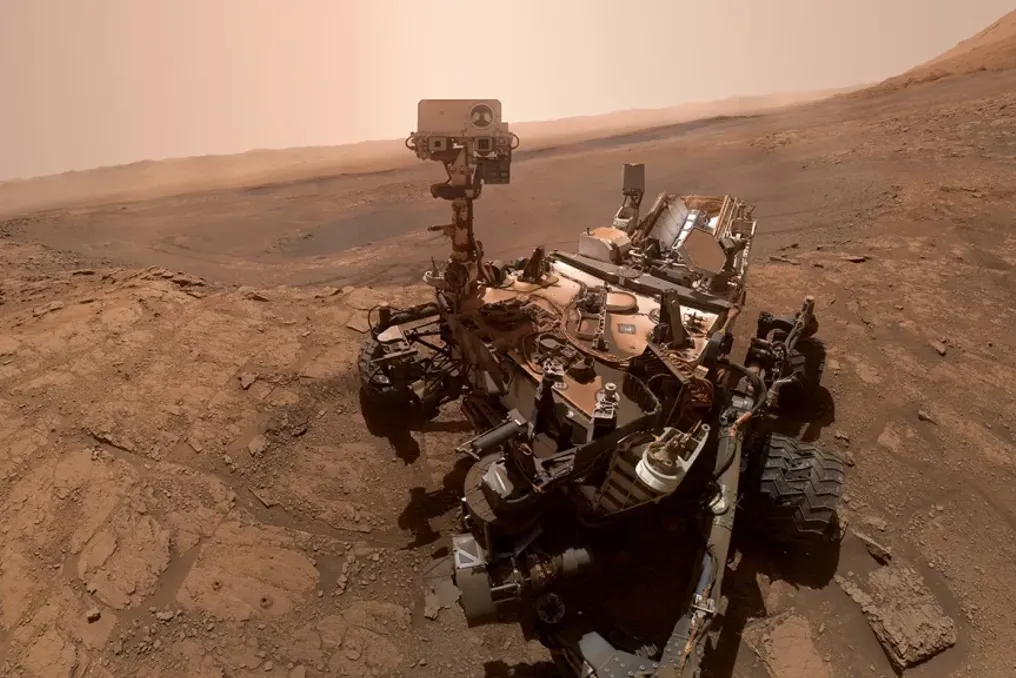
The NASA rover Curiosity has discovered an extensive area on the surface of Mars featuring geometric structures resembling honeycomb. This finding surprised researchers because an unprecedented volume of polygons for the instrument was found in one location.
Discovery in Valles Grande
This discovery took place in the Valles Grande region, where Curiosity recorded a landscape abundant with small geometric patterns. These structures measure between five and ten centimeters and are distributed across the ground, including the vicinity of an isolated hill named Miraflores. Although the rover had previously found similar formations, the mission team emphasizes that they have never registered such an extensive territory with these characteristics.
The recording was made while ascending the supports of Sharp Mountain, which is about five kilometers high and has been explored by the instrument since 2014. Currently, the origin of these polygons remains under investigation. Researchers are analyzing whether they arose from processes related to past water presence, changes in soil minerals, or exposure to the Martian environment. Among the hypotheses being considered are cracks caused by the drying of ancient deposits; surface heating and cooling cycles; material compaction after burial; and soil shrinkage due to moisture loss or mineral changes.
Investigation of Mysterious Stones
The same area attracted attention due to the presence of small dark stones scattered across the terrain. Scientists are now trying to determine if they are the result of impacts, fragments displaced from upper layers of Mars, or meteorites. Previous analyses revealed nickel in these materials, which is often found in meteorites, but a final determination of the stones' origin has not yet been made.
Wheel Wear Challenges Mission
After nearly fourteen years of operation on the Red Planet, Curiosity is showing natural signs of wear. Photographs taken by the instrument itself show significant damage to one of the rear wheels. To minimize damage, NASA has begun selecting routes with less aggressive terrain and has updated the control systems that regulate wheel movement during traverses. If the situation worsens, the team is considering an extreme measure—using the Martian terrain itself to detach the damaged part of the wheel. Tests have shown that the rover can continue operating even after this procedure.
Meanwhile, Curiosity continues its journey, turning every new landscape into an opportunity for a deeper understanding of Mars' history. As a NASA Jet Propulsion Laboratory scientist noted, 'We have seen many fascinating landscapes through Curiosity's eyes, but this sea of polygons has taken our breath away.'