Researchers from the USA and Canada conducted a systematic review and meta-analysis of clinical trials, establishing that using antihistamines for atopic dermatitis does not yield a clinically significant result but is accompanied by a substantial frequency of adverse events. These findings were published in The BMJ.
Characteristics of Atopic Dermatitis
Atopic dermatitis, also known as eczema, is a chronic skin condition that periodically flares up. Its symptoms include inflammation and intense itching, which negatively affects the quality of life of patients and their families, as well as their mental state and social connections. The disease affects about 7% of the adult population and 13% of children.
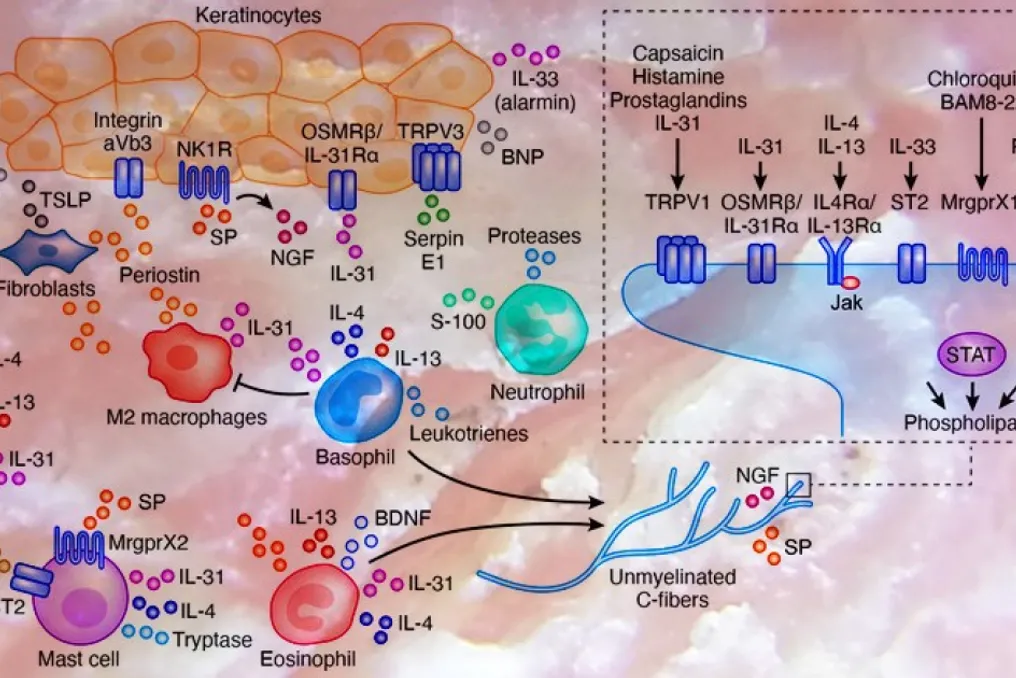
The main approach to treatment involves topical application of moisturizing agents, corticosteroids, and calcineurin inhibitors. In half of the cases, systemic administration of antihistamines is added to these methods. For severe cases, systemic immunosuppressants and monoclonal antibodies are used. According to modern scientific data, the mechanism of itching in eczema is mainly related to signaling pathways independent of histamine.
Study Methodology
Derek Chu, along with his colleagues and patient community representatives, conducted an extensive search in the Medline, Embase, CENTRAL, FDA, and EMA databases, covering the period up to May 2025. Forty-seven randomized controlled clinical trials involving 6,230 people were included in the analysis. The median age of participants was 20 years, and the proportion of women was 52%. Among the included studies, 57% concerned pediatric patients, 66% were placebo-controlled, and 77% reported local therapy for all subjects. Most participants suffered from moderate or severe atopic dermatitis. In four of these trials, antihistamines were prescribed at doses exceeding standard daily norms by more than two times.
Meta-analysis Results
Using Bayesian meta-analysis with random effects, researchers combined data on several parameters: severity of dermatitis (oSCORAD scale from 0 to 83, where lower is better), severity of itching (digital rating from 0 to 10), sleep disturbances, quality of life, and potential harm from treatment. Risks of systematic errors were assessed using a modified Cochrane collaboration tool.
Subgroup analysis showed that the effect of antihistamines on the severity of atopic dermatitis was higher in studies where the risk of systematic errors was high, so the analysis was limited to low-risk studies. In such studies, it was found that first-generation drugs show a weak effect (average difference of 1.04 points with moderate certainty of evidence), second-generation drugs show an even smaller effect (-1.87 points, moderate certainty of evidence), and a fourfold daily dose of the drugs yields a slightly better result (-4.34 points, low certainty of evidence).
Itching severity scores were similar for first and second-generation drugs: -0.28 and -0.89 points, respectively (moderate certainty of evidence). Although these changes are statistically significant, they are significantly below the minimally clinically important differences. Quality of life data were available only in one study for one drug (levocetirizine) and were statistically insignificant. Regarding sleep, data on second-generation antihistamines did not differ from the placebo group.
Side Effects and Conclusions
The side effect analysis revealed that taking first-generation antihistamines is associated with an increased incidence of cognitive impairment (odds ratio 3.24; 66 increased risks per 1000 patients). For second-generation drugs, the situation depended on the specific medication: 0 cases per 1000 patients for loratadine, 16 per 1000 for levocetirizine, and 17 per 1000 for cetirizine. The probability of discontinuing treatment due to side effects was higher for first-generation drugs (odds ratio 4.61), whereas for second-generation drugs and H2 receptor blockers, it remained insignificant. Sensitivity analysis confirmed these data, and subgroup analysis found no significant differences depending on age, trial design, duration of treatment, initial severity of the disease, or presence of additional topical therapy.
Thus, the results indicate that prescribing antihistamines for eczema may have only a minimal and clinically insignificant impact, while simultaneously increasing the risk of developing side effects, making their routine use for this indication inadvisable. It was previously noted that first-generation antihistamines can significantly increase the risk of seizures in children under two years old. Topical therapy with tapinarof cream demonstrated high efficacy in phase three trials, and monoclonal antibodies to interleukin-31 receptor, nemolizumab, have been approved for systemic treatment.