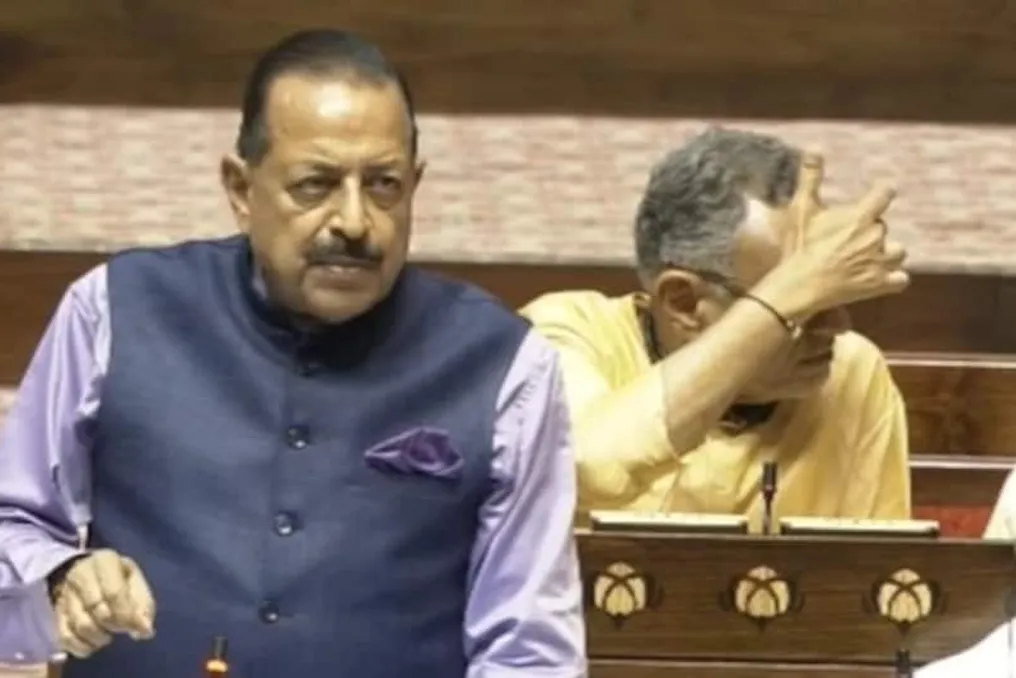
The bill to prevent the leakage of examination materials was passed in the Rajya Sabha after its approval in the Lok Sabha. The discussion on this bill in the Rajya Sabha lasted about seven hours before it was passed by unanimous vote. The government minister, Dr. Jitendra Singh, responded to the opposition's criticism.
Government Stance on the Bill
Dr. Jitendra Singh refuted the opposition's claims, stating that the term 'paper leak' is not present in the name of this law. He clarified that the official name of the document is Prevention of Unfair Means (PUM). The minister emphasized that this problem affects every family in the country. He noted that when Prime Minister Modi speaks of a 'Developed India 2047', children are a significant investment.
Singh denied the opposition leader's statements regarding 152 leaks, noting that he could not confirm this. He presented statistics concerning MIS, medical colleges, and the increase in seats. Additionally, he reported that the Prime Minister abolished management quotas, making medical education accessible to all. Furthermore, under the National Education Policy 2020, students have greater freedom in subject selection, which has contributed to the growth of opportunities in higher education. Exalvia schools for indigenous people were also opened in various parts of the country, totaling 400 such schools.
Scope and Recommendations
Dr. Singh explained that this law applies not only to NTA but also to SSC, UPSC, and bank examinations. He also discussed measures taken in cybersecurity. Regarding the recommendations of the Radhakrishnan Committee, 37 out of 46 main suggestions have been implemented. The minister pointed out that most leak incidents occurred at the state level, not at the NTA level. He welcomed the suggestions related to greater transparency in the coaching industry and stated that a dedicated group has been formed under Nandan Nilekani for this purpose.
Bill Passage and Opposition Reaction
Despite some opposition members, including John Britas, AA Rahim, Harish Birana, and Santosh Kumar P, submitting notices regarding changes to certain provisions, they were absent during the voting. Proposals for amendments were put forward by P. Wilson and Tiruchi Shiva, but they did not pass. The bill was passed in the Rajya Sabha by a unanimous vote. Since it was already passed in the Lok Sabha, it is just one step away from coming into force: after being signed by the President and the notification published, it will become law.
During the discussion, opposition figures, from opposition leader Mallikarjun Kharge to Rajya Sabha MP Sanjay Singh of the AAP party, questioned the government's intentions regarding leak prevention. Professor Manoj Kumar Jha from RJD stated that cosmetic reforms would not work and that the source of the problem, which he believes is NTA, needs to be addressed. Sanjay Singh of AAP expressed doubt about the government's confidence in conducting leak-free examinations.
Protest and Leaders' Comments