Binance Wallet has announced the launch of the Binance Alpha GRVT deposit campaign. Participants can take part in the promotion by following the established rules to qualify for exclusive token rewards.
Binance Wallet has announced the launch of the Binance Alpha GRVT deposit campaign. Participants can take part in the promotion by following the established rules to qualify for exclusive token rewards.
This campaign is exclusively available to members of the GRVT community who have received the official GRVT airdrop on the BNB Smart Chain (BSC). The total reward pool amounts to 66,640 GRVT, which is approximately valued at $20,000 USD. A total of the first 1,666 qualified participants will be rewarded, with each user receiving 40 GRVT.
To participate, users must deposit and transfer at least 300 GRVT in a single transaction. Reward distribution follows a 'first come, first served' principle. The promotional campaign will run from July 30, 2026, 13:00 UTC, until August 1, 2026, 13:00 UTC.
The participation process consists of two main stages. First, you need to deposit tokens into Binance Wallet (Keyless) by opening the Binance application, navigating to the 'My Wallets' section, and selecting 'Binance Wallet (Keyless)'. Users must request and deposit at least 300 GRVT from the address where they received the official GRVT airdrop.
Second, you should go to the 'Exchange' section of the Binance application, select 'Asset' -> 'Alpha' to access the Binance Alpha 2.0 Account page. There, you must use the 'Transfer In' function to transfer the corresponding GRVT tokens.
Before starting transfers, it is crucial to review the selection parameters. The campaign is only for those who received the official GRVT airdrop on BSC. Step 1 must be completed before Step 2 during the campaign period. However, if the GRVT airdrop was received directly in Binance Wallet (Keyless), Step 1 can be skipped, and you can proceed directly to Step 2, with eligibility determined by the completion time of Step 2.
It is also emphasized that the external blockchain address used for the deposit in Step 1 must exactly match the address that received the GRVT community airdrop. Rewards will be paid in GRVT tokens and credited to the winners' Binance Alpha or Binance Wallet (Keyless) accounts by August 15, 2026, 13:00 UTC.
GRVT (Gravity) is a hybrid decentralized exchange (HEX). It is designed to combine the self-custodial security of decentralized exchanges with the high performance and usability of centralized exchanges. By utilizing zero-knowledge rollups, GRVT ensures high-performance trading, privacy protection, and a simple adaptation process for Web3 traders. The integration of GRVT into the Binance Wallet Alpha ecosystem allows early community members and airdrop recipients to easily move their assets to Binance Alpha 2.0.
The GRVT token operates on the BNB Smart Chain (BSC) network and offers several key advantages: protocol governance, discounts on trading fees, liquidity provision incentives, and ecosystem rewards. For more information, it is recommended to study the official project documentation.
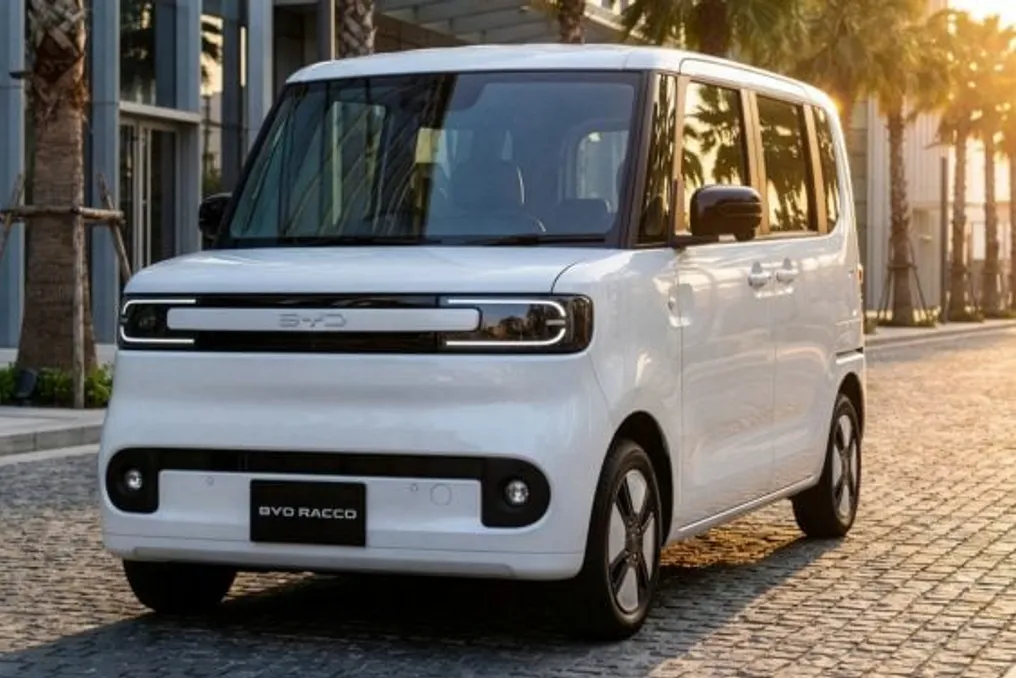
BYD introduced the Racco, its first kei vehicle, in Japan on Tuesday, the 28th. This launch marks the first time a foreign brand enters this automotive segment, which is crucial for the Japanese market. The electric car was specifically designed for the country, unlike adapted Chinese models, allowing the manufacturer to compete directly with Suzuki, Daihatsu, Honda, and Nissan.
The Racco line offers three options, all including consumption tax: the Racco 200, priced at 2,145,000 yen; the Racco 300 Plus, at 2,398,000 yen; and the Racco 300 Premium, valued at 2,497,000 yen. In direct conversion, these values correspond to between R$ 66,816 and R$ 77,781. The model name refers to the rakko, which means sea otter.
Kei cars are legally classified in Japan, requiring the vehicle not to exceed 3.40 meters in length, 1.48 meters in width, and 2 meters in height. Furthermore, the engine must have a capacity limited to 660 cubic centimeters and a maximum power of 64 horsepower. Conversely, owners of these vehicles pay lower taxes and insurance, establishing this category as the most popular in the country.
The data demonstrates BYD's interest in this niche: in 2025, 1,667,360 kei cars were registered in Japan, representing 36.5% of all 4,565,777 new vehicles sold that year, according to reports from Japanese dealer and light vehicle associations. Thus, more than a third of the market is concentrated in this specific format.
The Racco meets legal requirements with minimal margin, featuring a length of 3.39 m, a width of 1.47 m, and a height of 1.80 m. Its front engine generates exactly the 64 maximum hp permitted by law, along with 16.3 kgfm of torque, and the cabin accommodates up to four occupants.
Before the launch of the Racco, the brand had already been selling passenger cars in Japan since January 2023, having delivered just over 7,400 units by the end of 2025. In 2025 alone, the company registered 3,870 registrations, a 62% increase, according to the Japan Automobile Importers Association. In the first half of 2026, 2,388 units were delivered, constituting a 40% advance and positioning the brand in the 16th place among imported vehicles. BYD's goal is to achieve 10,000 orders for the Racco by the end of the year.
The main differentiator of the model lies in its range. The 300 versions use lithium iron phosphate batteries with a capacity of 35.8 kWh and can travel 320 km in the WLTC cycle, making it the first electric kei car to exceed the 300 km mark. The entry-level version has a 22.4 kWh battery, offering a range of 210 km. Comparatively, the Nissan Sakura, the best-selling electric car in Japan, starts at 2,448,600 yen and reaches 180 km. Additionally, the Racco supports fast charging of up to 100 kW and is equipped with electric sliding doors, ADAS systems, and an NFC key integrated with the mobile phone.
However, there is an impediment related to government incentives. While electric vehicles manufactured by Japanese brands have access to subsidies of up to 580,000 yen, imports like the Racco qualify only for the basic benefit of 150,000 yen. Although the car has the lowest environmental rating in the segment, it does not have the lowest final cost.
K2 Space has successfully raised $500 million in a Series D round, increasing its market valuation to $6.8 billion. This valuation is more than double the company's worth after the Series C round, which took place in December.
Co-founder and CEO Karan Kundur, along with his brother Neil, founded K2 Space four years ago. Their core idea was that future space missions would focus on larger satellites rather than smaller platforms.
The company's theoretical assumptions have been practically confirmed: K2 Space launched the Gravitas satellite, which is already operating with a 20-kilowatt Hall thruster in orbit, demonstrating high power. This serves as proof that heavier satellites can perform communication and defense missions inaccessible to smaller platforms.
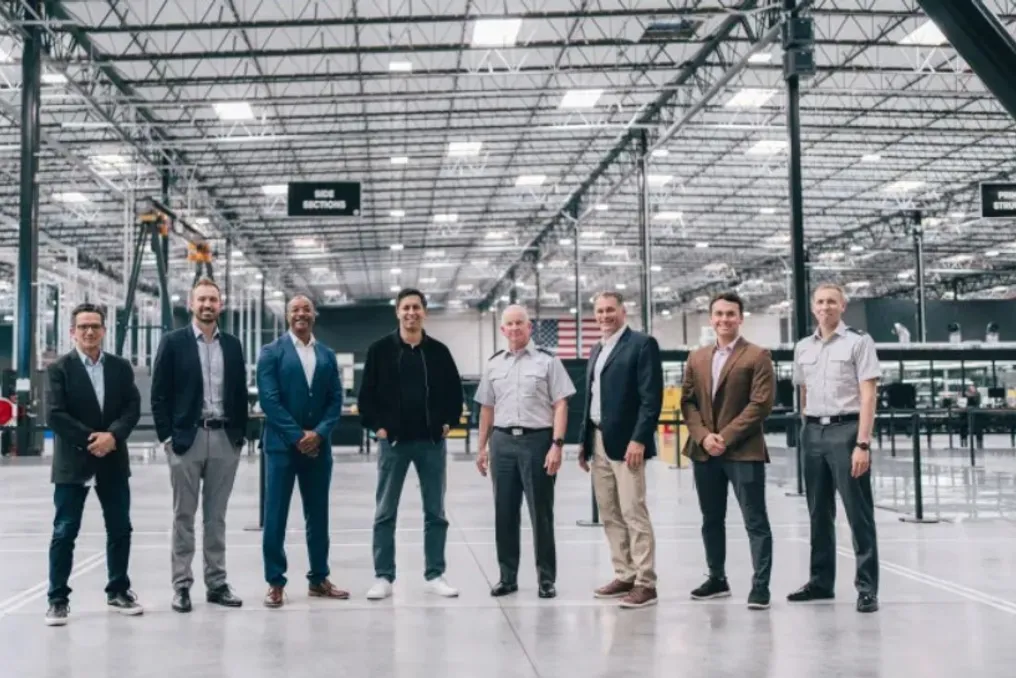
To support this potential, the company established its own manufacturing base early on. The K2 factory in Torrance spans 180,000 square feet and is capable of producing up to 100 satellites annually. Over 85% of each satellite platform's components are manufactured at this facility, which investors view as a key factor allowing the company to scale production from a few to hundreds of units without facing production bottlenecks that slow down competitors.
A significant step was securing contracts. The Space Force selected K2 as a supplier of satellite bus for its Protected Tactical Satcom-Global program, marking the company's first contract with the Pentagon. Additionally, commercial satellite operator SES requested an initial batch of 30 satellites for its meoSphere network, and defense contractor Anduril signed an agreement to manufacture satellites for the Golden Dome missile defense program.
According to K2, the company has secured commercial and government contracts valued at over $1 billion. The next mission is scheduled for the second quarter of 2027, when a series of satellites will be launched, and a large 100-kilowatt 'Gigabit' class satellite is planned for the second half of 2028.
Investors supporting K2 view this round as a bet on infrastructure. Lucas Oliveira, Senior Partner at Kleiner Perkins, noted that 'every important mission in space comes down to power and mass, and K2 understood that before anyone else.' Tengbo Li, General Partner at ICONIQ, stated more broadly: 'We believe space will become one of the defining frontiers of the coming century, and K2 is creating the platform to power the next generation of the space economy.'
OpenAI announced on Thursday, the 30th, a significant decrease in the costs of its smaller and mid-sized artificial intelligence models. This measure aims to make the use of these technologies more viable for companies amid growing concerns about AI-related expenses.
The company, known for developing ChatGPT, implemented an 80% cut in the cost of the GPT 5.6 Luna model and reduced the price of the mid-tier Terra model by 20%. This change comes in an increasingly competitive market, where there are disputes with other companies and the emergence of lower-cost Chinese alternatives.
The new pricing structure primarily affects the cost charged for data processing in OpenAI's smaller models. Specifically, the Luna model is now priced at 20 cents per million input tokens, compared to the previous value of US$ 1. The Terra model saw its price drop from US$ 2.50 to US$ 2 per million input tokens.
Regarding response generation, the Luna's cost was reduced from US$ 6 to US$ 1.20 per million tokens, while the Terra was adjusted from US$ 15 to US$ 12. The price of the company's main model, named Sol, remained unchanged.
This reduction occurs during a period when many corporations are finding it challenging to estimate the financial impact of intensive AI use. The sector has shown a trend of transitioning from fixed subscription plans to usage-based billing systems, which can generate instability and increases in operational costs.
OpenAI attributes this possibility of price drops to efficiency advancements integrated into GPT 5.6, citing improvements in both code development and internal system performance optimization.
The pricing strategy also exerts pressure on competitors. Anthropic, which has a strong user base among developers and companies with its Claude line, maintains higher prices on the mid-tier model equivalent to Terra. Data shows that Claude Sonnet 4.6 costs US$ 3 per million input tokens and US$ 15 per million output tokens, values higher than those currently practiced by Terra.
Furthermore, the market dispute is intense with the growth of open-source models developed by Chinese competitors, such as GLM 5.2, linked to Z.ai, which is pointed out as an option capable of approaching the performance of major Western companies at a lower cost.
Analysts observe that the price decrease may encourage more organizations to adopt artificial intelligence tools. However, this movement may also exert financial pressure on companies in the sector before any potential public stock offerings.