Uzbekistan has proposed introducing the 'Eco-Partner' status for individuals and legal entities that contribute to the creation of green spaces and public parks.
Uzbekistan has proposed introducing the 'Eco-Partner' status for individuals and legal entities that contribute to the creation of green spaces and public parks.
The draft resolution of the Cabinet of Ministers was prepared by the National Committee on Ecology and Climate Change and is directed for public discussion. This document was developed as part of the implementation of Presidential Decree No. UP-47 dated March 25, 2026, dedicated to measures to increase the effectiveness of the national project 'Yashil Maqon'.
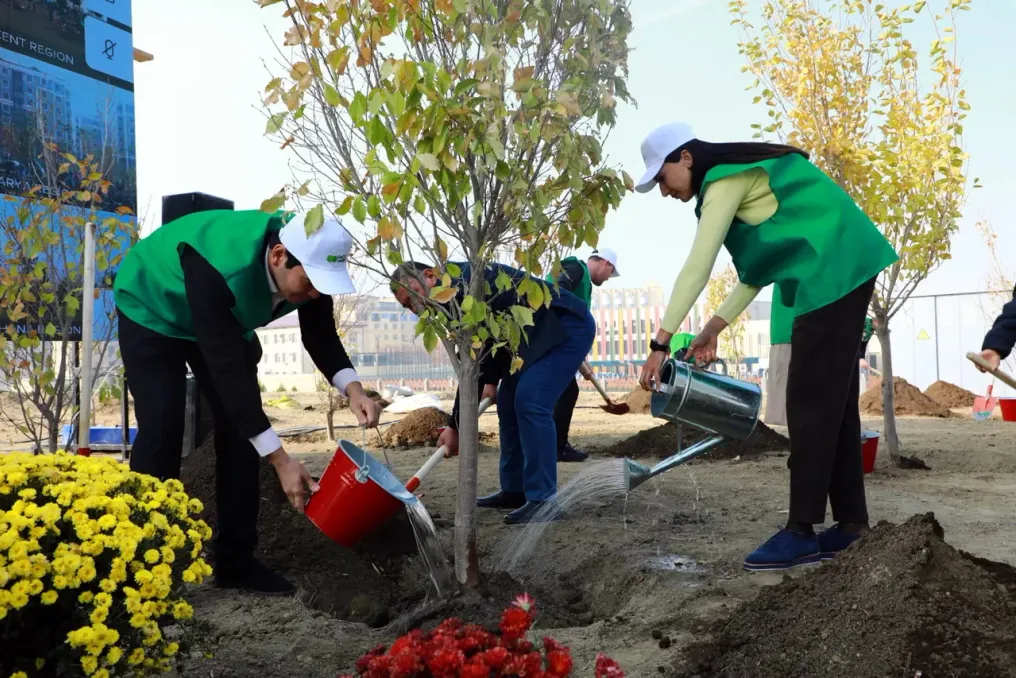
The proposal envisions expanding the participation of citizens and companies in the creation, preservation, and development of green zones, including gardens, parks, botanical gardens, and arboreta, through the introduction of an incentive system. The 'Eco-Partner' status will be awarded to those who develop a green garden or park containing at least 1000 trees and shrubs, and who contribute at least 200 million soms to the 'Yashil' charitable fund.
The awarding of the status will take place through an annual competition. Winners will include one citizen from each of Uzbekistan's 14 regions and 10 legal entities with the highest performance indicators. Results are evaluated based on activities completed by the end of April, and certificates and commemorative gifts are presented between June 1 and 10 after review in May.
Recipients of this status will also be recommended for the 'Nature Defender' badge, and the participant with the highest overall score may be nominated for the honorary title 'Honored Ecologist of the Republic of Uzbekistan'. However, the project also sets a restriction: holders of the 'Eco-Partner' status will not be able to conduct construction work on the green areas they have created.
As an incentive, 'Eco-Partners' will receive a 10% discount on state services, as well as preferential terms for consumer loans in commercial banks where the share of state ownership exceeds 50%. The draft resolution has been published on the portal regulation.gov.uz for public discussion, where citizens can leave their comments and suggestions.
An eight-year-old male jaguar living in Brazil, equipped with a GPS transmitter, traveled a straight-line distance of 2122 kilometers in less than a year. This route, which covered forests, savannas, pastures, and plantations, is an unprecedentedly long and sustained journey for this predator, as it was previously assumed that their dispersal was limited to 60–100 kilometers.
The exact motives that prompted the male, named Gaspar, to undertake such a perilous journey remain unclear. Possible theories include displacement from his former territory by a competitor, searching for mating opportunities, or discovering areas with abundant prey. The results of this study were published in the scientific journal Ecology.
Historically, jaguars (Panthera onca) occupied vast territories in South, Central, and southern North America, including humid tropical forests, semi-deserts, and coastal zones. However, due to increased human persecution, declining prey populations, and habitat destruction, the range of these predators has significantly shrunk and fragmented into isolated patches of varying sizes. The survival of jaguars critically depends on their ability to move between these remaining strongholds, which are often far apart.
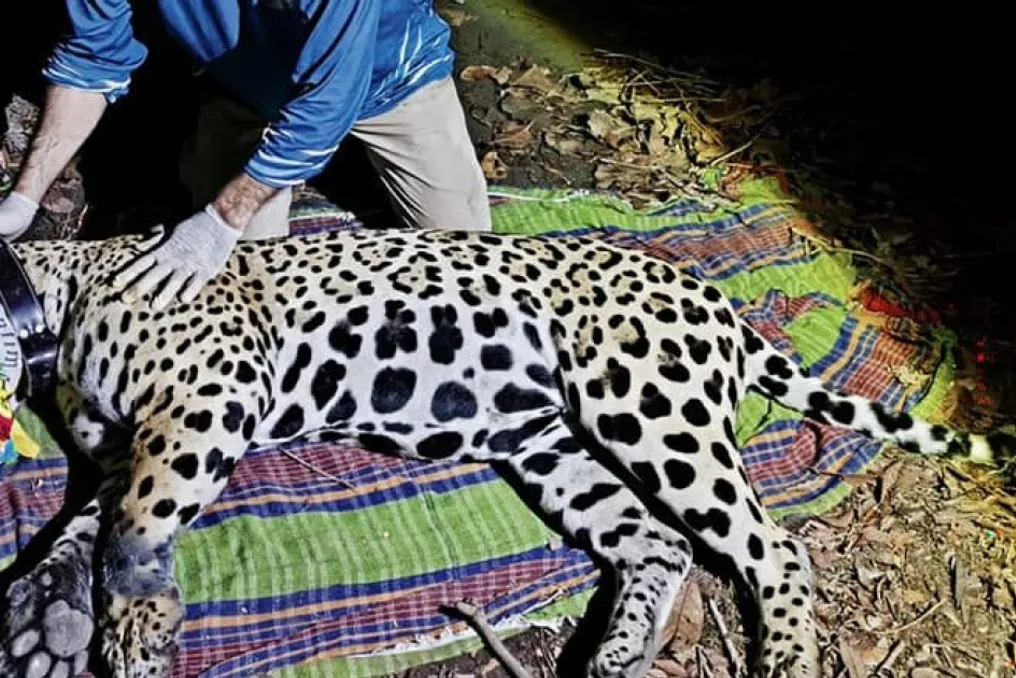
A team of zoologists, led by John Morant from the Basque Country University, demonstrated the capacity of jaguars to cover large distances. On November 11, 2024, researchers fitted an adult male from the Araguaia River in Brazil with a GPS collar. This area is considered a potential corridor for jaguar movement between the Amazonian humid tropical forests and the Cerrado savannas.
The transmitter operated for 381 days, until November 27, 2025, transmitting data from over 5000 points. For the first three months after observation began, the jaguar remained within its initial territory along the Araguaia River, covering an area of 697 square kilometers. After this, Gaspar began a long journey into the Cerrado, initially moving southeast and then southwest. At an average speed of 0.407 kilometers per hour, he averaged 9.76 kilometers daily. By the time the transmitter stopped working, the jaguar was 2122 kilometers from the starting point (as the crow flies).
Judging by the movement trajectory, Gaspar likely did not follow any specific destination but rather chose direction based on local conditions. Morant and his colleagues note that jaguars from the Cerrado, Atlantic Forest, and Gran Chaco are capable of covering even greater distances—from 14 to 28.8 kilometers per day. Nevertheless, Gaspar's overall route in terms of length and duration remains a record for the species, significantly exceeding previously recorded dispersal events of 60–100 kilometers. For comparison, this journey is comparable to two instances of migration by male and female pumas (Puma concolor), which traveled over 2700 and 1341 kilometers, respectively.
In the initial phase along the Araguaia River, Gaspar spent time in forests, savanna, and marshy areas. During the migration, he tried to stay in natural vegetation but increasingly had to visit human-altered areas, such as plantations and pastures. The study authors emphasize that this journey demonstrates the high ecological adaptability of jaguars and their ability to overcome artificial barriers between familiar habitats. However, in such transformed landscapes, predators face an increased risk of being shot or poisoned. Therefore, ensuring the conservation of jaguars requires not only the preservation of natural corridors but also the maintenance of permeability in anthropogenic landscapes.
The reasons for Gaspar's prolonged and dangerous trek remain unclear. At the time the transmitter was fitted, he was about eight years old, which rules out the early dispersal stage (ages from one to three years). The most probable reasons are displacement by a competitor or the search for a mate or richer feeding grounds. The ultimate fate of the male is also unknown; there is a high probability that he died at the hands of humans, although the failure of the transmitter cannot be entirely ruled out.
It should be noted that jaguars are capable of moving not only on land but also in water. Last year, an instance was recorded where a male of this species swam at least 1.27 kilometers and reached an island in the Serra da Mesa reservoir in central Brazil.