Over 2,900 executives from the public and private sectors attended the Huawei South Africa Connect 2026 event. The goal of the event was to discuss what steps South African organizations need to take to transition from isolated AI pilot projects to full-scale implementation.
Themes and Digitalization Priorities
The event was held under the slogan 'Where innovation shapes the future.' It used South Africa's ranking as a leader in AI readiness among Sub-Saharan African countries as a starting point. Sessions were presented focusing on the potential of AI in the energy, finance, telecommunications, education, and public service sectors.
Communications Minister Solly Malatsi emphasized that South Africa's digital future depends not only on technology but also on citizen participation. He noted that the primary tasks for expanding access to the digital economy are device availability and connectivity. Malatsi stated that AI should be viewed not as a threat to fear or a fleeting trend, but as one of the greatest opportunities of modern times to solve the most pressing development challenges.
AI Readiness Strategy
Ming, CEO of Huawei South Africa, opened the keynote speech. He referred to the World AI Conference in Shanghai, where South Africa became one of the founders of a new Global AI Cooperation Organization. Ming presented a three-stage plan for achieving AI readiness: informatization enables connectivity, digitalization makes data work, and intelligence creates new economic value. He cited Huawei's projects in China related to networks and power systems as proof of this approach's effectiveness.
According to Ming, large-scale AI implementation is impossible without a robust digital infrastructure. He stressed that developing economies aiming to advance in intelligence must gradually strengthen the foundations, including networks, data, and industrial digital transformation.
From Pilot to Scale
As organizations move beyond AI pilot projects, Nicholas Ma, Vice President of Corporate Affairs and President of Global Key Accounts for Government and Enterprise at Huawei, presented the company's ACT path. This framework helps businesses transition from testing to full deployment. ACT first identifies high value-added use cases before organizations configure AI models on industry data. According to Huawei, this approach has helped identify over 1,000 core manufacturing scenarios and form a community of more than four million developers.
Ma noted that South Africa is at a critical stage of leapfrogging in AI integration. The AI market exceeds 50 billion rand and is projected to triple by 2030. He added that decisive action today will help not only ensure individual success but also build an ecosystem where everyone thrives.
Economic Potential and Partnerships
Kui Zheng, Deputy General Manager of Huawei South Africa, reported that by the end of the decade, AI could contribute between 1 trillion and 1.4 trillion rand to the South African economy and create up to 400,000 new jobs. He mentioned that local implementations are already underway, including a railway security system that reduced cable theft by 80%. Zheng emphasized that the future of AI will be built not by one company, even Huawei, but by an open ecosystem of partners, developers, and customers jointly creating value.
Clients from the energy, financial, government IT, and telecommunications sectors also spoke at the event. Len de Villiers, Head of IT and Management Group at Eskom, stated that the utility company is building an AI-based smart grid, implementing 20 AI initiatives across eight business areas. These include predictive maintenance and a microgrid in Limpopo, which connected over 700 households to reliable power. De Villiers said that Eskom's digital transformation aims to create an intelligent, secure, and inclusive energy platform for the next era of South Africa's growth.
Standard Bank moved beyond isolated AI pilot projects to large-scale deployment through collaboration with Huawei. Khomotso Molabe, Director of IT for Personal and Private Banking and Deputy Group CIO at Standard Bank, reported that this partnership allowed them to consolidate infrastructure across 10 African countries and improve operational efficiency. Molabe believes this experience can serve as a model for all industries.
Huawei's Local Ecosystem
Huawei's local partner ecosystem now includes over 1,400 South African companies, providing 94.7% of local revenue and over 90% of supply and service work. Lucas Sia, Director of Development and Corporate Partner Management at Huawei Sub-Saharan Africa, reported that this network provides solutions across various industries, including digital twin and municipal services solutions with BCX, smart retail solutions with Altron, connected healthcare solutions with Gijima, and secure paperless government solutions with CoCre8. Sia concluded that the company supports growth through innovation, opportunities, and competencies, thereby 'strengthening South Africa, being based in South Africa.'
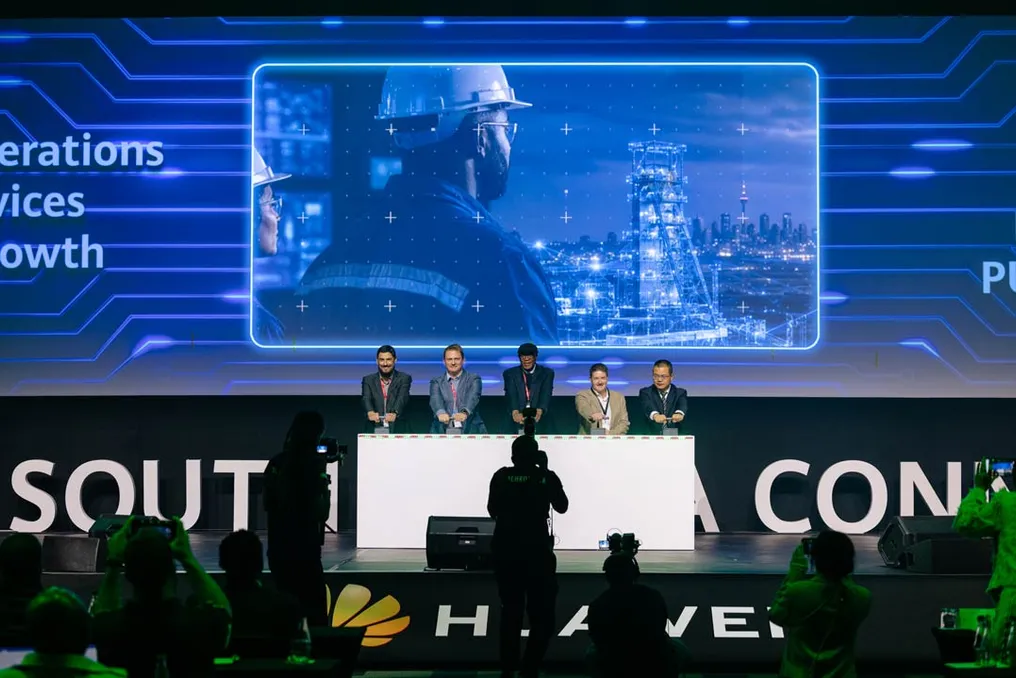
Huawei has been operating in South Africa for 27 years under the motto 'In South Africa, for South Africa,' investing in ICT infrastructure to support the country's digital economy. The company announced its intention to continue working with clients and partners to provide industry-specific solutions. Huawei and its partners concluded the event with the joint launch of these solutions.