August is traditionally a favorable month for astronomy enthusiasts due to the combination of dark and warm nights. During this period, the Perseids reach their peak—one of the most active meteor showers.
August is traditionally a favorable month for astronomy enthusiasts due to the combination of dark and warm nights. During this period, the Perseids reach their peak—one of the most active meteor showers.
The Perseids are considered the most popular meteor shower of the year, and 2026 promises excellent conditions for observing them. The radiant of this shower is located in the constellation Perseus, but the meteors themselves can appear anywhere in the sky. The highest number of meteors is usually recorded after midnight and before dawn, when the radiant rises higher above the horizon, and the observer is on the side of the Earth facing the stream of particles.
Particles left by Comet Swift-Tuttle enter the atmosphere at a speed of about 60 kilometers per second, heating up and burning, which leaves bright light trails. According to data from the International Meteor Organization, under ideal conditions at the moment of maximum activity, one can see from 60 to 100 meteors per hour, although recent years have shown real observations more often within the range of 20–30 meteors per hour.
From the beginning of August until August 16, six planets of the solar system will be visible in the morning hours. In order of their rising from west to east are Neptune, Saturn, Mars, Uranus, Mercury, and Jupiter. Note that Neptune and Uranus require the use of a telescope to be detected, while the other planets are visible to the naked eye.
It is harder to spot Mercury and Jupiter because they rise during the morning dawn. Around four or five in the morning, Jupiter will shine in the constellation Cancer, and Mercury will be near it. The closest proximity of these two planets is expected on August 16.
The best conditions for observing Saturn are created at twilight; it should be sought in the southeast. The planet rises in the constellation Pisces and appears as a yellowish star. A distinguishing feature of Saturn is the lack of twinkling, which makes it easier to identify among real stars. To view the ring system, a small amateur telescope or binoculars with at least 30x magnification are sufficient.
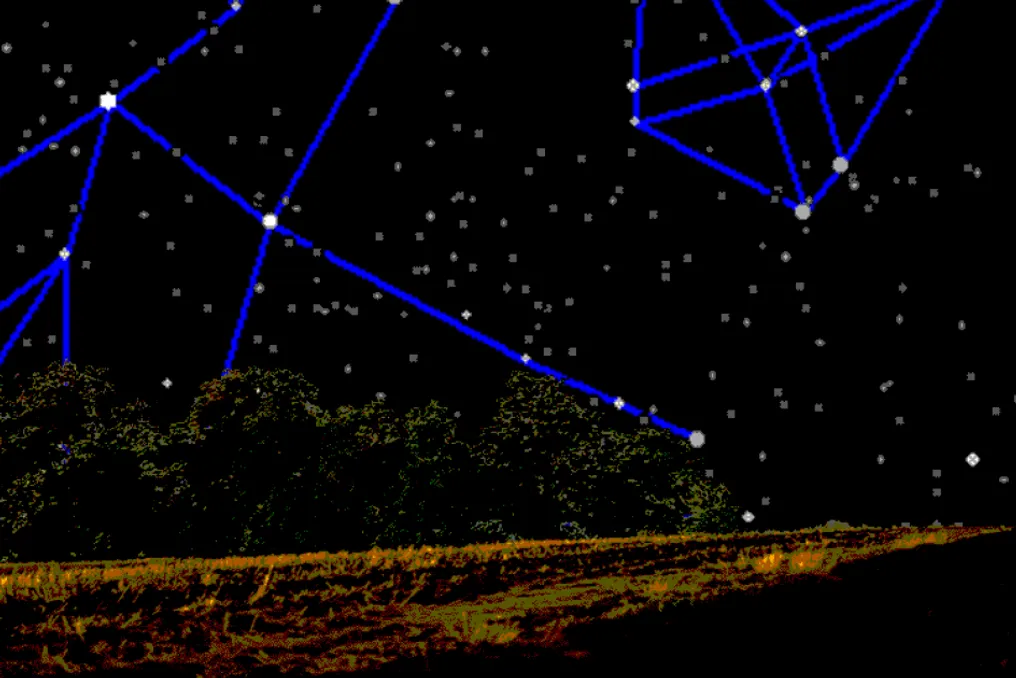
Throughout August, it is easy to spot the Summer Triangle—one of the most recognizable asterisms of the Northern Hemisphere. It is formed by Vega (the brightest star in the constellation Lyra), Deneb (Alpha Cygni), and Altair (Alpha Aquila). Around 10:00 PM, this triangle is high above the southern part of the sky.
In August, it is also convenient to study deep-sky objects, such as planetary nebulae in the constellations Lyra and Vulpecula, the double star Albireo in the constellation Cygnus, and the globular cluster M13 in the constellation Hercules. For such observations, it is recommended to choose the period a few days before the new moon and for several days after it, when the influence of moonlight is minimal. For these purposes, a telescope with an objective diameter of at least 150 millimeters, as well as clear weather and absence of urban light pollution, is necessary.
Google decided to disable the artificial intelligence image creation feature in Google Earth last Friday, July 31st. This functionality, which allowed for the generation of photorealistic representations of global locations from satellite data, had only been introduced one day earlier, on Thursday, July 30th, but faced severe criticism.
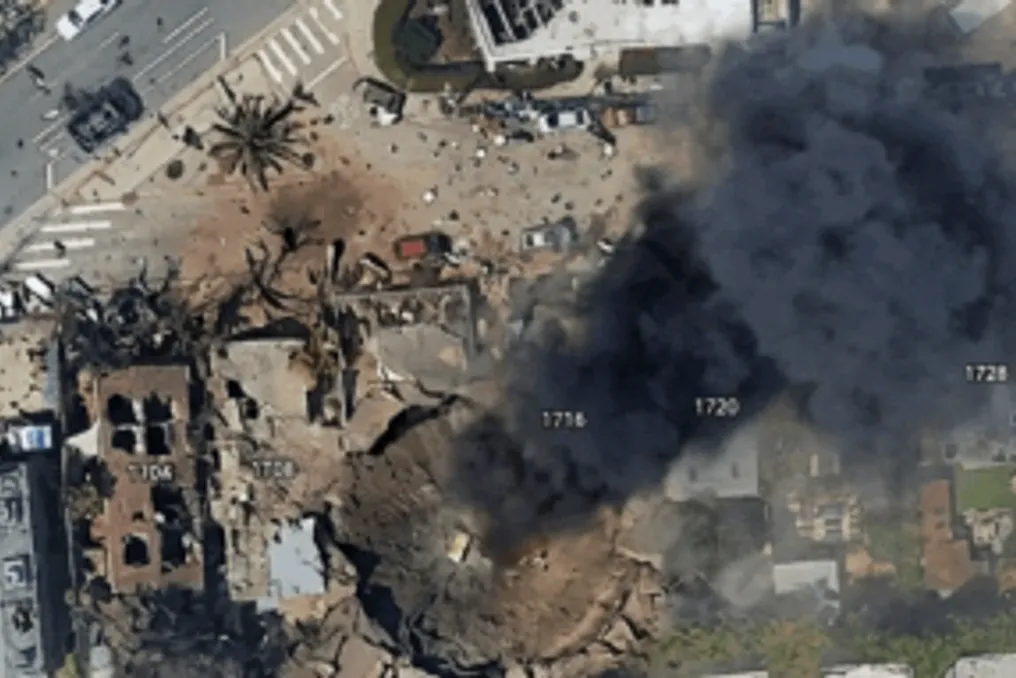
In less than twenty-four hours, users and experts demonstrated how easily it was possible to produce realistic images simulating disasters and attacks, which opened the door for use in disinformation campaigns. Google acknowledged this concern, stating on its X account (formerly Twitter) that while it saw useful uses by geospatial professionals, it also observed shared screenshots that seemed to violate its guidelines.
As a result, the company opted to remove the AI from Google Earth while working on developing more robust restrictions to prevent such occurrences. The company also reinforced that the generated images were not visible to all users and contained digital watermarks for identification purposes.
The simplicity with which realistic images could be generated, capable of being used in fake news and disinformation efforts, generated a wave of criticism directed at Google. Several experts and users pointed out the extreme ease of using the tool for illicit purposes.
For example, the team at 404 Media managed to fabricate fake images of a homeless encampment in Los Angeles, as well as position protesters in front of Google's headquarters. Information security researcher Henk van Ess achieved similar results, reporting having created images of refugees on the border with Mexico, a nuclear power plant in Iran, and a fatal accident on a street in Amsterdam, using Google's own satellite imagery as a basis.
Negative examples continued, with the BBC generating images of a collapsed Eiffel Tower, a hole swallowing the Great Pyramid of Giza, and Russian tanks in the capital of Ukraine. On Thursday, July 30th, Google had assured that it took the issue of disinformation seriously, informing that all generated images possessed the SynthID digital watermark, identifiable through Gemini or Lens; however, this measure proved insufficient to keep the feature active.
WhatsApp has begun testing a new feature designed to create an exclusive section for communications from large corporations, such as airlines and banks. This implementation aims to reduce the amount of commercial interactions in users' main inbox, given the growing use of the platform by companies to contact consumers.
According to information obtained by TechCrunch, Meta plans that after a certain period, any message received from a large company will be automatically transferred to a new folder called "Offers & Updates".
The company is evaluating various timeframes for this automatic movement, which can be up to twenty-four hours after receiving the notification. Users retain the option to disable this feature in settings if they prefer these conversations to remain in the main flow. However, there will be no possibility of manually adjusting the migration time to the new folder.
Meta explains that this functionality will allow promotional content, such as discount coupons, delivery notifications, and other commercial alerts, to leave the main inbox a few hours after being sent, resulting in a less cluttered list of personal and group conversations. For businesses, the change ensures that their messages are located in a specific space, preventing them from getting mixed with the rest of the conversations.
WhatsApp announced that it has started testing this tool with specific partners who use the WhatsApp Business Platform. The company's intention is to expand the availability of the feature after analyzing the results achieved in this initial phase. Currently, small businesses and individual accounts using WhatsApp Business will not be affected by this novelty. Nevertheless, Meta reserved the right to consider including messages sent by small businesses in the "Offers & Updates" folder in the future.
In recent years, WhatsApp has implemented several modifications aimed at mitigating the excessive volume of commercial messages directed at users. In 2024, the platform allowed individuals to unsubscribe from marketing communications sent by brands. In the following year, there was a limitation on the number of mass messages that both companies and users could send within a defined period. In October 2025, the company advanced by restricting the number of messages companies can send without receiving any response from recipients. According to WhatsApp, the first two measures have already been implemented globally, while the third is still being refined.
During Meta's financial results presentation for the second quarter of 2026, CEO Mark Zuckerberg declared that revenue from the "other" category within the app portfolio exceeded US$1 billion (equivalent to R$5 billion). This growth was mainly driven by paid subscriptions and messages on WhatsApp.
In June of this year, the company made its artificial intelligence (AI) agents globally accessible for business use. Meta reported that over one million businesses are already using these resources. During the earnings call, Zuckerberg mentioned the Brazilian rental company Movida as an example of technology application, highlighting that the company observed an increase in customer conversions and improvements in customer service with the help of AI agents. There is an expectation that in the coming months, an even greater number of companies will incorporate AI into WhatsApp for customer support, marketing, and sales purposes.
WhatsApp is implementing a widget in its beta version 2.26.302 for Android, allowing users to record voice messages without needing to start a conversation. This feature enables the user to record the audio and subsequently choose one or more recipients, eliminating the need to create broadcast lists.
This functionality is being progressively released to participants in the WhatsApp beta program on Android. The new feature was detected via the specialized website WABetaInfo, which monitors tests on the Google Play Store.
When interacting with the widget, WhatsApp displays a specific interface for audio recording, offering usual controls such as record, pause, resume, discard, or confirm the message before sending, similar to what occurs within conventional chats.
After finishing the recording, the application presents a screen where the user selects the contacts to send the same message to. Although this capability already exists through broadcast lists, the new feature may be particularly useful for those who need to send quick announcements to several conversations without relying on a pre-configured list.
Additionally, this tool eliminates the current process of recording in a chat, sending it, and only then forwarding it to other individuals. Furthermore, it simplifies the creation of voice notes, allowing the user to start speaking just by unlocking the smartphone.
Besides the audio widget, WhatsApp has recently been testing and releasing several other modifications. The company announced comprehensive improvements for platforms such as iPad, CarPlay, Android Auto, Web, and Desktop. These improvements include direct account registration on iPad, the ability to view PDFs in chats with integration to Adobe Acrobat, and sharing music from Apple Music and Spotify in Status.
It is important to note that the voice message widget is still in a gradual release phase only for participants in the Android beta program, and there is no confirmation of an analogous tool for iPhone devices. Meta has not yet announced a date for this feature to arrive in the stable version of the application, but its presence in the testing channel suggests a more advanced stage of development.