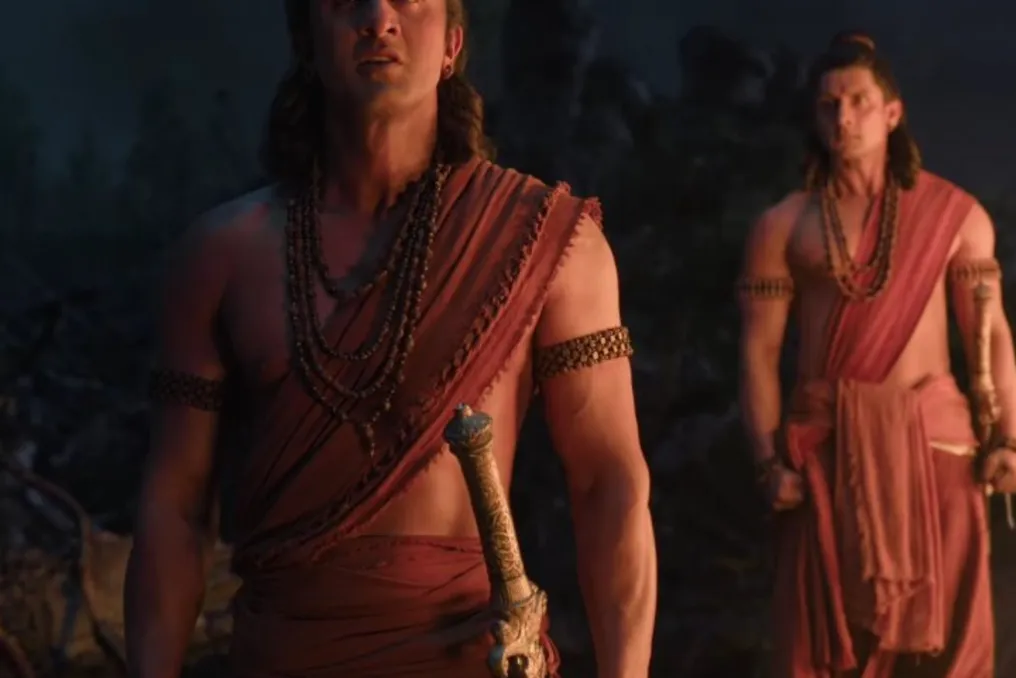
The appearance of new scenes from Nitesh Tiwari's highly anticipated film 'Ramayana' has prompted viewers to compare it with the biggest blockbuster in Indian cinema—'Baahubali'. Both films are known for their grand scale, luxurious sets, and impressive visual effects; however, a closer look reveals significant differences and some interesting similarities in terms of technology and production.
Differences in Filming Approaches
While director S.S. Rajamouli's film 'Baahubali' was characterized by the use of real locations and meticulous on-site development, 'Ramayana' appears more reliant on modern Computer Generated Imagery (CGI) and artificial visual effects. Analyzing the shots allows one to see exactly where these differences lie in the scenes, visual design, and the ratio of real versus unreal elements.
Crowd Scenes and Landscapes
The most obvious difference is evident in the crowd scenes. In 'Baahubali', Rajamouli utilized real extras, which gave each person's face, clothing, and expression a unique look, lending the scene a vibrant atmosphere. Conversely, the crowd scenes in 'Ramayana' were created using CGI and VFX, forming a uniform, cloned pattern that resembles an artificial composition more than a gathering of people.
A noticeable difference in realism appears when comparing the scenes near the waterfall. In 'Baahubali', Prabhas' jump through the water looks completely natural: the water droplets, the speed of movement, and the surrounding rocks appear authentic and wild.
In 'Ramayana', Ranbir Kapoor's prayer scene before the waterfall, although beautiful and serene, features a waterfall background that seems largely created on a green screen or digital backdrop. The natural depth and texture of the water that would provide a complete sense of reality are absent in this case.
Action Sequences and Female Characters
An interesting balance between similarity and realism is observed in scenes featuring women. In 'Baahubali', Anushka Shetty's (Devasena) fighting style was very aggressive, dynamic, and grounded, accompanied by earth being raised and opponents falling.
In 'Ramayana', Sai Pallavi is shown with a shield and sword. Although Sai Pallavi's look and posture are quite striking, the background columns and structures look so clean and polished that they resemble a 3D model more than a real set piece.
Aerial Vehicles and Military Actions
'Baahubali' featured a majestic swan-shaped ship (Maral) flying in the air. Similarly, 'Ramayana' shows a glimpse of Pushpaka Vimana or a divine chariot.
Although the design of Pushpaka Vimana in 'Ramayana' looks glossier and more modern, conceptually it evokes associations with the flying ship from 'Baahubali'. The approach to battle scenes differs between the two films. Battles in 'Baahubali', such as the Battle of Kalkeya or the fields of Mahishmati, seem more realistic due to the dust, mud, and presence of real soldiers, conveying the feeling of a real battlefield.
On the other hand, the battlefield in 'Ramayana' looks darker, more cinematic, and richer in visual effects. In 'Baahubali', Prabhas is depicted ascending the trunk of a giant war elephant, and the main feature of this scene is its raw, real texture, creating the impression of filming on a real animal followed by VFX refinement.
In contrast, in 'Ramayana', Devaraja Indra is shown flying on the mythical white elephant 'Airavata' amidst snowy clouds and mountains. Although visually this is part of a fantasy world created by CGI and 3D animation, it is far from reality.
Sets and Weapons
Although the sets of 'Ramayana' possess a high level of splendor, the influence of 3D modeling and CGI dominates; antiquity is not felt within the walls. At the same time, the sets of the Mahishmati empire in 'Baahubali' were distinguished by a perfect combination of real sets and VFX. The giant pillars, Singh gates, and inner courtyards were built in Ramoji Film City and looked authentic.
Bhallaladeva's royal chariot in 'Baahubali' looks like a deadly weapon designed for destruction on the battlefield, with rotating daggers and sharp blades on the wheels. Similarly, the rotating wings of Pushpaka Vimana in 'Ramayana' also resemble a weapon of war, although the actual danger of them remains an open question.
Overall, despite trailers appealing to people, these interesting comparisons have attracted significant attention on social media.