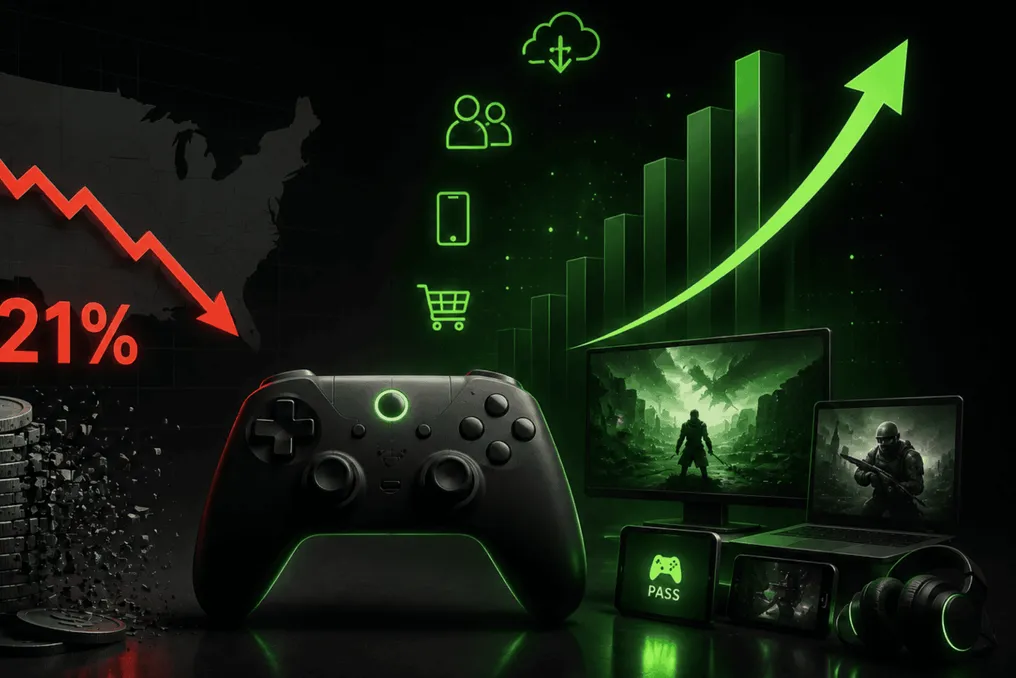
The mergers and acquisitions market showed aggressive warming in the last quarter, moving approximately $1.4 billion. This figure represents the most robust volume in the last twelve months and the second largest in three years. However, a more detailed analysis of this capital indicates a significant shift in the type of acquisitions, signaling that funding for ambitious projects requiring ground-up development is scarce.
New market strategy in gaming
Currently, there is a trend of consolidation focused exclusively on cash flow stability. Companies are prioritizing the purchase of already consolidated user bases over the appeal of traditional intellectual property. Recent moves, such as Supercell buying Metacore and Atari incorporating Hipster Whale, illustrate this new business approach.
Instead of investing in creating a new brand, the market shows a preference for paying a premium for proven retention and predictable Lifetime Value, absorbing casual studios specialized in maintaining daily player engagement.
The acquisition of Electronic Arts
This search for financial security takes on a more critical tone when analyzing the opposite side of the market, where the traditional model of large productions has suffered a major reality check. A notable regulatory event last week was the approval of the purchase of Electronic Arts (EA) for $55 billion. This transaction was led by a Saudi sovereign wealth fund, consolidating the use of soft power to acquire Western infrastructure.
Financial implications of the purchase
Although a check of this magnitude may seem like a positive capital injection at first glance, the executive perspective reveals that this move functions more as heavy support for a structure that could no longer sustain itself autonomously. The inherent financial risk of leveraged operations of this size is that buyers contract massive loans and transfer this debt directly to the acquired company. As an immediate consequence, EA's balance sheet saw an increase of almost $20 billion in liabilities.
With this financial pressure, the company is suffocated by debt that demands immediate returns, eliminating any room for the patience necessary for innovation. Structural damage has already begun to be perceived internally, as in the case of BioWare, which reduced its staff to fewer than 100 employees after the failure of Dragon Age, now depending entirely on the production of the next Mass Effect to justify its corporate existence under management that no longer tolerates risky investments.
Rise of the independent market
For those who follow the business landscape, the lesson about the reevaluation of digital entertainment is clear. However, the outlook for the sector's future is not pessimistic. While financial capital has lost tolerance for unpredictability, the squeeze on superproductions has created the ideal environment for the expansion of the independent market. In recent years, the global revenue of independent games has grown at double-digit rates, varying between 14% and 16% annually, capturing significant shares of revenue on digital platforms and proving that decentralized creativity is quite profitable.
Independent titles have dominated awards and gained public favor for several seasons. There is a conviction that the true future of game development lies in this dynamic. The independent model provides greater agility in production, complete creative freedom, and requires minimal investment, allowing for a much more equitable distribution of resources. Thus, the collapse of the traditional format under the weight of its own debts should not be seen as a tragedy, but rather as the best news to ensure a healthier and more ventilated gaming ecosystem.