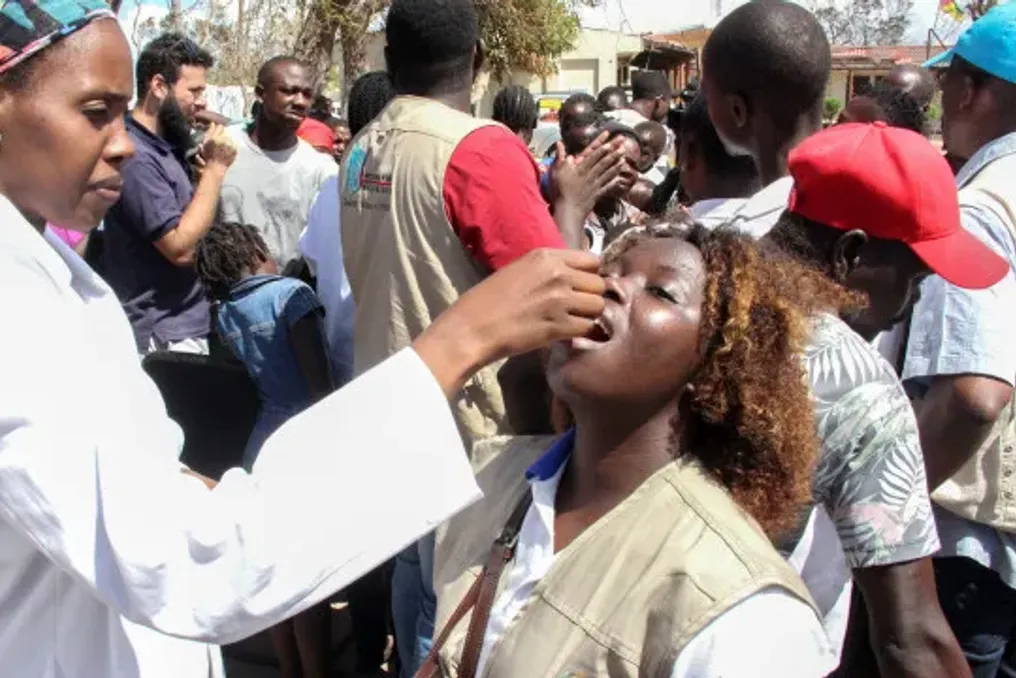
According to the latest report issued by the National Directorate of Public Health (DNSP), Mozambique recorded a total of 9,553 cholera cases between September 3, 2025, and July 25, 2026.
Distribution of Cases by Province
Nampula province was the most affected, accounting for 3,986 infections and registering 39 deaths. The second most affected province was Tete, with 2,974 cases and 33 deaths. Cabo Delgado also registered a significant number of infections, totaling 1,137 cases and eight deaths.
Other affected provinces include Sofala, with 921 cases and four deaths; Manica, with 386 infections and three deaths; Zambezia, which accumulated 146 cases and two deaths. In Maputo, three cases were reported, with no fatalities recorded, while the city of Maputo itself reported one isolated case.
Current Situation and Mortality Rates
In the last 24 hours, five new cases were reported, of which four patients were hospitalized and one was treated on an outpatient basis. During this same period, six medical discharges were granted, there was one readmission, but no deaths were reported. Currently, there are 12 patients hospitalized across the national territory due to the disease.
Official data indicates that the overall mortality rate remains at 0.9%, while the in-hospital mortality rate is 0.3%.
General Epidemic Statistics
Since the beginning of the epidemic, the national health system has recorded a total of 5,806 hospitalizations, 3,747 outpatient attendances, 9,452 hospital discharges, 29 readmissions, and 16 cases of treatment abandonment.
International Response and Prevention
A new Anticipatory Action Framework from the United Nations for cholera in Mozambique foresees the availability of funding of up to 1.7 million euros to allow for rapid interventions before outbreaks worsen, as is currently happening.
This document was formally approved on May 22 by the structures of the United Nations Office for the Coordination of Humanitarian Affairs (OCHA). It establishes a mechanism that links epidemiological data to immediate funding, enabling early action to prevent larger crises.
The anticipatory framework approved by OCHA stipulates that the response must be triggered based on weekly data on acute watery diarrhea, which allows for the rapid identification of unusual increases in cases. When predefined limits are exceeded, measures are automatically activated, eliminating delays in resource mobilization.
A central pillar of this mechanism is pre-positioned funding through the Central Emergency Response Fund (CERF), which will allocate up to 1.5 million dollars (equivalent to 1.3 million euros) for a two-year period. Each activation can release 750,000 dollars (650,000 euros), allowing for two rapid interventions within that timeframe.
In addition to direct support from CERF, the plan includes co-financing by partner agencies, raising the total mobilizable amount to almost two million dollars (1.7 million euros), including extra funds designated for preparation and execution on the ground.
Persistent Public Health Challenges
The document highlights that cholera continues to pose a serious public health threat in Mozambique. Recurring outbreaks are linked to the lack of access to potable water, inadequate sanitation conditions, and extreme weather events, such as floods and cyclones.