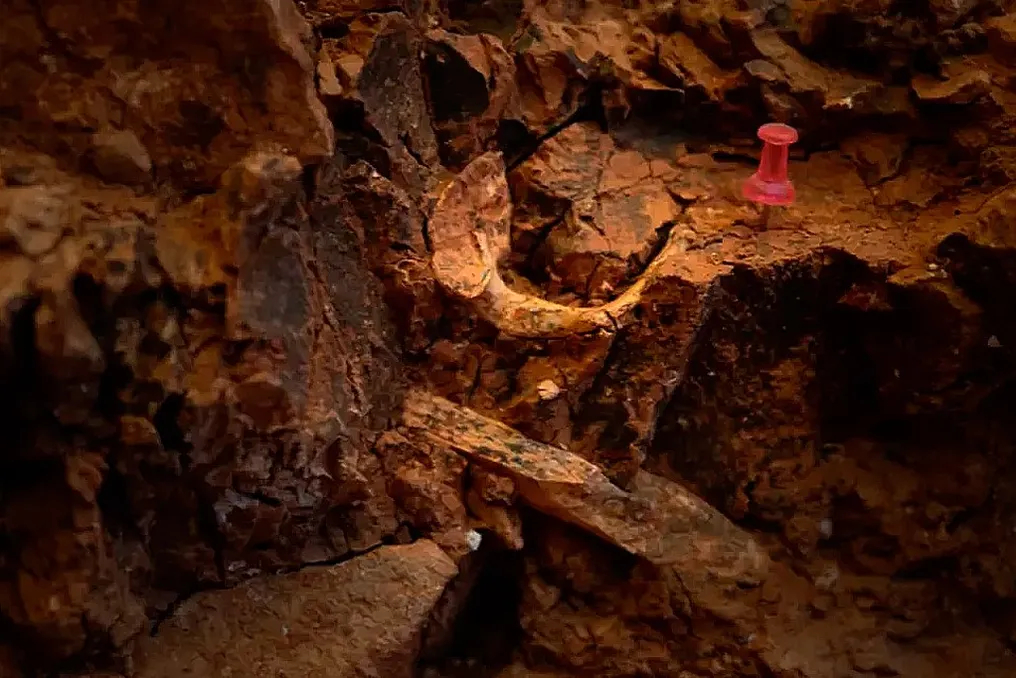
Recent archaeological discoveries in a cave in Spain have provided new information about the practice of cannibalism among the first inhabitants of Europe. Analysis of new bones of the species Homo antecessor has shown that this tribe engaged in cannibalism for the last 850 thousand years.
Discovery of evidence of cannibalism among adults
Archaeologists announced the discovery of hominid remains with signs of cuts and bites belonging to members of the species Homo antecessor. This species inhabited Europe between 1.2 million and 770 thousand years ago. It was previously known that this group fed on members of its own species, but the unexpected finding was that some of the newly discovered bones belonged to adult individuals, whereas previously researchers had only found evidence of cannibalism concerning children.
Location of the find and artifacts
The discovery was made in the Gran Dolina cave, which is part of the Sierra de Atapuerca archaeological complex in northern Spain. Stone tools that Homo antecessor was already capable of making were found at the site, and they corresponded to the cut marks on human bones. In addition, fragments of skulls, vertebrae, arm and leg bones, as well as three teeth, were found.
Understanding the feeding practice
Apparently, Homo antecessor is the oldest human relative that consumed members of its own species for nutritional reasons. This was reported by the Institute of Catalan Paleoecology of Humans and Social Evolution (IPHES) in its statement. Palmira Saladie, a bioanthropologist at IPHES who led the work, noted in the statement: 'The discovery of a larger number of adult individuals, some of whom also have cut marks, demonstrates that cannibalism was not limited to young individuals.'
Scale of the findings and further research
In recent decades, researchers have found many fossils with signs of cannibalism in this cave, but all of them belonged to children and youth. The most common explanation was that younger members of warring groups became easy prey due to their helplessness. Now, the total number of individuals found has reached at least 13, about half of whom are adults. Andreu Olle, an archaeologist at IPHES, stated in the statement: 'The increase in the number of individuals, especially the inclusion of more adults, allows us to begin understanding this population much more completely than ever before.'
Evidence and uncertainties
There is a lot of evidence of cannibalism in the Gran Dolina cave. Some bones had signs of human bites, which is considered the most reliable evidence that the found bodies were indeed eaten. Archaeologists also discovered a 'pattern' in this practice: the same butchering methods used on animals were also used on humans. Nevertheless, the reason why Homo antecessor consumed members of its own species remains unclear to scientists, and they hope that new analyses will help better understand this practice.
Evolutionary status of Homo antecessor
The next step, according to the statement, is to study issues such as age-related differences in cannibalism practices, the number and duration of cannibalism episodes, and the social organization of the group. It should be noted that Homo antecessor is not a direct ancestor of modern humans. When the fossils of this species were discovered in Atapuerca in 1997, it was thought that it might be the last common ancestor of modern humans and Neanderthals. However, in 2020, paleoanthropologists proved through the analysis of ancient proteins that this species is, at best, a sister group or a very close relative of Homo sapiens.