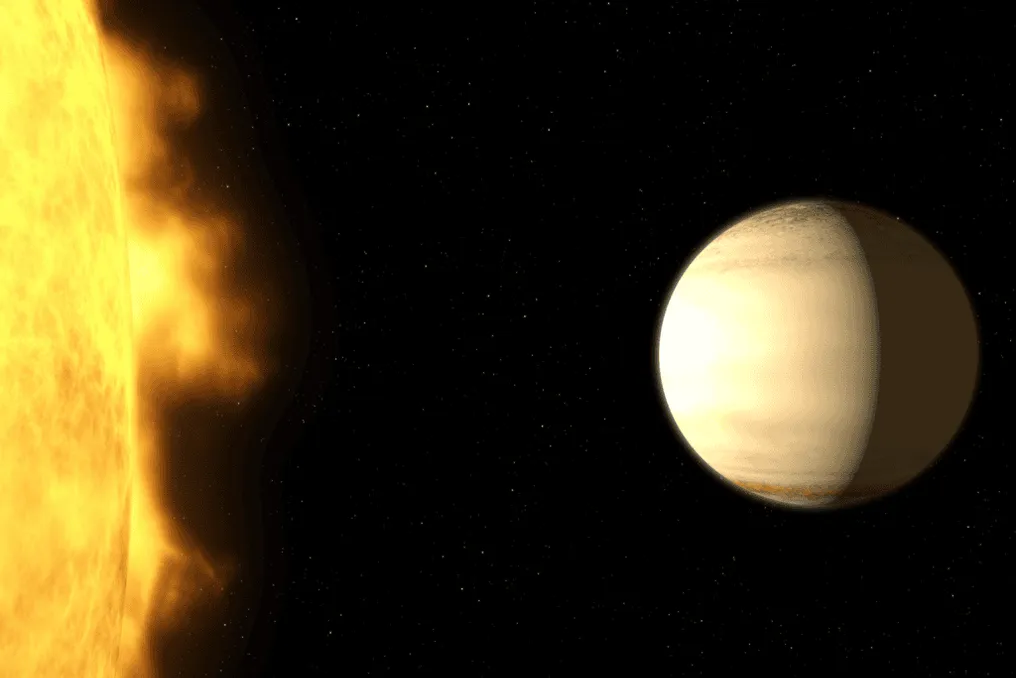
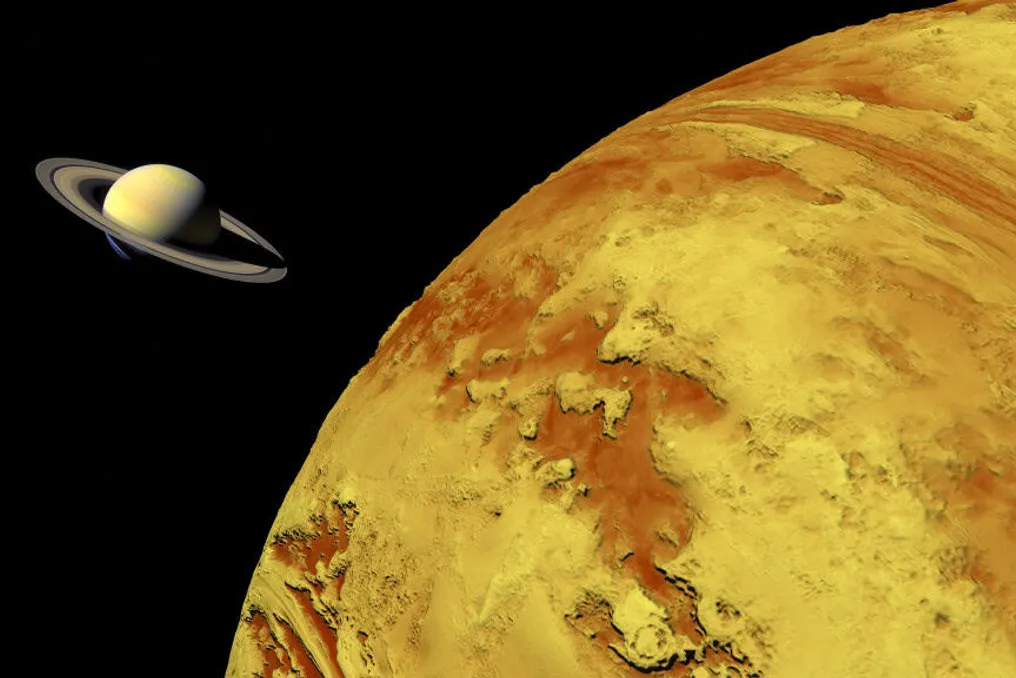
A study conducted using the James Webb Space Telescope has drawn the attention of the scientific community to two very different worlds—Pluto and Titan. Both objects exhibit the same mysterious infrared signal, which indicates the presence of unexplained chemistry.
Similarity Between Pluto and Titan
Despite obvious differences—Titan, Saturn's moon, possesses a dense atmosphere, seas of liquid methane, and dunes of organic particles, whereas the dwarf planet is an extremely cold environment with a thin atmospheric layer—observations by James Webb showed identical light absorption in a specific infrared range on both bodies. This result suggests the presence of an unknown compound.
Bruno Bézar, a planetary scientist from the Paris Observatory and lead researcher, noted that the situation is 'quite mysterious; we cannot say what it is.' The initial clue emerged from analyzing data from Titan collected by the telescope in 2022, where researchers used spectroscopy to identify materials based on how they absorb light. However, the detected pattern does not correspond to any cataloged compound.
Hypotheses on Molecular Origin
To rule out equipment errors, scientists compared data obtained using the NIRSpec and MIRI instruments installed on James Webb. Both instruments recorded the same characteristic, confirming that the signal was not a measurement error. The team then analyzed data from Pluto, obtained in 2023, and again found the same pattern. One hypothesis relates to alkenes—a family of hydrocarbons that exhibit similar behavior in the observed infrared range.
It is believed that this compound may arise from chemical processes involving nitrogen and methane. Under ultraviolet radiation, these elements can generate more complex organic molecules that then reach the surface. Key indicators of this hypothesis include the appearance of the signal on Titan's surface, its decrease in intensity at the edges of observations, the fact that Pluto's atmosphere alone does not explain the phenomenon, and the absence of such a characteristic on Ganymede.
Prospects for Future Research
New observations from James Webb will help scientists map the distribution of this signal on Titan and determine if it is related to specific areas, such as regions of large organic dunes. The NASA Dragonfly mission may also contribute to this study; this craft, scheduled to arrive at Titan in the 2030s, will be equipped with instruments capable of directly analyzing molecules on the surface.
According to Bruno Bézar, the research could potentially reveal the mechanisms of complex chemical process development in various worlds of the Solar System.