Researchers have discovered hundreds of archaeological structures hidden beneath the forests of the Amazon and concluded that an ancient society occupied a vast area of southwestern Amazonia from approximately 600 BCE to 850 CE.
Scale of Ancient Population and Settlements
According to calculations, this population built thousands of ceremonial centers and reached between 1.25 million and 3 million inhabitants at its peak. The international team conducted the study using LiDAR aerial photography technology to map vegetated areas. The analysis showed that the degree of settlement was much wider than previously assumed, changing the perception of human presence in the forest before European colonization.
Characteristics of the Aquiry Civilization
The research findings were published in the scientific journal Nature last Wednesday (the 29th). They indicate that the so-called Aquiry civilization transformed the landscape of the Amazon over about 1500 years through the construction of earth monuments, road building, agriculture, and vegetation management.
Details of the Discovered Structures
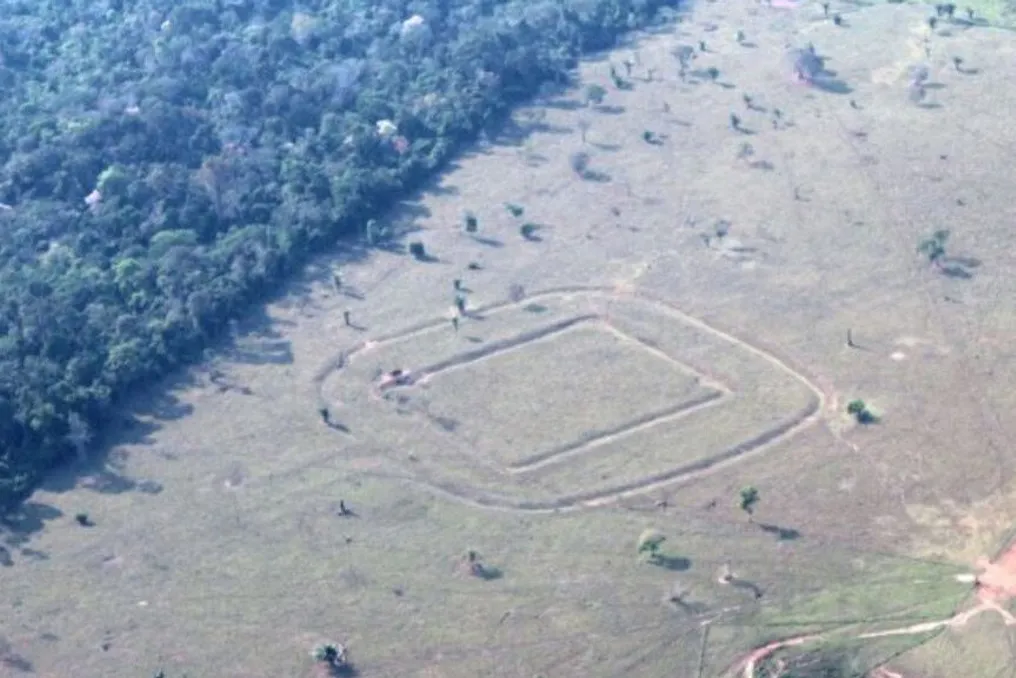
The study focused on the southwestern Amazon region, which constitutes less than 3% of the entire Great Amazon. Nevertheless, the flights allowed for the identification of 432 earth structures, 396 of which were unknown to the researchers. Based on this data and comparison with previous surveys, scientists estimated that the ancient territory could accommodate between 24,000 and 30,000 such constructions.
According to researchers' estimates, this society covered an area of about 183,000 square kilometers, comparable to the territory of some modern countries. In this space, the population reached between 1.25 million and 3 million people around the beginning of the first millennium CE. The discovered structures have diverse geometric shapes and are connected by straight roads laid through the forest. Researchers interpret these sites as centers intended for political activities, rituals, and meetings between different communities, rather than just residential areas.
Cultural Structure and Economic Activity
The name Aquiry derives from the designation used by indigenous peoples for the Acre River. According to researchers, this society was not a single centralized kingdom but rather a network of culturally related communities that shared practices and traditions across a vast territory. The study also emphasizes that the forest was not untouched during this period. Residents cleared areas to grow corn, manioc, and pumpkins, and also contributed to the management of food-bearing tree species such as Brazil nuts and various fruit trees.
The authors argue that this human intervention left long-term traces in the composition of Amazonian vegetation and may have even affected the region's carbon balance, which they believe requires more attention in future climate studies.
Role of LiDAR Technology
LiDAR technology played a crucial role in the discovery. This method uses laser pulses emitted from airplanes that can pass through small gaps in the tree canopy and record the relief beneath the vegetation, allowing structures to be found without the need to remove the forest cover.
Views of the Lead Researcher
Archaeologist and anthropologist Martti Pyrssinen from the University of Helsinki, who led the study, stated that the new results changed his view of the scale of ancient settlement in the Amazon. In an interview with ScienceAlert, he noted: 'I recently felt something similar when I realized there could be ten times more such earth structures in the region than I had previously assumed.'
He shared his impression of the impact of the new estimates obtained through the survey.In another assessment for the same publication, Pyrssinen emphasized that the number of structures found in a relatively small part of the Amazon suggests that other regions might also conceal similar evidence. 'The scale of the archaeological record suggests that many other regions of the Amazon may have been much more densely populated and intensively modified than previously thought,' said the ScienceAlert researcher. He also described how he envisions the landscape during the peak of this society. According to him, large ceremonial centers were likely surrounded by extensive wooden structures, agricultural fields, and managed forests for generations. In the same conversation, he added: 'At certain times of the year, these places came alive with ceremonies, meetings, music, dances, athletic competitions, and other social events.'
Open Questions
Despite the progress, the study did not answer a number of questions. It is still unknown what languages the different communities spoke, what they called themselves, or what factors led to the disappearance of this civilization around 850 CE. Researchers consider this one of the main unresolved problems for future research.