The Siyafana Sonke Action Campaign has intensified its advocacy, calling upon the South African government to promptly address what it characterizes as a worsening humanitarian crisis affecting both documented refugees and migrants within the nation.
Humanitarian Concerns and Refugee Situation
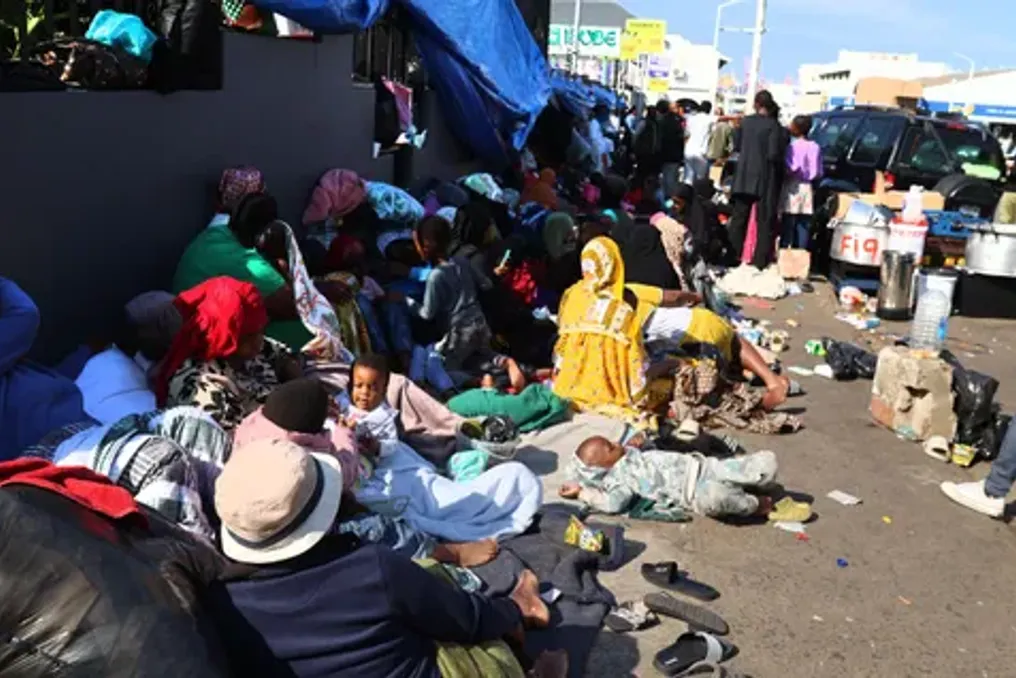
The campaign, which champions the rights and well-being of these vulnerable populations, cautions that refugees are being manipulated in a political context while critical humanitarian issues are largely overlooked. During a press briefing held on Thursday, representatives from the campaign and refugee groups stated that over 400 refugees, including numerous children, have been residing on the pavement outside the Department of Home Affairs office on Che Guevara Road since the middle of May 2026. This encampment followed their flight from threats and acts of violence.
The organization clarified that the refugees are not demanding permanent residences but rather immediate emergency shelter, alongside the development of a secure reintegration procedure. Campaign spokespeople noted that while impoverished and working-class communities in South Africa continue to struggle with unemployment, poverty, and inadequate public services, anti-migrant factions exploit these grievances by targeting refugees and migrants, many of whom possess legal recognition and protection under South African law.
Critique of Political Response
Yeshelen Govender, representing Siyafana Sonke, criticized political figures for allowing electoral politics to influence the government's reaction to the crisis. He asserted that the humanitarian needs of the individuals on the ground are being overshadowed by political maneuvering. Govender argued that refugees have become political scapegoats amid intense political competition, stating that political parties fear losing municipal and governmental control, leading to refugees being used as 'political footballs' while genuine humanitarian problems remain unaddressed.
Govender expressed skepticism regarding official mentions of 'reintegration,' questioning the existence of any substantial program. He challenged the definition of reintegration, pointing out that communities are unprepared to receive them, lacking necessary psychosocial support, safety planning, or protection. He deemed the simple instruction for refugees to return to areas where they were previously attacked as an unfeasible solution.
Scope of Displacement and Needs
He reported a continuous increase in the number of displaced refugees, with some arriving from outside KwaZulu-Natal following similar incidents elsewhere. Govender mentioned receiving refugees from as far as the Eastern Cape and the Free State, all seeking aid from Home Affairs. While civil society has supplied food and basic necessities, he stressed that this cannot resolve the accommodation shortage. He emphasized that the community, comprising over 400 individuals—including children, women, the elderly, and those with chronic illnesses—requires shelter, ideally a structure with walls and a roof, but currently, tents would suffice.
Emergency lodging, according to Govender, would enable families to begin recovering from months of trauma, providing them with a chance to move beyond mere survival and make informed decisions about rebuilding their lives. He accused the state of disregarding its specific legal duties concerning refugee protection. Furthermore, Govender urged South Africans to redirect their frustration toward the systemic causes of poverty, such as unemployment, corruption, inequality, and poor service delivery, rather than blaming migrants.
Calls for Government Accountability
Deborah Ewing, another member of Siyafana Sonke, contended that the humanitarian emergency should never have reached its present state, asserting that authorities failed in their constitutional obligation to safeguard vulnerable people. She stated that people should not have been forced out of their communities initially, emphasizing that the police's role is to prevent crime and protect citizens. Despite repeated warnings and interactions with authorities, refugees continued to be displaced without safe alternatives.
Ewing called on both provincial and national governments to assume responsibility by providing emergency shelter until a proper reintegration process can commence, noting that the current situation is unsafe for these families to return to. She added that any lasting resolution necessitates coordinated effort across all governmental tiers.
Personal Accounts and Health Risks
Alim Leung, also affiliated with Siyafana Sonke, estimated that approximately 450 people, including 52 children, were living on the streets. She recounted an instance where a woman gave birth and subsequently returned to the pavement because no other options were available. Leung noted that civil society organizations had found shelters unwilling to guarantee the refugees' safety if the government itself could not assure it. She also alleged that humanitarian groups offering food aid faced unwarranted hurdles.
Raphael Bahebwa, a refugee and leader of the Congolese Solidarity Campaign, stated that those sleeping outside Home Affairs had exhausted all possible avenues. His primary concern is safety, and he appeals to the government to take responsibility since they initiated the verification process and recognized them as refugees. Bahebwa warned that the overcrowding on the pavement poses severe public health risks due to the forced proximity of hundreds of people, suggesting major infections could occur. He concluded by appealing to political leaders to intervene before conditions worsen.
Percy Nhau, a Zimbabwean refugee, insisted that the government must either uphold the protections it granted to recognized refugees or be transparent about its stance. He stressed that these individuals are legally present and that the government accepted the duty to protect them upon granting refugee status. Nhau rejected the notion that refugees are less deserving of protection, stating that this narrative must change.
During a site visit, Nhau detailed the personal impact of displacement, explaining that they are in South Africa because their home countries are unsafe. He highlighted the distinction between refugees and illegal immigrants, confirming their legal status. He added that many refugees ran businesses that employed South Africans, and the looting and closure of these establishments resulted in job losses for local residents, creating a dire situation.